
What a Contribution Limit Actually Is
A contribution limit is the maximum amount the IRS lets you put into a tax-advantaged retirement account in one calendar year. It's not a suggestion, it's not connected to your employer's match, and it's not something you can carry over if you miss it. It exists because the tax treatment on that money is a real benefit, and the IRS caps how much income can get that treatment annually.
The number moves almost every year, adjusted for inflation. That means whatever contribution percentage maxed you out last year is already stale math — the ceiling shifted, and unless you shifted with it, you're not contributing what you think you are.
If you haven't checked whether your employer match is even set up correctly, that's worth a separate look — but this post is about the ceiling itself, not the match sitting below it.
The 2026 Numbers, By Age
| 2025 | 2026 | |
|---|---|---|
| 401(k) — under 50 | $23,500 | $24,500 |
| 401(k) — 50 and older | $31,000 | $32,500 |
| 401(k) — 60 to 63 (super catch-up) | $34,750 | $35,750 |
| IRA — under 50 | $7,000 | $7,500 |
| IRA — 50 and older | $8,000 | $8,600 |
Every one of these numbers went up. None of them went up by accident — they're tied to inflation adjustments the IRS publishes every fall. If you're relying on a number you memorized a year or two ago, it's wrong now.
What This Means for Your Paycheck
Ceilings are abstract until they're broken into what actually leaves your bank account.
Under 50, paid biweekly (26 paychecks a year): maxing the $24,500 limit means $942.31 per paycheck. Paid monthly: $2,041.67.
Age 50 or older, hitting the full $32,500: $1,250 per paycheck biweekly.
In the 60–63 super catch-up window, the $35,750 total: $1,375 per paycheck biweekly.
Don't copy-cat last year's contribution rate. The ceiling moved. You should too.
Martin and Jenny: Same Start, Different Ending
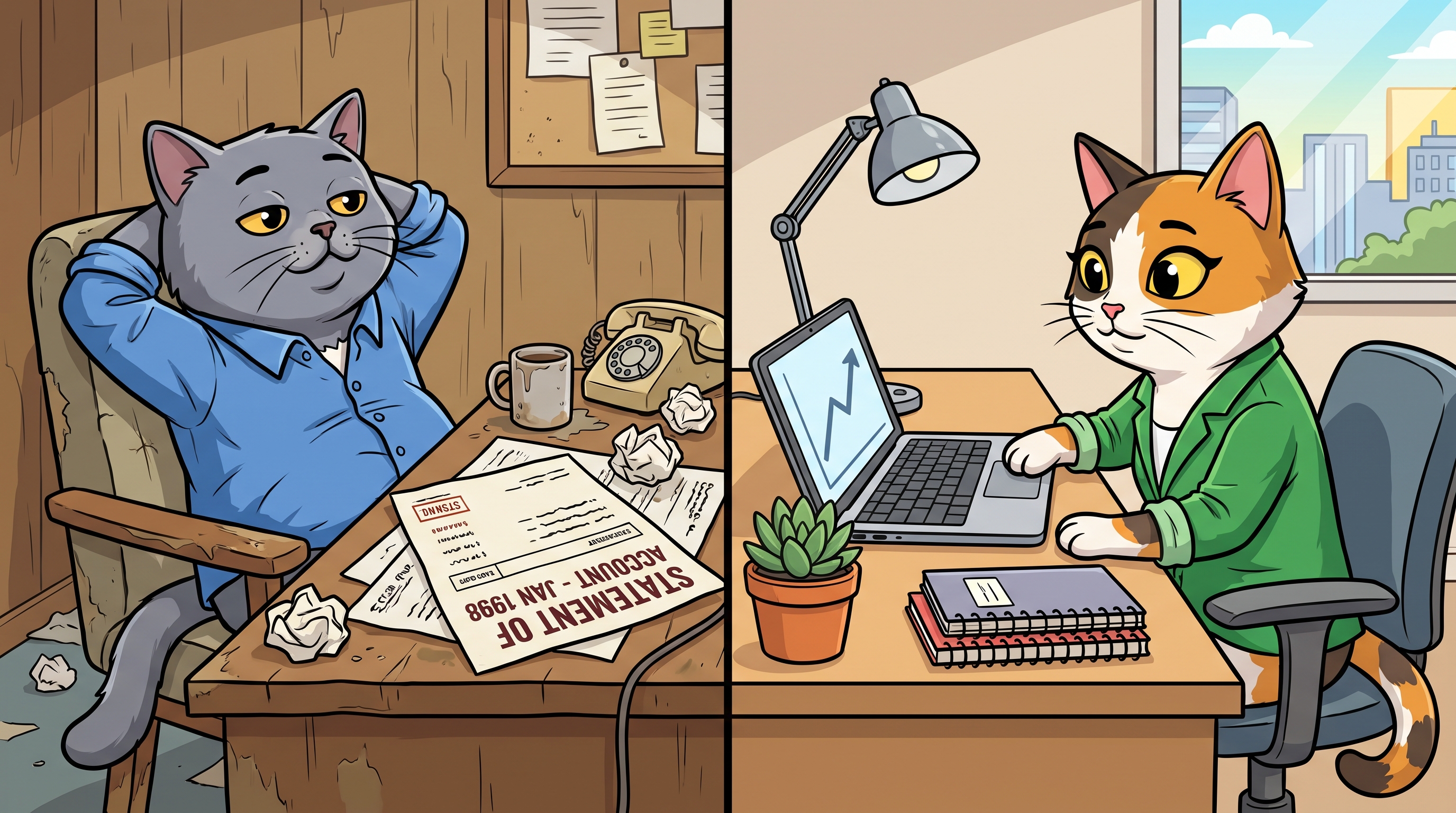
Picture two cats who started saving at the same time, in the same job, with the same $15,000-a-year contribution.
Martin set his contribution once and never touched it again. Same dollar amount, every year, for 20 years — even as his salary grew and the IRS ceiling kept rising past what he was putting in.
Jenny started at the same $15,000. But every time the limit moved, she moved with it — ending, this year, at the real 2026 max of $24,500.
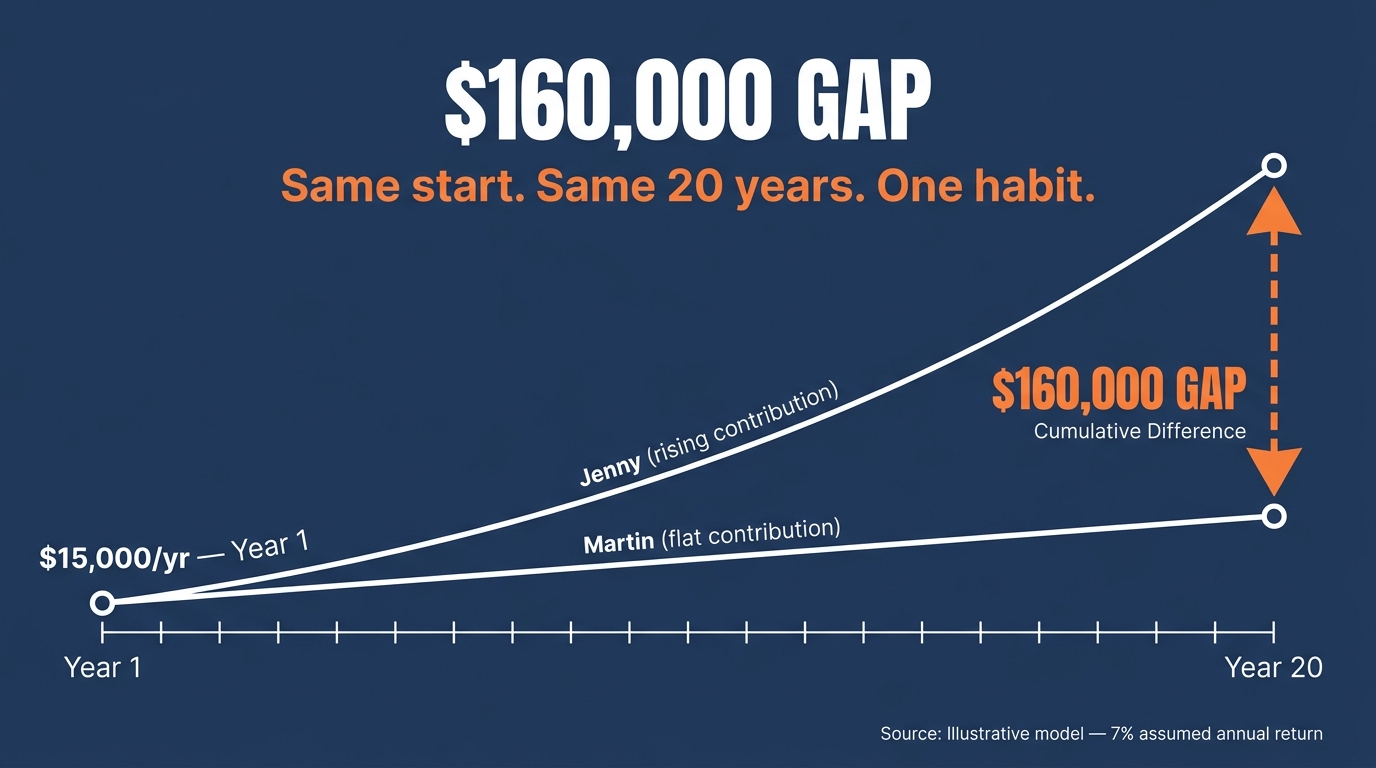
Here's a simplified model of where that leaves them — assuming a 7% average annual return, which is a common conservative long-term benchmark, not a guarantee:
Martin, 20 years, flat $15,000/year: roughly $658,000.
Jenny, 20 years, contribution rising with the ceiling: roughly $818,000.
Same starting point. Same 20 years. A $160,000 gap — created entirely by one habit: checking the number every year instead of setting it once and forgetting it existed.
The Extra $1,000 Rule
The 2026 401(k) ceiling is $1,000 higher than 2025 — $24,500 vs $23,500.
Bump your contribution by that extra $1,000 this year and leave it invested for 20 years at a conservative 7% return, and that one adjustment alone is worth roughly $41,000 by the time you retire.
Martin isn't bad with money. He's just running last decade's math.
The New 2026 Roth Catch-Up Rule
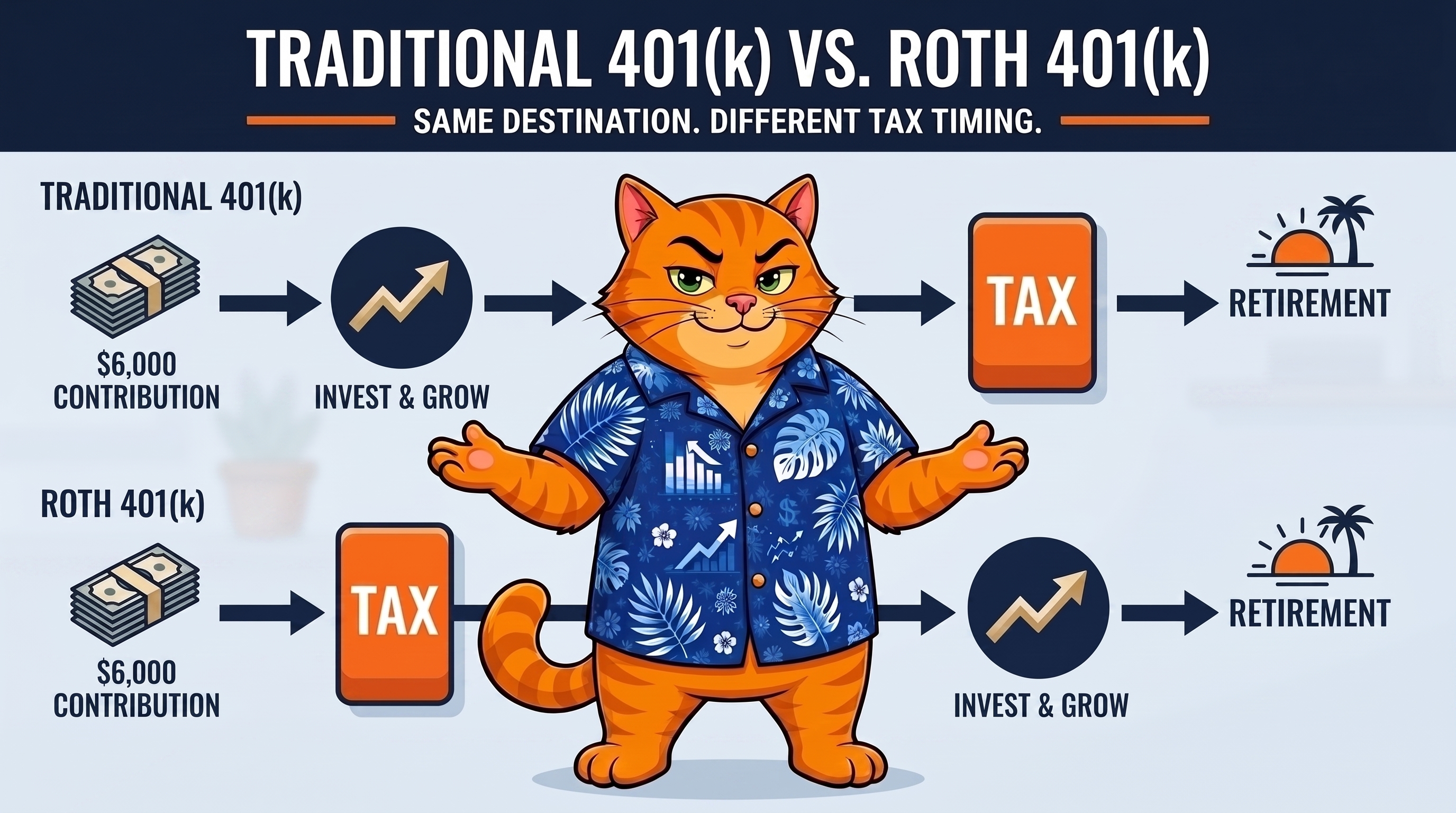
This one's new, and it's not a footnote. Starting in 2026, if you earned more than $150,000 in FICA wages last year, your catch-up contributions — the $8,000 or the $11,250 — have to go in as Roth, meaning after-tax dollars. You don't get a choice on this one if you're above that threshold.
That's a real shift for anyone in that income bracket who's been defaulting to traditional (pre-tax) catch-up contributions without thinking about it. Pre-tax catch-up contributions for high earners are done. Check your plan's default setting — if it's still pointed at traditional, that's now a compliance problem, not just a preference.
IRA Limits — Same Logic, Smaller Numbers
The IRA limit moved to $7,500 for 2026, with a $1,100 catch-up if you're 50 or older — $8,600 total. Same rule as the 401(k): calendar-year cap, resets every January, doesn't carry over.
If you're contributing to both a 401(k) and an IRA, these limits are independent — maxing one doesn't reduce your room in the other. People conflate this constantly. They're separate ceilings.
The Part Chuck Wants You To Actually Do
Go check your current contribution percentage — not dollar amount — against these new ceilings. If you set your 401(k) to a flat percentage last year and haven't touched it since, you may be contributing less of the new limit than you think, especially if you got a raise. A percentage that maxed you out in 2025 doesn't automatically max you out in 2026. The math changed. Your settings probably didn't.
If you're within range of any of these limits, this is a five-minute fix in your payroll portal. If you're nowhere close, that's fine too — this isn't a guilt trip, it's just the actual number so you can make an actual decision.

Update your contribution percentage today if it needs it. Then move on with your life until the IRS moves the number again next November.
Sources: