What an HSA Actually Is
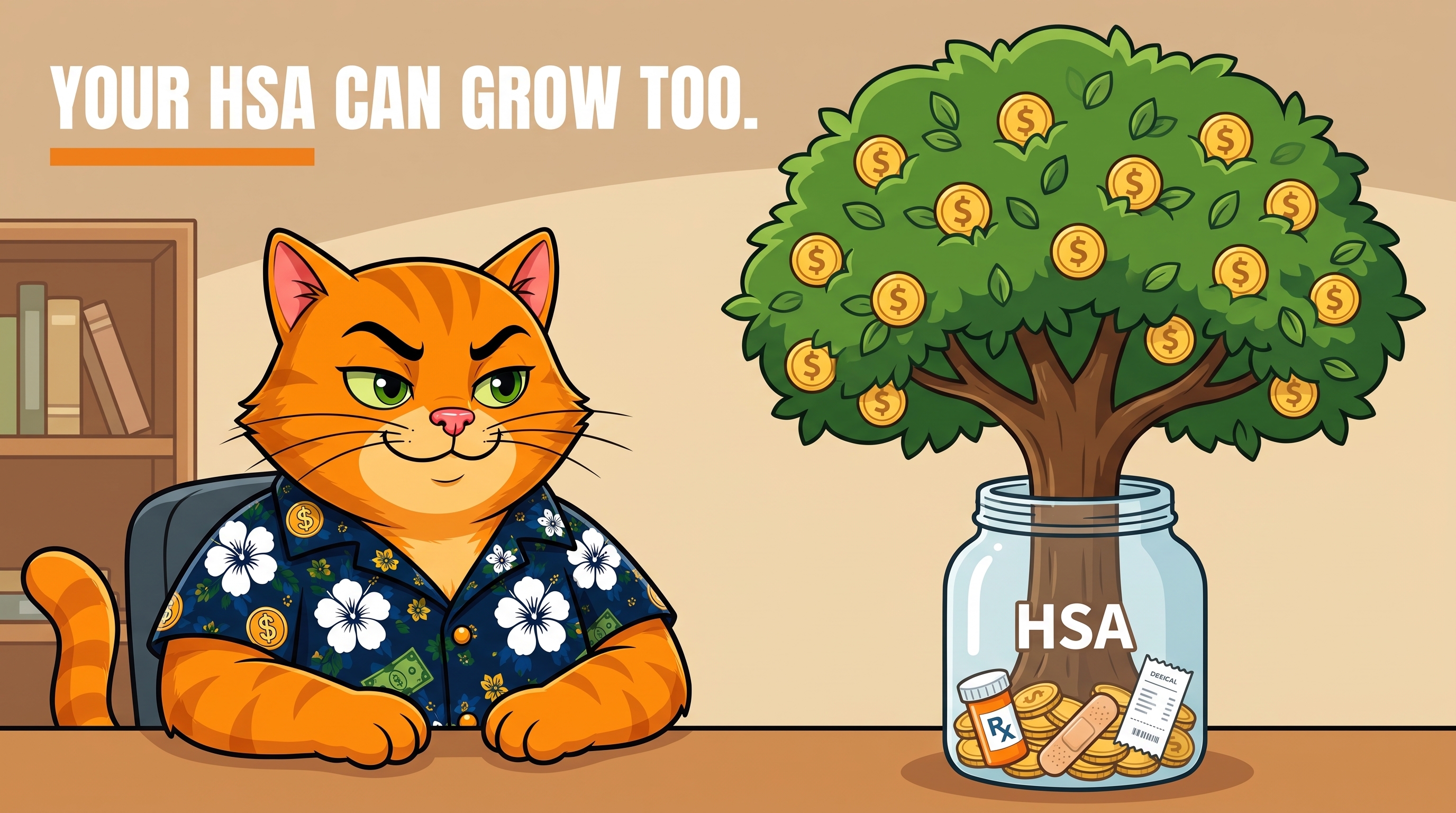
A Health Savings Account (HSA) is a tax-advantaged account you're allowed to have if you're enrolled in a high-deductible health plan (HDHP). For 2026, that means a deductible of at least $1,700 if it's just you, or $3,400 on a family plan. Meet that bar, and you can put up to $4,400 a year into the account as an individual, or $8,750 for a family. Add another $1,000 if you're turning 55 this year or already past it.
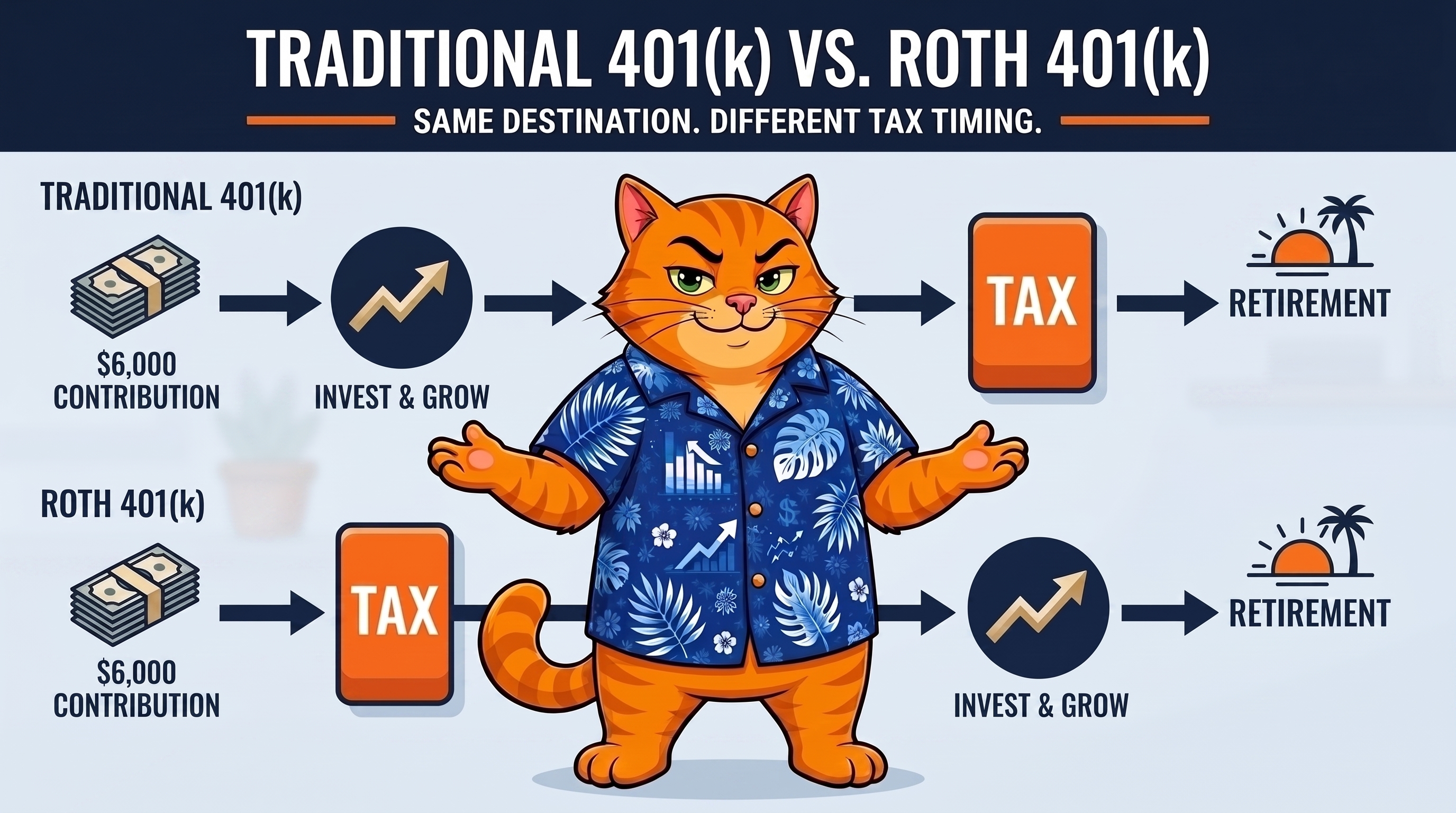
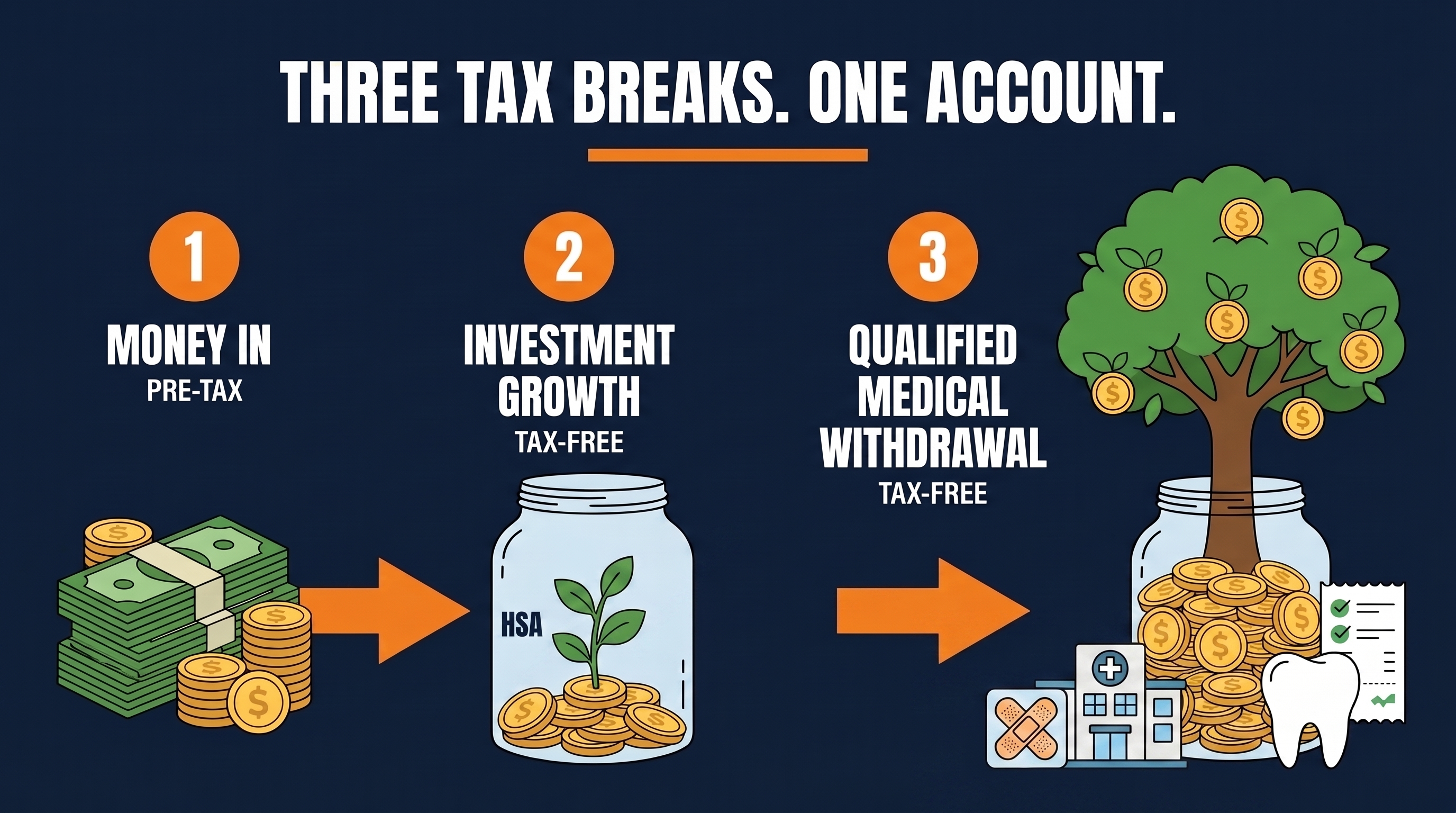
Here's the part worth paying attention to: the triple tax advantage. Money goes in pre-tax, so it lowers what you owe the IRS the year you contribute. It grows tax-free, so any gains inside the account are untouched. And it comes out tax-free, as long as you spend it on qualified medical expenses. Three tax breaks, one account. Nothing else does all three — a 401(k) gives you two of them and taxes you on the way out, a Roth IRA gives you the other two and taxes you going in. The HSA is the only one that skips the tax collector at every stage.
Debbie vs. Gerald: Same Account, Very Different Outcomes
Say Debbie and Gerald are both 35. Same job type, same HSA-eligible plan, same 30 years until they hit 65.
Debbie contributes about $1,500 a year — roughly what she actually spends on medical care — and drains the account close to zero every December. That's not a mistake. It's just the default most people fall into without ever actually deciding to.
Gerald does something different. He contributes the full $4,400 individual limit every year. His real costs run closer to $500, which he pays out of pocket when he can afford it, and the other $3,900 stays invested inside the account instead of getting spent.
Run that out for 30 years at a flat, illustrative 7% average annual return — a simplified stand-in for a diversified stock/bond portfolio, not a promise — and Gerald's account grows to roughly $368,000. Debbie's stays at $0, because she's spending what comes in as it comes in.
Same account. Same rules. $368,000 apart. The variable isn't income, and it isn't discipline — Debbie is plenty disciplined about paying her bills on time. The variable is whether she ever knew the account could do more than that.
The Debbie vs. Gerald Gap
Max HSA contributions invested at 7% avg. annual return for 30 years ≈ $368,000 vs. $0 saved by spending it down every year.
If you're contributing the max to your HSA and spending it down like an FSA, you could be leaving roughly $368,000 of tax-free growth on the table over 30 years.
Why Most People Default to Debbie's Approach
Most people don't choose Debbie's approach. They inherit it — from the Flexible Spending Account (FSA) they had before, or still have on a different line item. FSAs really are use-it-or-lose-it. Miss the deadline, and whatever's left typically disappears. That's a real rule, and it trains a real habit: spend it before you lose it.
HSAs don't work that way, and the difference matters more than most people realize.
HSAs roll over every year.
There's no deadline. What you don't spend this year carries into next year, and the year after that, and it stays with you even if you change jobs, change insurance, or stop working entirely. It's portable in a way an FSA has never been. Carrying an FSA habit into an HSA is one of the more expensive, and more common, mix-ups in personal finance.
The Retirement-Account Angle
Here's where the HSA stops looking like a medical account and starts looking like a second retirement account.
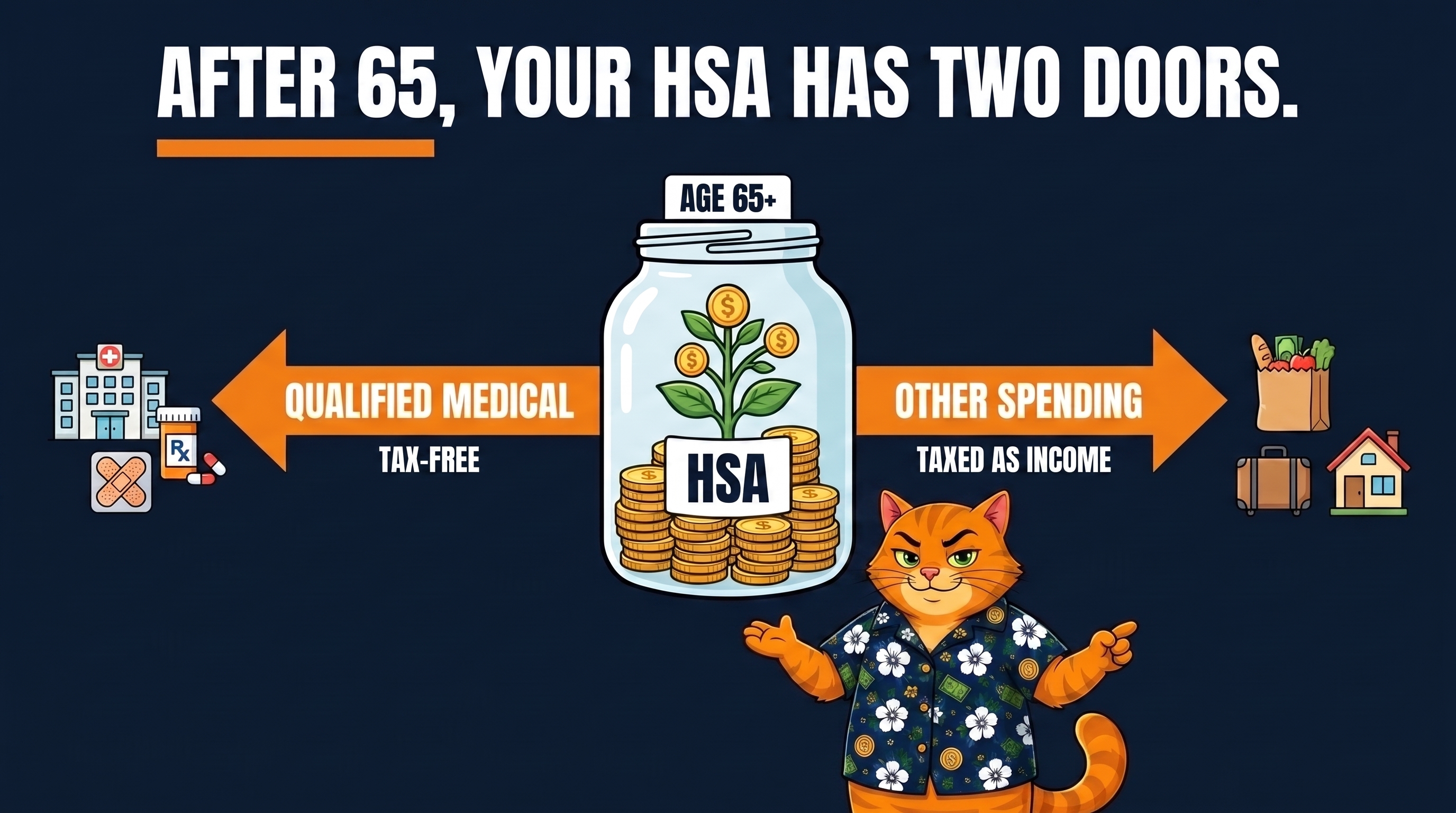
Once you hit 65, you can pull HSA money out for any reason — not just medical — without the usual 20% early-withdrawal penalty. Spend it on something that isn't a qualified medical expense, and it just gets taxed as ordinary income. That's exactly how a Traditional 401(k) withdrawal already works.
Before 65, that's not true — non-medical withdrawals get hit with income tax and the 20% penalty, full stop. But once you're past that line, an HSA that's actually been invested instead of spent functions like a bonus Traditional 401(k) — one that comes out completely tax-free if you spend it on medical care, which is exactly what most retirees end up doing anyway.
The Part Chuck Wants You To Actually Do
Understanding the account is step one. Here's what actually changes if you act on it.
- Contribute the max if the budget allows it. $4,400 individual or $8,750 family for 2026, plus $1,000 if you're 55 or older.
- Invest what you don't need this year, instead of letting it sit in cash earning nothing.
- Pay smaller bills out of pocket when you can afford to, so more of the balance stays invested and growing.
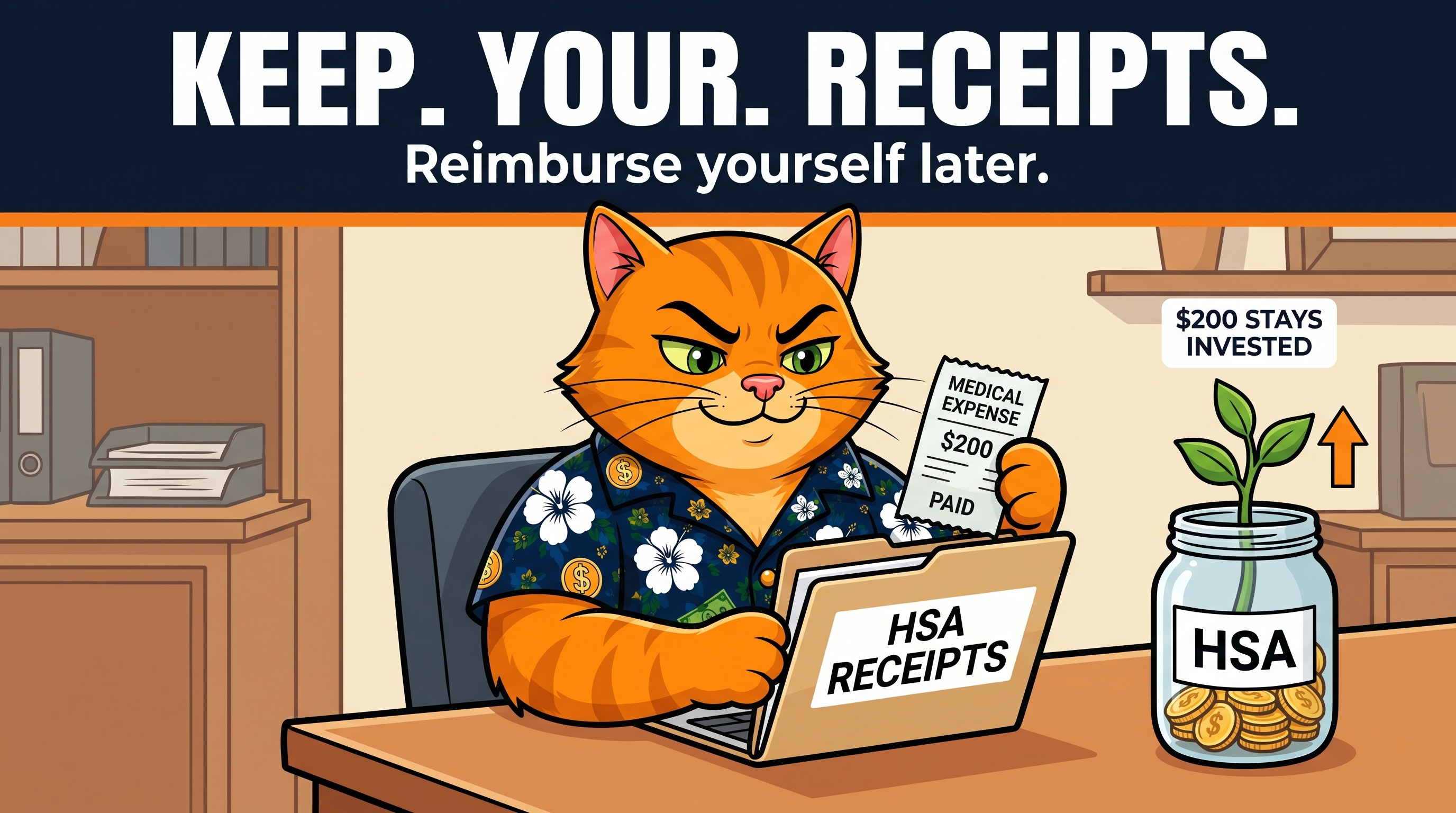
- Keep your receipts. There's no deadline on reimbursing yourself for a past qualified expense — even one from years ago — as long as the HSA was open when you paid it. Pay a $200 bill out-of-pocket today, let the HSA $200 stay invested for another 15 years, and reimburse yourself later, completely tax-free.
None of this requires a bigger paycheck. It requires treating the account like what it actually is instead of what it looks like on the surface.
Check Your Own Setup
If you're on an HSA-eligible plan right now, how are you utilizing it? Are you like Debbie and just contributing what you expect to spend this year in healthcare? Or are you more like Gerald and maxing out your HSA for healthcare costs and long-term investments to be used as a retirement bucket?
Sources: 2026 HSA and HDHP contribution limits — Congress.gov, Congressional Research Service, "Health Savings Accounts (HSAs)" (R45277).