Investing Isn't Saving
Saving is putting money somewhere safe. Investing is putting money somewhere that can grow — with real risk attached, in exchange for real growth potential over time. A savings account protects your money. An investment account puts it to work.
That's the whole distinction. Everything else people worry about — timing, picking stocks, reading charts — is optional complexity layered on top of a simple idea: money that's invested has a chance to grow faster than money that's just sitting still.
Know Your Why (Briefly)
Your reason for investing changes what "starting" should look like. Someone investing for a decades-out goal can afford to ride out market swings. Someone investing toward a house down payment in two years generally shouldn't have that money in the market at all — too little time to recover from a bad stretch.
There's also real variability this post isn't going to pretend to resolve. Debt, a mortgage, dependents, a spouse with different priorities — all of that changes the math, and it changes it differently for everyone. There's one piece with a fairly clear answer: high-interest "bad" debt (credit cards, most personal loans) generally gets paid down before you invest aggressively, since it's hard to beat a 20%+ interest rate with market returns. Everything past that — how much, how aggressively, on what timeline — genuinely depends on your specific situation. This post covers the mechanics of starting. It's not a personalized plan, and it shouldn't pretend to be one.
Take Jason. He's got about $600 sitting in checking that he's been meaning to do something with for four months. He's not drowning in debt. He doesn't have a house down payment deadline. He just knows he should probably be doing something with it, and hasn't. That's most people's actual starting point — not a five-year plan, just money sitting still with nowhere assigned to go.
The Actual First Step
Open a brokerage account. That's it — that's the first step everyone overcomplicates. Fidelity, Schwab, and Vanguard all let you open one for free, with no minimum balance required to open it.
If your employer offers a 401(k), that's an even simpler first step — the account may already exist, and contributions come straight out of your paycheck before you have to think about it. Either path counts as starting.
How Much to Start With
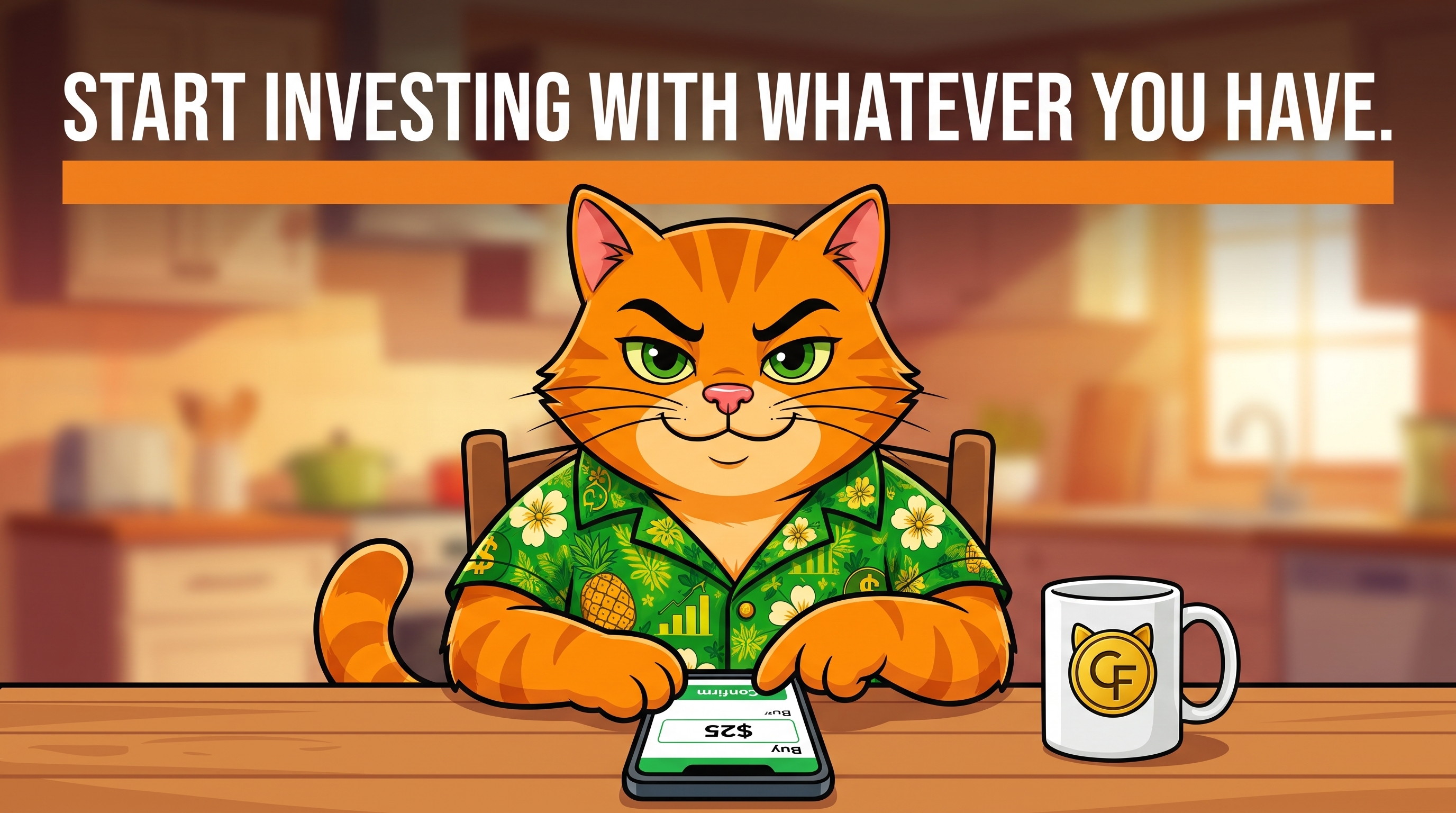
Small amounts count. $25 counts. $50 a month counts. The number that matters isn't the size of your first contribution — it's whether you start now or keep waiting to save more first.
Investing a fixed amount on a regular schedule, regardless of what the market's doing that week, is called dollar-cost averaging. You're not trying to time a "good" moment to buy — you're buying consistently, which smooths out the ups and downs over time.
Waiting to start until you've saved more doesn't make you safer. It just means less time in the market — and time, not the size of any single contribution, is what compounding actually needs to work.
What to Actually Buy
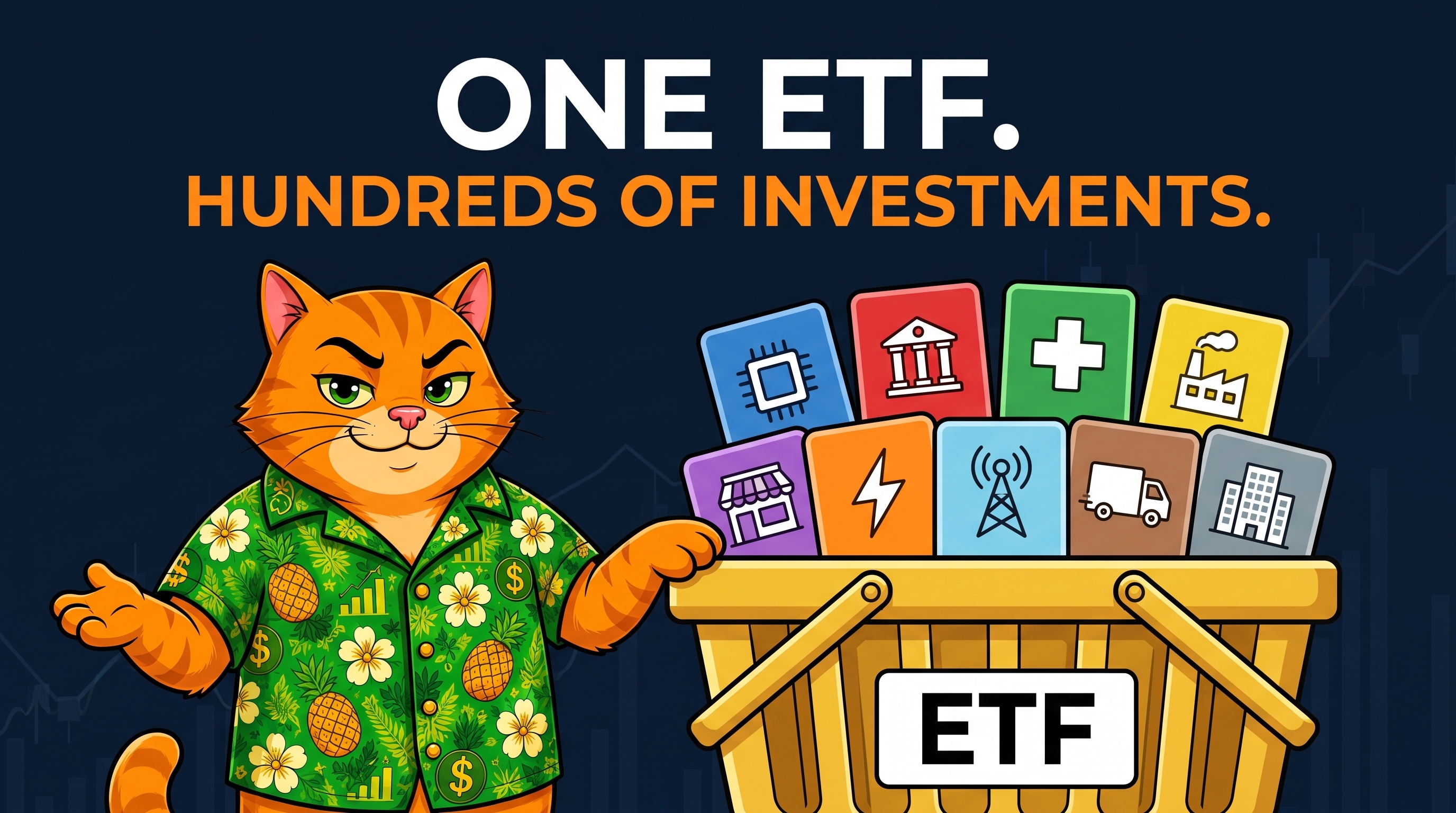
At a beginner level: index funds and ETFs. Both let you own a small slice of hundreds of companies at once instead of betting on any single one, and both tend to charge lower fees than actively managed alternatives — worth checking the actual expense ratio before you pick one, since that fee compounds against you for as long as you hold the fund.
You don't need to pick individual stocks to start. A single broad-market index fund is a completely reasonable entire starting portfolio.
The Mistake That Derails Beginners
It's not picking the wrong fund. It's what happens after you've already started: panic-selling the first time the market drops, or waiting indefinitely for "the right time" to add more.
The Waiting Tax
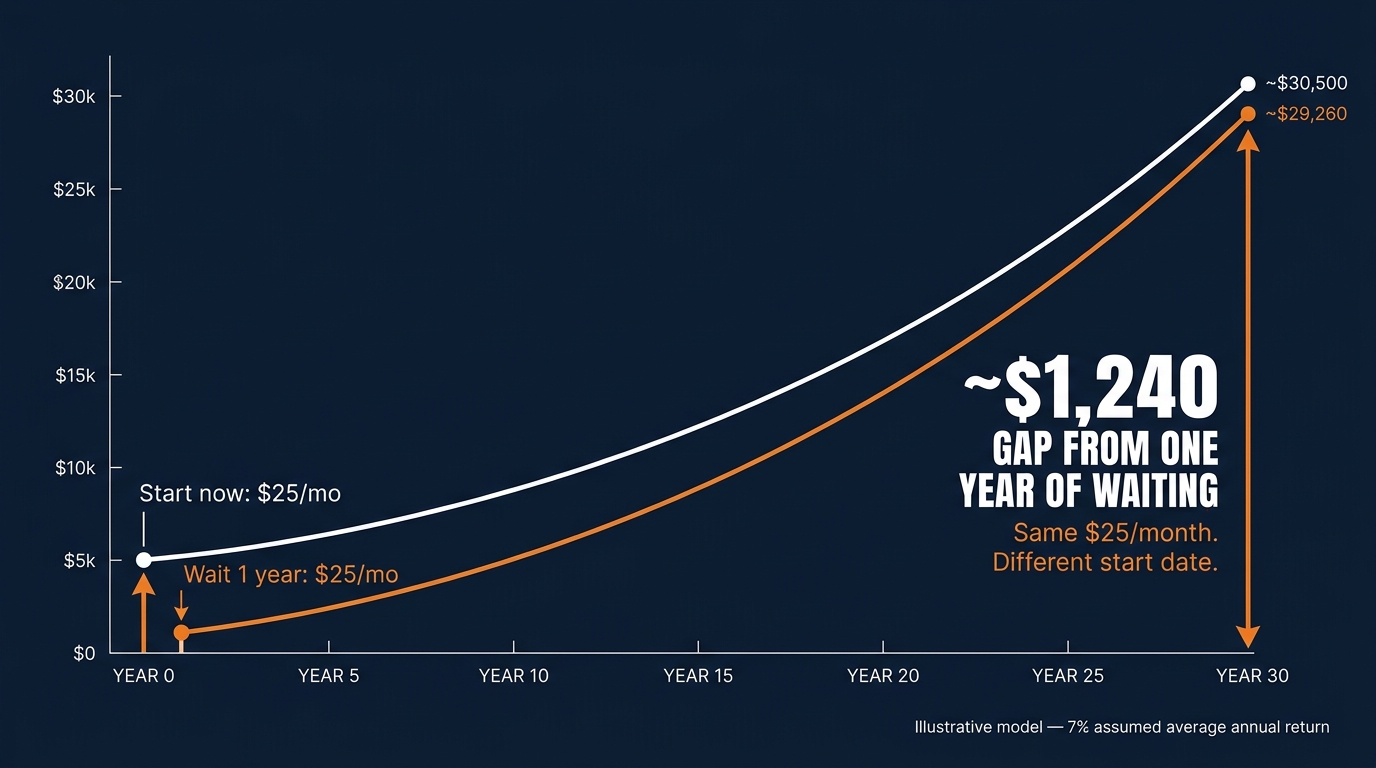
Waiting one extra year to start investing $100/month at a 7% average return costs you roughly $1,240 in lifetime growth by the time you're 30 years in — not because you lost money, because time stopped compounding for you.
The month you keep meaning to start is the expensive one. Not because of what you'd invest — because of what that money stops earning while it sits still.
Markets go down sometimes. That's not a signal something went wrong — it's the normal cost of the growth you're there for in the first place. Selling during a drop locks in the loss that would have otherwise recovered. Waiting for a "better" entry point is usually just a more comfortable-sounding version of not starting at all.
The Part Chuck Wants You To Actually Do
Pick a number — even $25 — and open an account this week. Not next month, not after you've researched every fund option available. This week.

You can refine what you're invested in later. You can't get back the months you spent deciding whether to start.
What Jason Actually Did
Jason didn't research funds for three weeks or wait for a bigger paycheck. He opened a brokerage account on his phone, put $200 of that $600 into a single broad-market index fund, and set up $25 a month on autopay so he wouldn't have to think about it again. He left the rest in checking.

That's the whole story. No dramatic turnaround, no crash course in finance. Just money that used to sit still, now doing something.
Do This This Week
- Open a brokerage account — free, no minimum, five minutes.
- Pick a number. $25 is enough.
- Set it to repeat automatically so you don't have to remember next month.
- Leave it alone. Refine later.
Sources:
This post covers investing mechanics rather than time-sensitive statistics; general concepts (index funds, dollar-cost averaging, brokerage account basics) reflect standard, non-disputed personal finance practice rather than a single cited figure.