What "A Basket of Investments" Actually Means
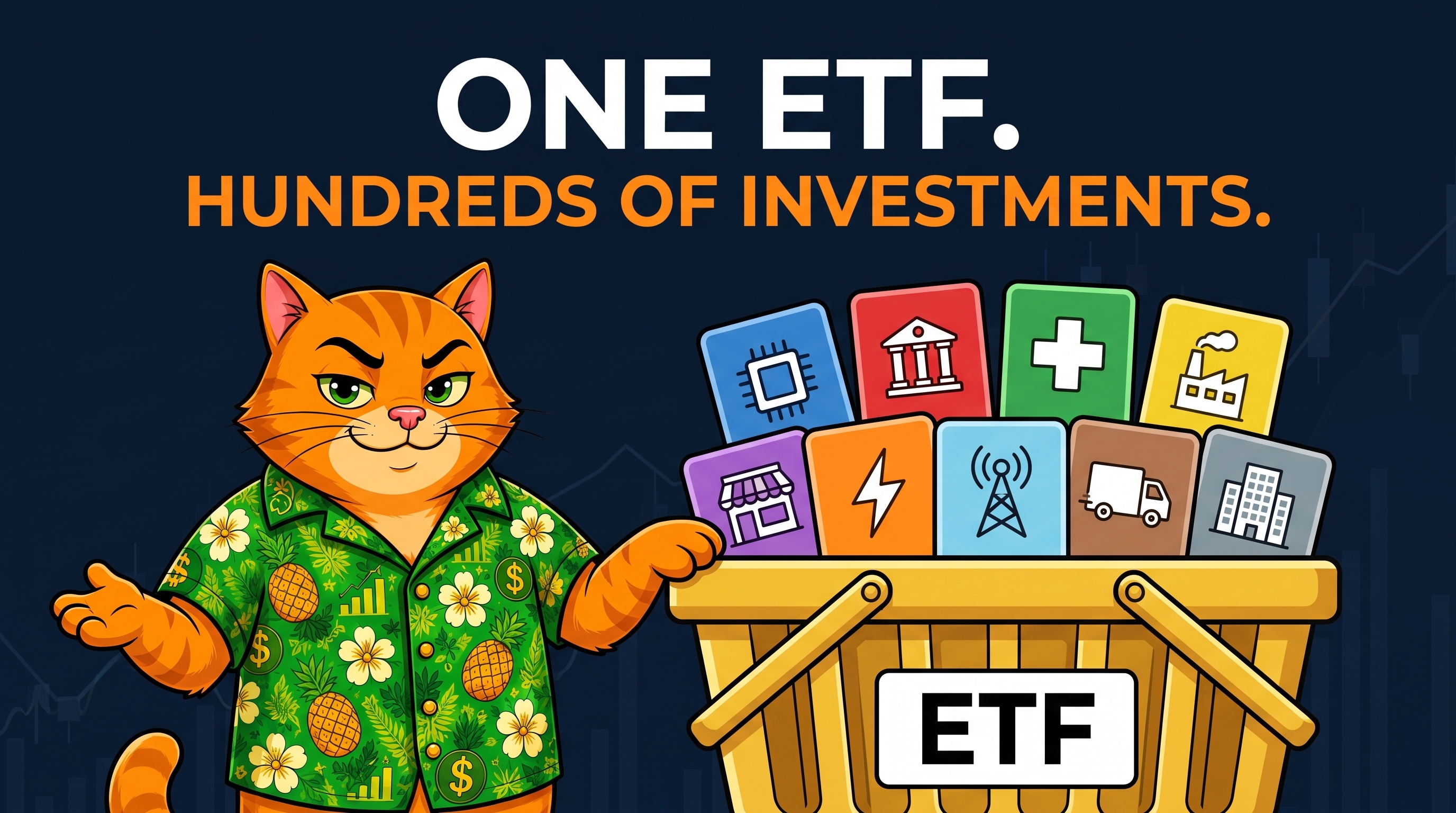
Say it out loud and it sounds like a metaphor. It isn't. When you buy one share of an S&P 500 ETF, you're not buying one company's stock wearing a trench coat — you're buying a tiny sliver of all 500 companies in that index, bundled by a fund manager into a single tradeable share. Apple, Microsoft, a bank, a hospital chain, a soda company — all in the same basket, all in the same purchase.
That matters because picking individual stocks means researching individual companies — their earnings, their debt, their competitors — one at a time, forever. An ETF hands you a whole sector, market, or strategy pre-built. You're not skipping the diversification. You're outsourcing the assembly.
As of June 2026, U.S.-listed ETFs held $15.78 trillion in combined assets — this isn't a niche product beginners stumbled into, it's where a huge share of the market already sits.
Jillian Opens Her First Brokerage Account
Jillian, a first-time investor, finally opened a brokerage account after months of putting it off. She sat down at her kitchen table, laptop open, ready to buy her first investment — and the list in front of her didn't just have stock tickers. It had things like VOO and VTI sitting right next to AAPL and TSLA, with no obvious explanation for why they belonged in different categories.
She clicked into VOO expecting a company profile. Instead: an index, hundreds of holdings, no single CEO, no single earnings call. That's an easy moment to either close the tab or buy something without really understanding what you own. Jillian read one more paragraph before deciding.
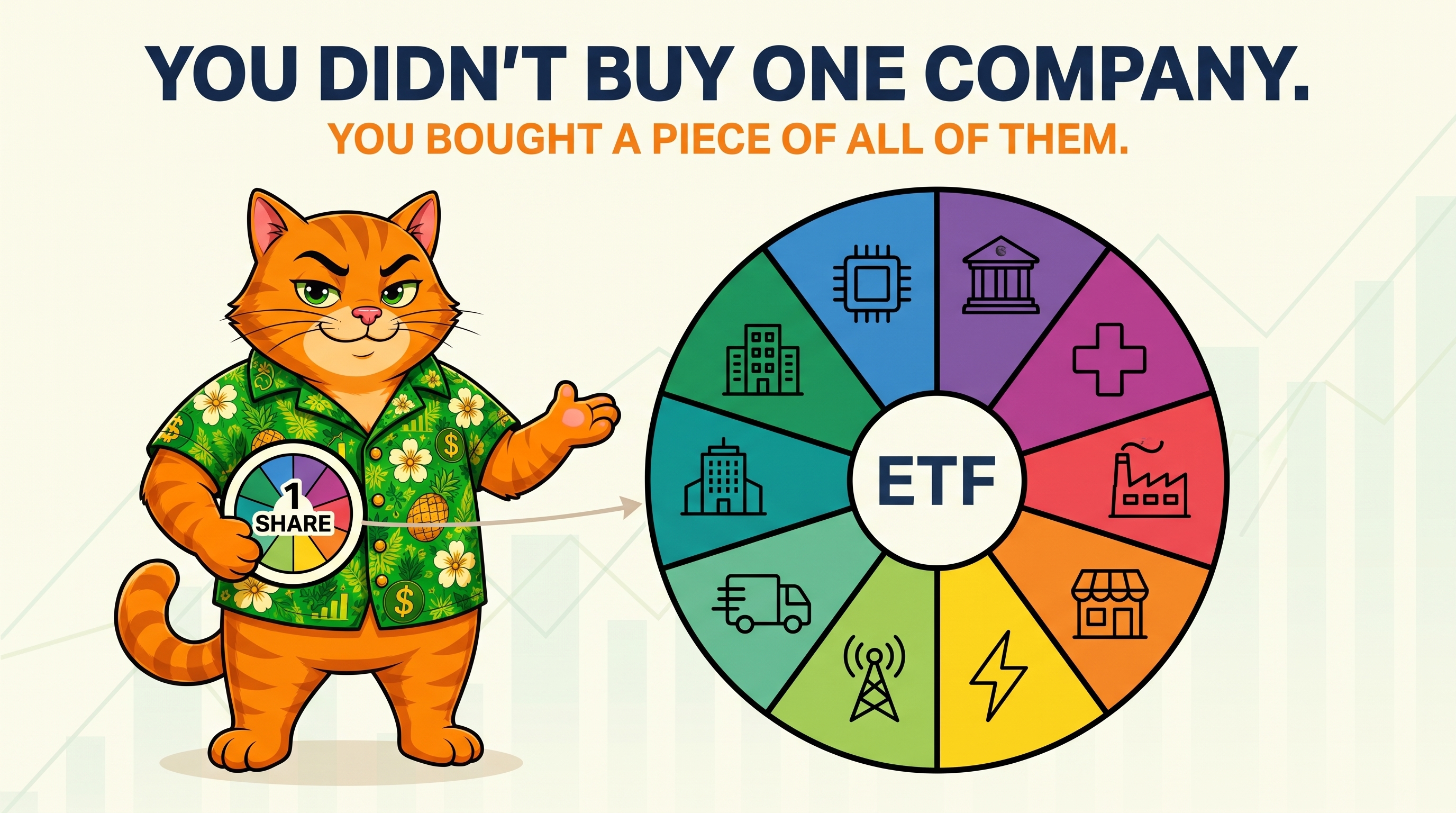
Chuck doesn't chase every mouse in the house one at a time — an ETF means one basket catches all of them at once.
ETF vs. Stock: Spread vs. Concentration
Buy one share of an individual stock and your money's fate is tied to one company. Buy a broad-market ETF and your money is spread across everything it holds. That's the entire trade-off: concentration versus spread.
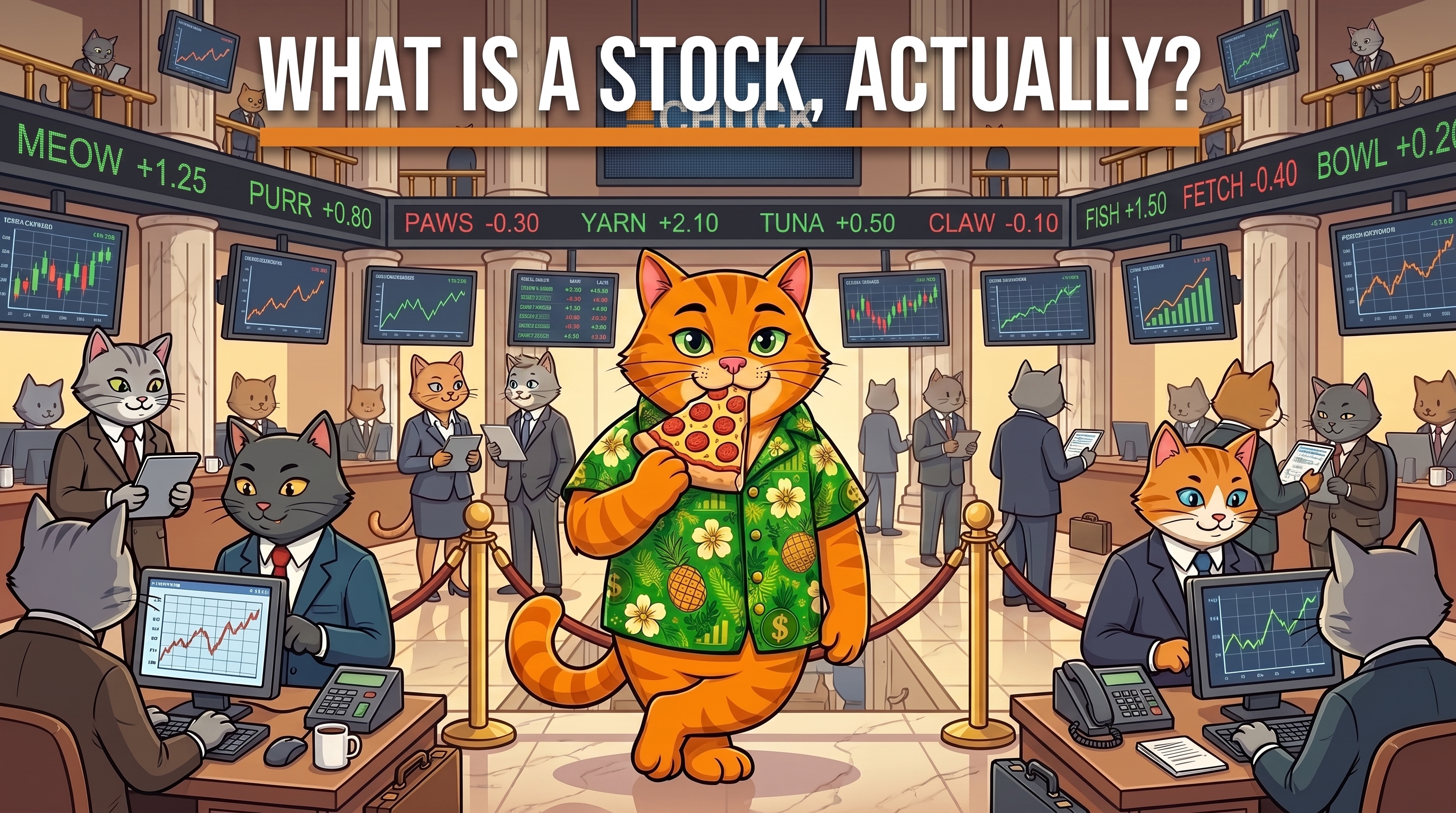
One bad earnings report can tank a single stock overnight. The same bad report barely moves an ETF that holds that company alongside 499 others. You give up the chance at outsized gains from picking the one company that 10x's — but you also give up the chance of picking the one that goes to zero. What Is a Stock, Actually? covers what you actually own when you buy a single company's shares, if you want the other half of this comparison.
ETF vs. Index Fund: A Structure vs. a Strategy
This is the distinction almost everyone gets tangled on, and it's worth being precise about it once: "ETF" tells you how the fund is packaged and traded. "Index fund" tells you how the fund chooses what to own. Those are two different questions, and a fund can answer both at once.
VOO is the clean example: it's an ETF (that's the wrapper — trades on an exchange all day, priced like a stock) and it's also an index fund (that's the strategy — it tracks the S&P 500). Same fund, two separate facts about it. But not every index fund is an ETF — plenty exist as traditional mutual funds instead, priced once a day after the market closes rather than trading live. And not every ETF is an index-tracker — a meaningful and fast-growing slice of the ETF market today is actively managed, meaning a manager is picking what's inside rather than mirroring a benchmark.
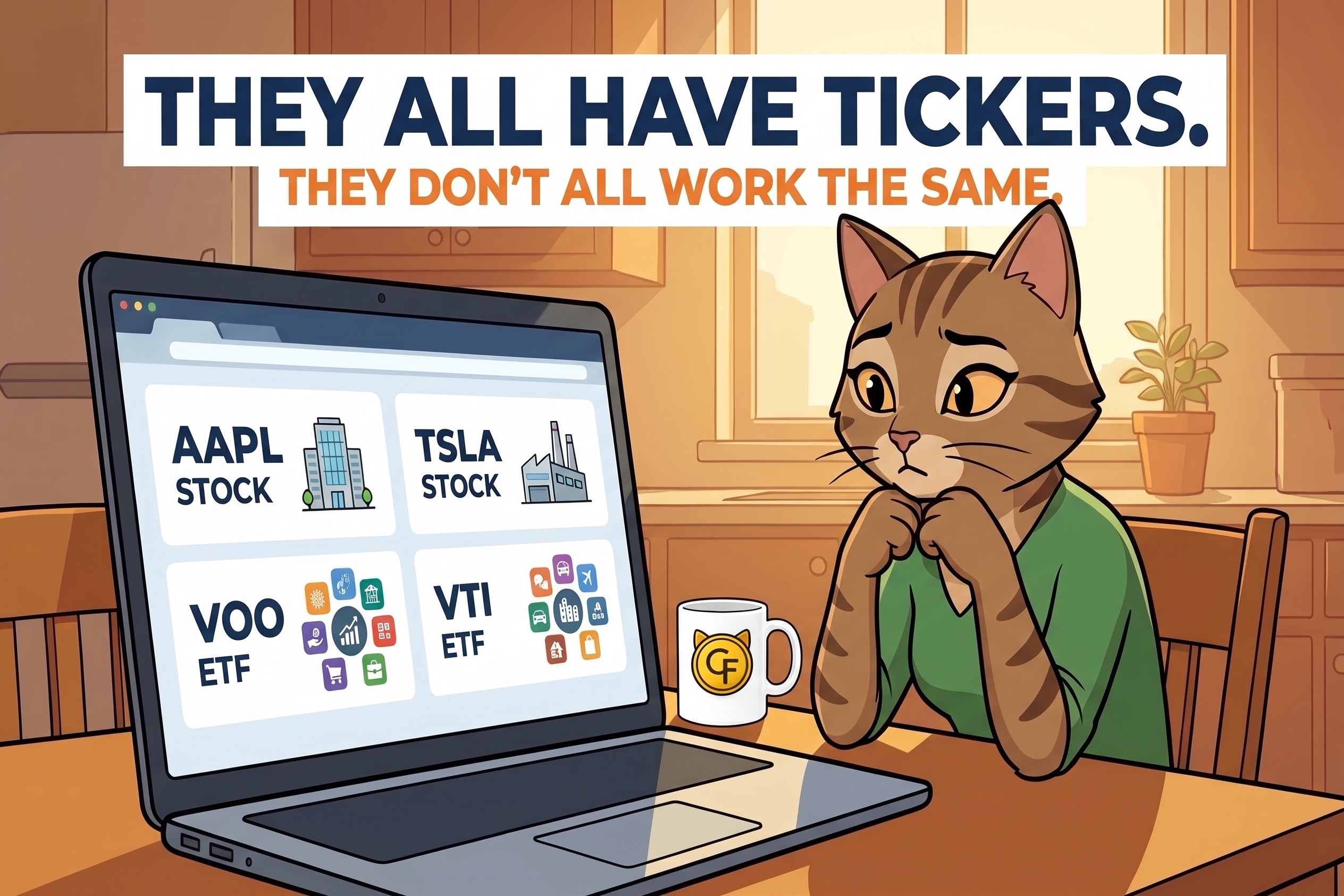
So when someone says "ETF vs. index fund" like they're opposites, they're usually mixing up the wrapper with the strategy. Ask two separate questions instead: how does this trade (ETF or mutual fund), and what is it trying to do (track an index, or something else)?
Why Broad-Market ETFs Are So Beginner-Friendly
Three reasons broad-market ETFs are usually where beginners land first:
Low cost. Most broad-market ETFs charge a tiny sliver of your investment annually to run — a fraction of what old-school actively managed funds charge. That fee is called the expense ratio, and it quietly determines how much of your return you actually keep. Expense Ratios Explained breaks down exactly how much that number costs you over time.
The ETF Basket Rule
ETF = a basket of investments (stocks, bonds, or both) that trades on an exchange like a single stock
Buy one ETF share and you own a slice of everything inside it — the S&P 500 version alone spreads your money across 500 companies for the price of one trade.
Instant diversification. One purchase, hundreds of companies — for the broad, index-tracking kind. You don't need $50,000 to own a piece of the entire market — you need one share.
No high minimum. ETFs generally don't impose the same fund-level minimum investments associated with some mutual funds. Depending on your brokerage, you may even be able to buy fractional shares — so you're not locked out even below one full share price.
The One Thing Beginners Get Wrong
Not all ETFs are equally safe, and "it's an ETF" is not, by itself, a safety label. An ETF tracking the S&P 500 owns 500 established companies across every sector. A leveraged ETF or a single-sector ETF can be dramatically more volatile than the market as a whole — some are built to move 2x or 3x as fast as their benchmark, in both directions. The word "ETF" describes the wrapper, not what's inside it. Always check what the ETF actually holds before assuming it behaves like the boring, diversified kind.
The Part Chuck Wants You To Actually Do
Before you buy an ETF, look inside it.
Pull up the fund's holdings and see what you actually own. Broad market? One sector? Leveraged? If you can't tell what's in the basket, don't buy the basket.
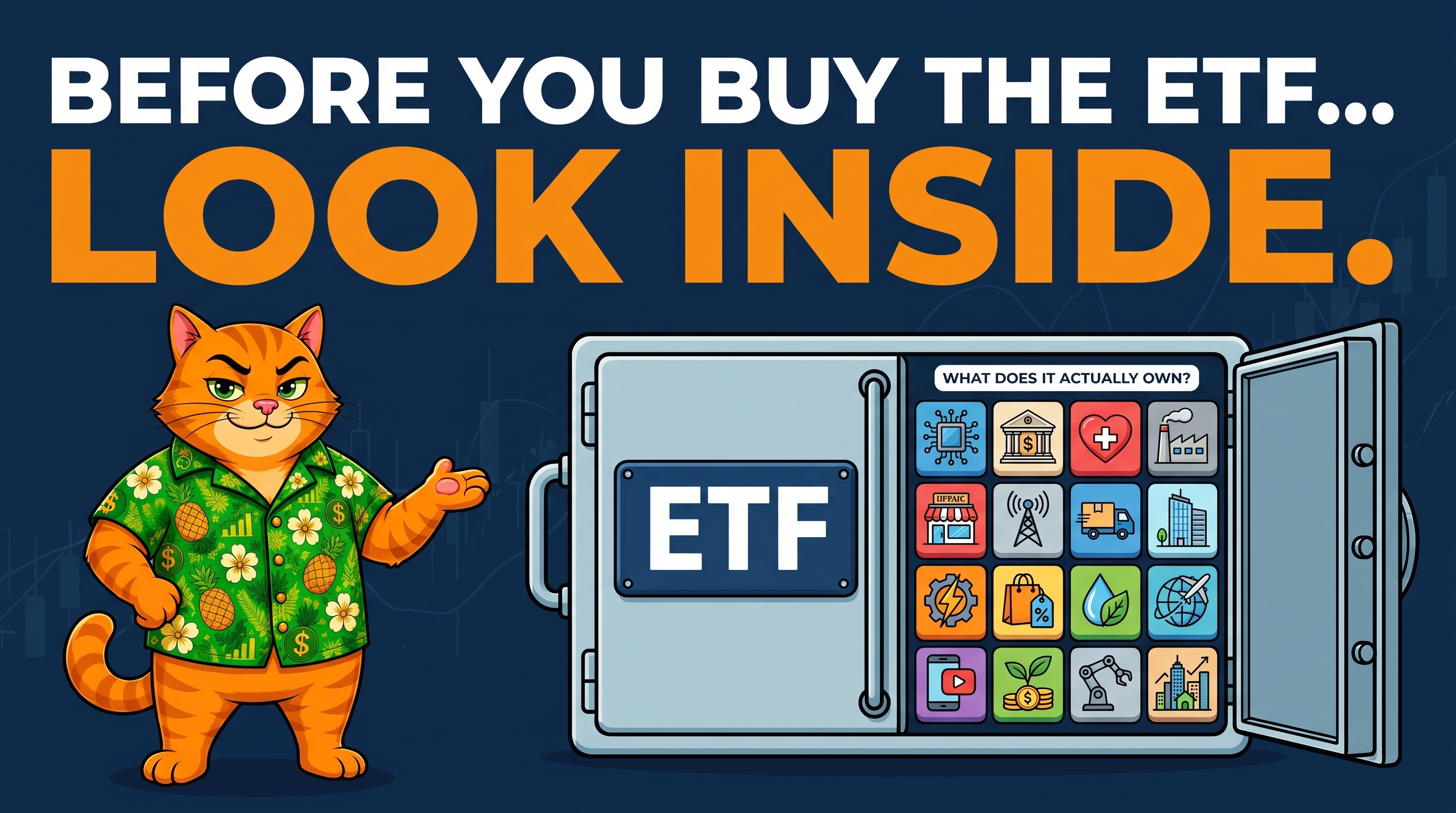
Know what you own before you own it.
Sources: