The Two Numbers That Actually Move
Your FICO score weighs two things that a card closure touches directly: your credit utilization ratio (roughly 30% of your score) and your average age of accounts (roughly 15%).
Utilization is simple — it's how much of your total available credit you're actually using, added up across every card you have open. Average account age is exactly what it sounds like — how long, on average, your credit accounts have existed.
Closing a card doesn't touch either of these directly. It touches the inputs that calculate them. That distinction matters more than it sounds like it should.
The Utilization Trap
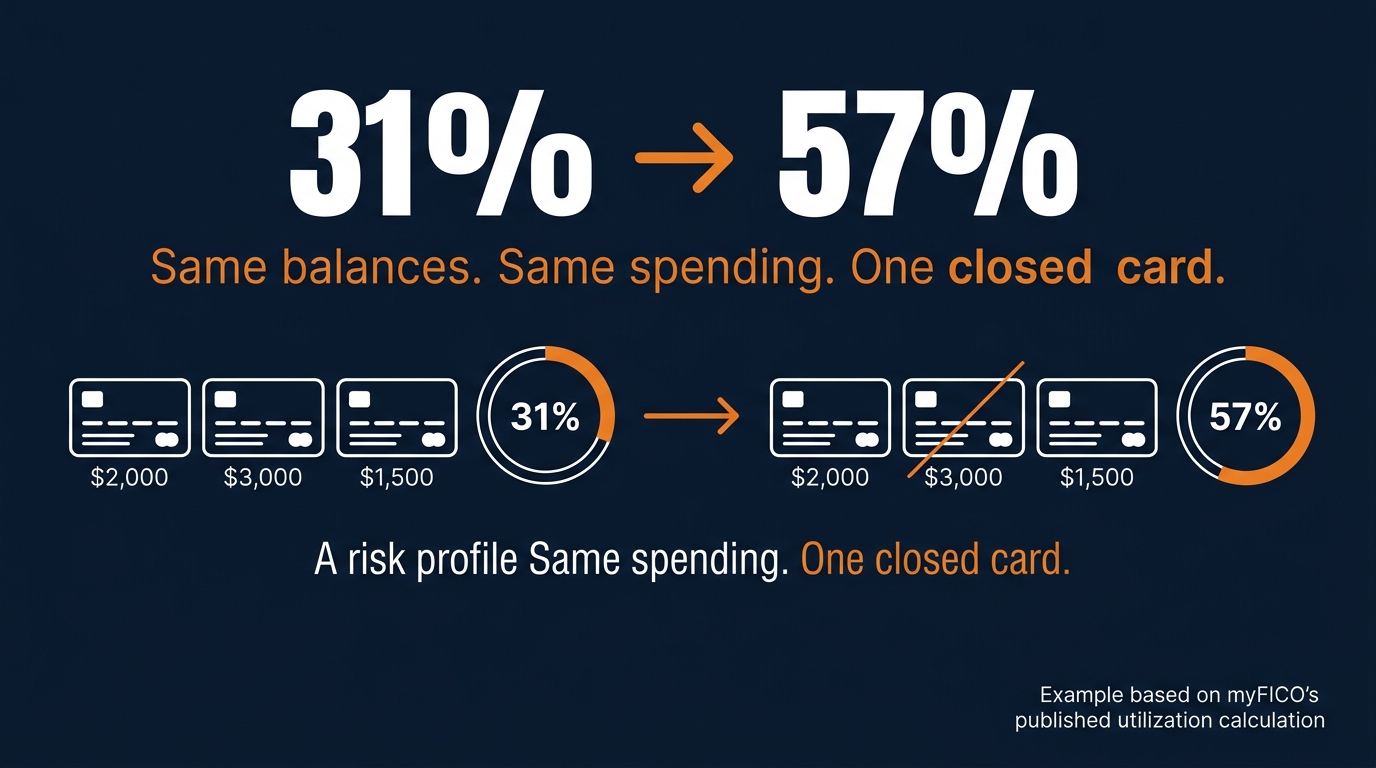
Here's a real example, straight from FICO's own numbers. Say you have three cards: one with a $500 balance and a $2,000 limit, one completely unused with a $0 balance and a $3,000 limit, and one with a $1,500 balance and a $1,500 limit.
Add it up: $2,000 in total balances against $6,500 in total available credit. That's about 31% utilization — not great, not terrible.
Now close that unused card, the one with the $3,000 limit, because it's just sitting there doing nothing. Your balances haven't changed. Your spending hasn't changed. But your available credit just dropped to $3,500 — and your utilization jumped to about 57%.
Nothing you did wrong. You just removed the ceiling, and the ratio did what ratios do.
The Account-Age Myth
Here's the part almost everyone gets backwards: closing a card does not immediately shorten your credit history.
Closed accounts in good standing typically stay on your credit report for up to 10 years, and they keep counting toward your average account age the entire time they're there. Your 8-year-old card doesn't stop being 8 years old the moment you close it.
The real risk is delayed, not immediate. Once that closed account eventually drops off your report — years later — your average age can take a real hit at that point, especially if you don't have other old accounts to pick up the slack. It's not a today problem. It's a someday problem, and it's easy to forget about because nothing visibly happens right away.
When Closing Actually Makes Sense
None of this means never close a card. Closing makes sense when the annual fee outweighs what you're actually getting from it, when you no longer use the card at all, or when the card is a genuine temptation you're at risk of overspending on. If a card is actively working against you, the utilization math above is a cost worth paying.
Alternatives to Closing
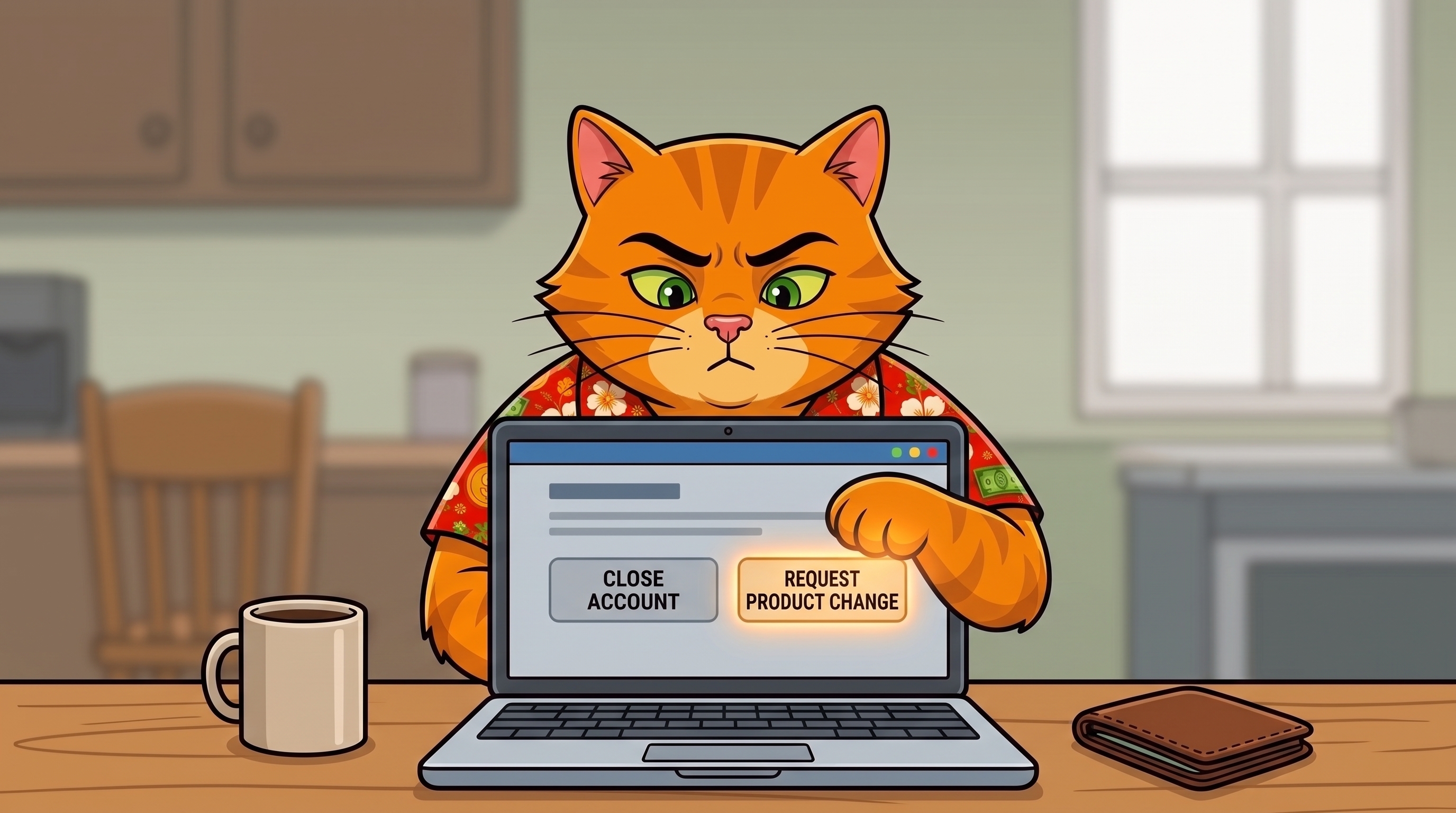
Before you close anything, check whether you can downgrade instead. Most issuers let you request a product change — swapping your card for a no-annual-fee version of the same account — without closing it. Same account number, same open date, same account age. You keep the history, you lose the fee.
The Utilization Trap
Closing an unused card with a $3,000 limit can push your utilization ratio from 31% to 57% overnight — same spending, same balances, nothing else changed.
If your score sits anywhere in the high 600s or 700s, a jump like that can cost real points fast, and it tends to happen right when you're about to apply for a mortgage or auto loan — the worst possible timing.
If the card has no fee and you just don't use it, put one small recurring charge on it — a streaming subscription, a phone bill — and set it to autopay. That keeps the account active without you having to think about it, and it keeps its age and limit working in your favor.
If You're Closing It Anyway
If you've decided to close it regardless, a few things blunt the damage. Pay down balances on your other cards first, so the utilization spike from losing this card's limit lands on a smaller number. If you're planning to open a new card, do it before you close the old one — though be aware that a new account brings its own hard inquiry and briefly lowers your average age too, so it's a trade, not a free fix. Consider asking one of your remaining cards for a credit line increase to help offset the limit you're about to lose. And time it — don't close a card in the months right before a mortgage or auto loan application, when your score needs to be at its most stable.
The Thing People Forget
Authorized-user cards count toward your account age too — yours, or someone else's if you're an authorized user on their card. If you get removed from someone else's card, or if you remove an authorized user from yours, that account's age and limit stop counting for whoever lost access. It's the same utilization and age math as closing your own card, just triggered by someone else's decision instead of yours.
The Part Chuck Wants You To Actually Do
Before you close anything, check two numbers: what your utilization ratio would look like without that card's limit, and how that card's age compares to your other accounts. If closing it would spike your utilization past 30%, or if it's your oldest account by a wide margin, a downgrade is almost always the better move.
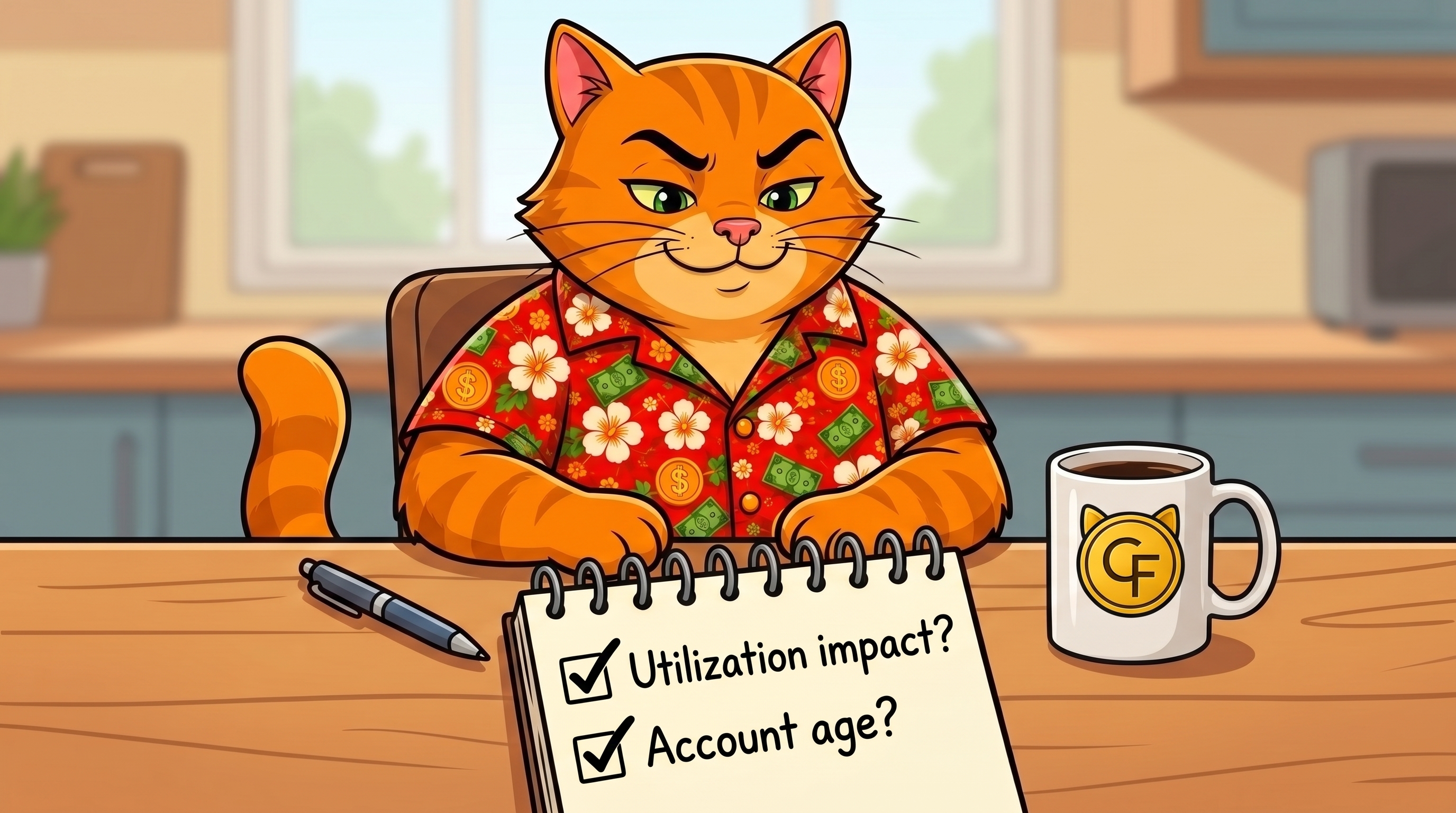
You don't need to keep every card forever out of fear. You just need to know what you're actually trading before you cut it loose.
Chuck's next breakdown covers whether adding your kid as an authorized user is actually worth it — the credit head-start strategy, and what it really does to their score before they've ever spent a dollar.
Sources: