What Actually Matters
The number of cards you hold touches two things that actually affect your credit: your utilization ratio and your average account age. More cards generally means more total available credit, which can help utilization — but only if you're not carrying it as an excuse to also carry more balances. That's not the focus here, though. The real question isn't what number is "right" — it's what your actual wallet says about how you manage it.
Scotty's Wallet
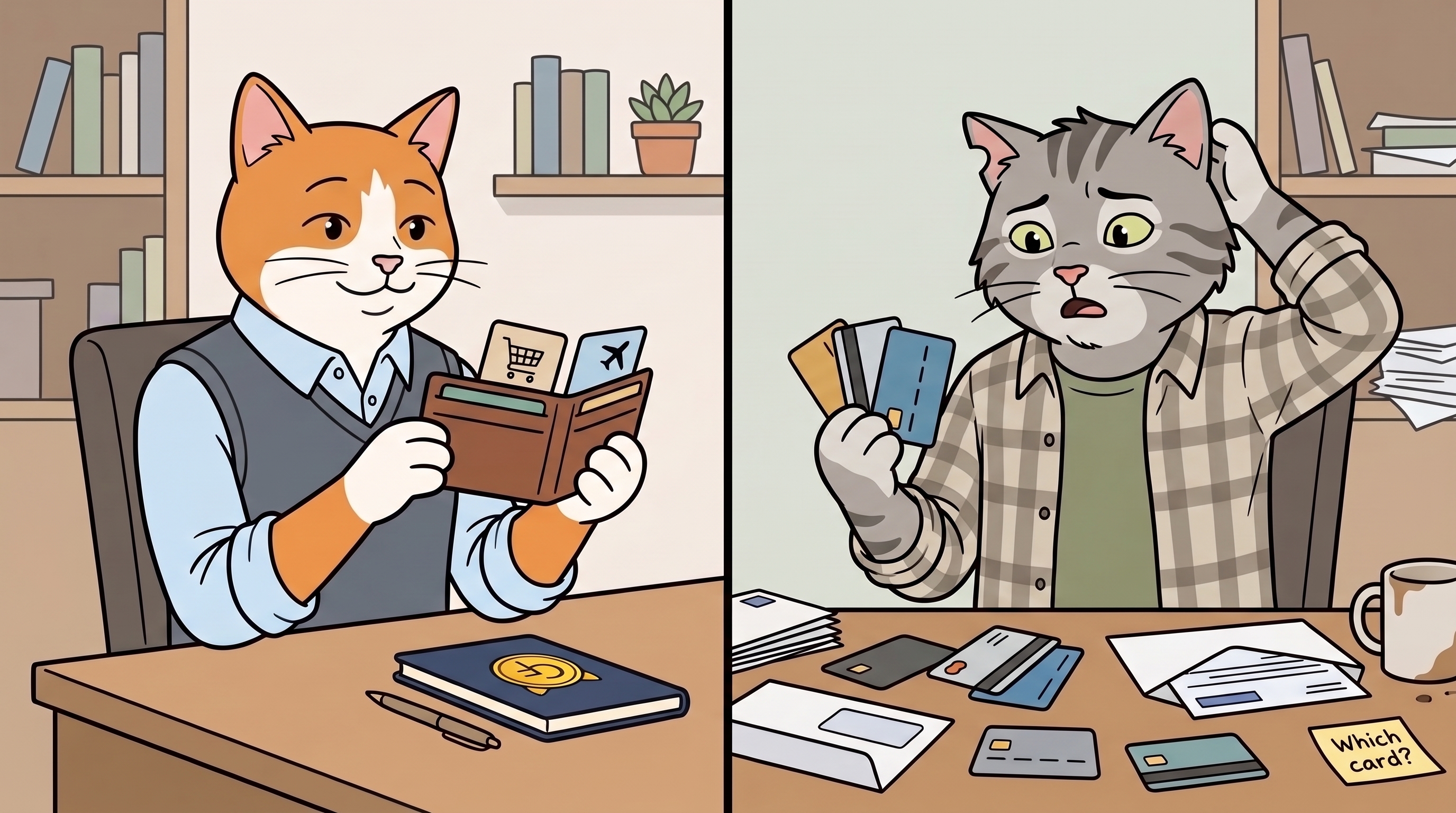
Scotty carries two cards. One's a flat cash back card he uses for gas and groceries. The other's a travel rewards card he uses for dining out and his handful of subscriptions. That's it. Every card in his wallet has a specific job, he knows what it's for without thinking, and tracking two due dates a month takes about ninety seconds.
Devin's Wallet
Devin carries ten cards, accumulated over several years chasing sign-up bonuses. He's never canceled or downgraded a single one. Three of them carry annual fees he'd genuinely forgotten were still charging him — together, about $167 a year, for perks he stopped using a long time ago. A couple of the cards haven't been touched in over a year, which puts them at real risk of the issuer closing them without asking — the same account-age hit as closing a card yourself, just not on Devin's timeline.
The Autopilot Tax
Devin is paying $167 a year across three cards in annual fees for benefits he stopped using years ago.
That's not a rate or a percentage — it's cash leaving his account every year for cards that aren't earning their keep, purely because nobody ever canceled them.
On paper, Devin's utilization ratio actually looks fine — ten cards means a lot of total available credit relative to what he's spending. But last month he missed a payment. Not because he couldn't afford it — because keeping track of ten different due dates finally got away from him.
What the Contrast Actually Teaches
More cards isn't automatically bad for your score. Devin's utilization proves that. The real cost of Devin's wallet isn't a credit-score problem — it's a management problem that eventually becomes a credit-score problem, the moment a payment actually gets missed.
Scotty isn't "right" because two is some kind of correct number. He's right because every card he holds is earning its place, and he can actually keep track of all of it without effort. If Scotty had four cards and could say the same thing, four would be exactly as right as two.
The Real Question to Ask Instead
Stop asking "how many cards should I have." Ask this instead: does every card in your wallet earn its place, and can you actually keep track of it without a system falling apart. That's the question that predicts whether your cards are helping you or quietly working against you — not a head count.
A Simple Gut-Check
Run this on your own wallet right now:
- Can you say what each card is actually for, without looking it up?
- Do you know every card's due date without checking an app first?
- Has every card been used at least once in the last 12 months?
- For any card with an annual fee — are you getting more value out of it than the fee costs?
If you answered "no" to any of these, that's the actual signal worth paying attention to. Not the number sitting in your wallet.
The Part Chuck Wants You To Actually Do
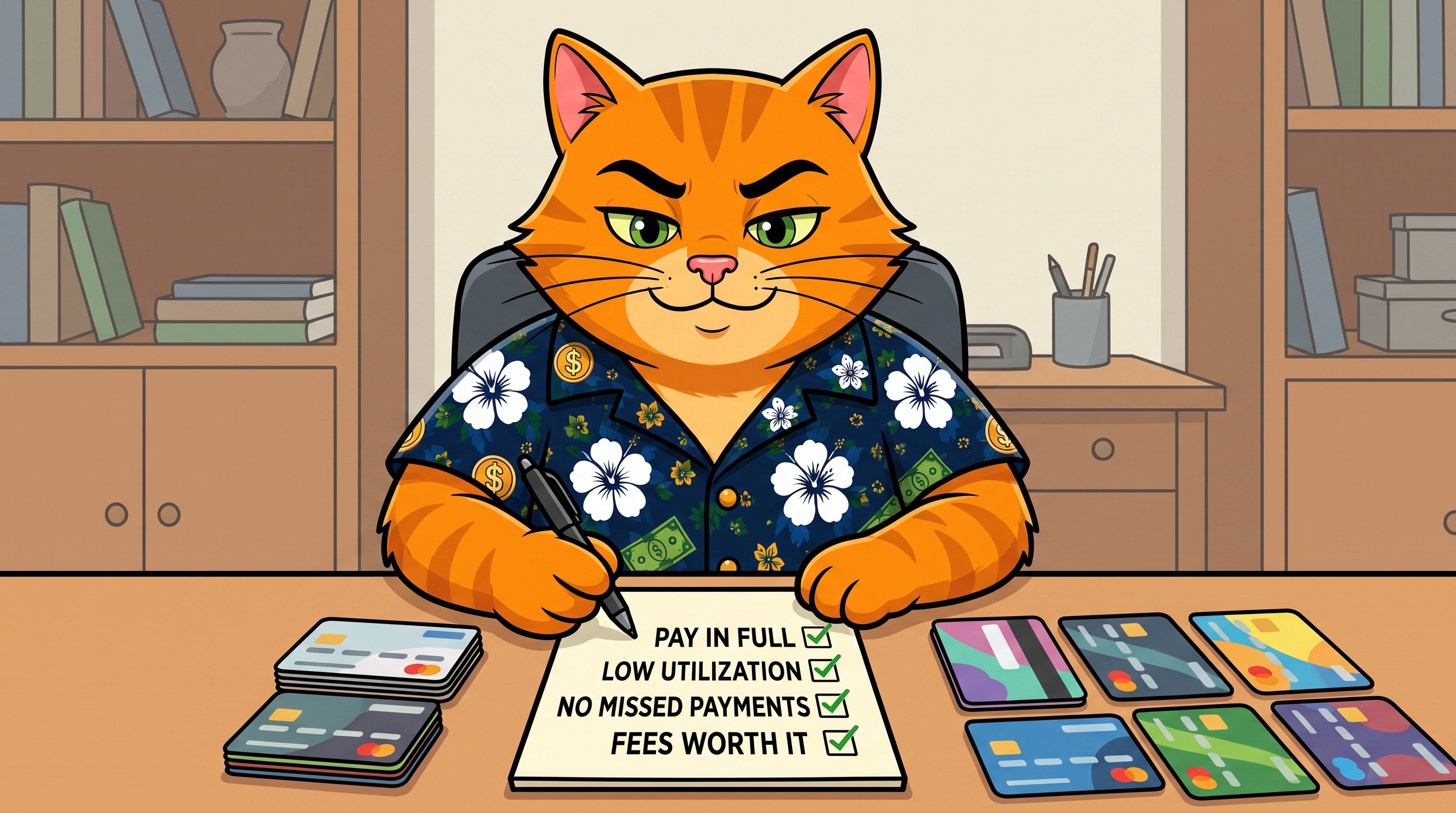
Go run the gut-check above on your own cards, one at a time. If a card fails it, that's worth a real decision — not because the number's too high, but because that specific card stopped earning its place. If you're actually considering closing one, read this first — closing a card doesn't do what most people assume.
There's no fixed right number. It moves with how much you actually use each card, how closely you track what you're carrying, and whether your utilization stays where it should. Get those right, and the number stops being the question worth asking.
Sources: