Checking and Savings Are Built for Different Jobs
Checking is for spending — bills, groceries, the stuff moving in and out of your account every week. Savings is for money that isn't being touched. Those are different jobs, and keeping too much in checking to cover the wrong job has a quiet cost: checking accounts typically pay close to 0% interest, while a decent high-yield savings account is currently paying somewhere around 4% APY. Every dollar sitting in checking beyond what it's actually there to do is a dollar not earning that difference.
Lacey and Stella, Same $15,000
Lacey and Stella each have $15,000. Same amount, same starting point — only where they keep it differs.
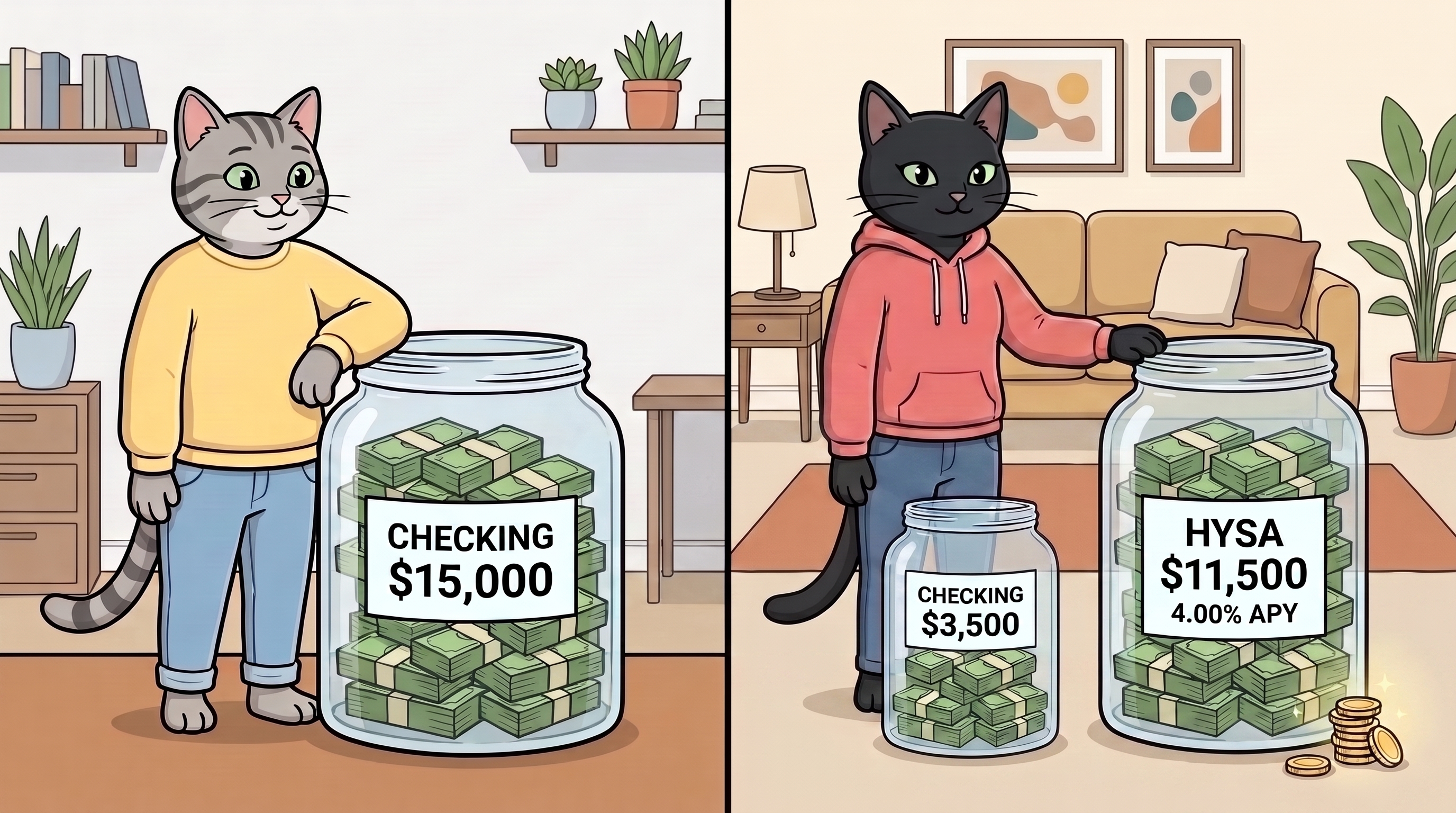
Lacey keeps all $15,000 in checking. It feels safer that way — a big number sitting right where she can see it. Stella keeps about $3,500 in checking, roughly a month of her expenses, and moves the remaining $11,500 into a high-yield savings account earning close to the current top rate of 4.00% APY.
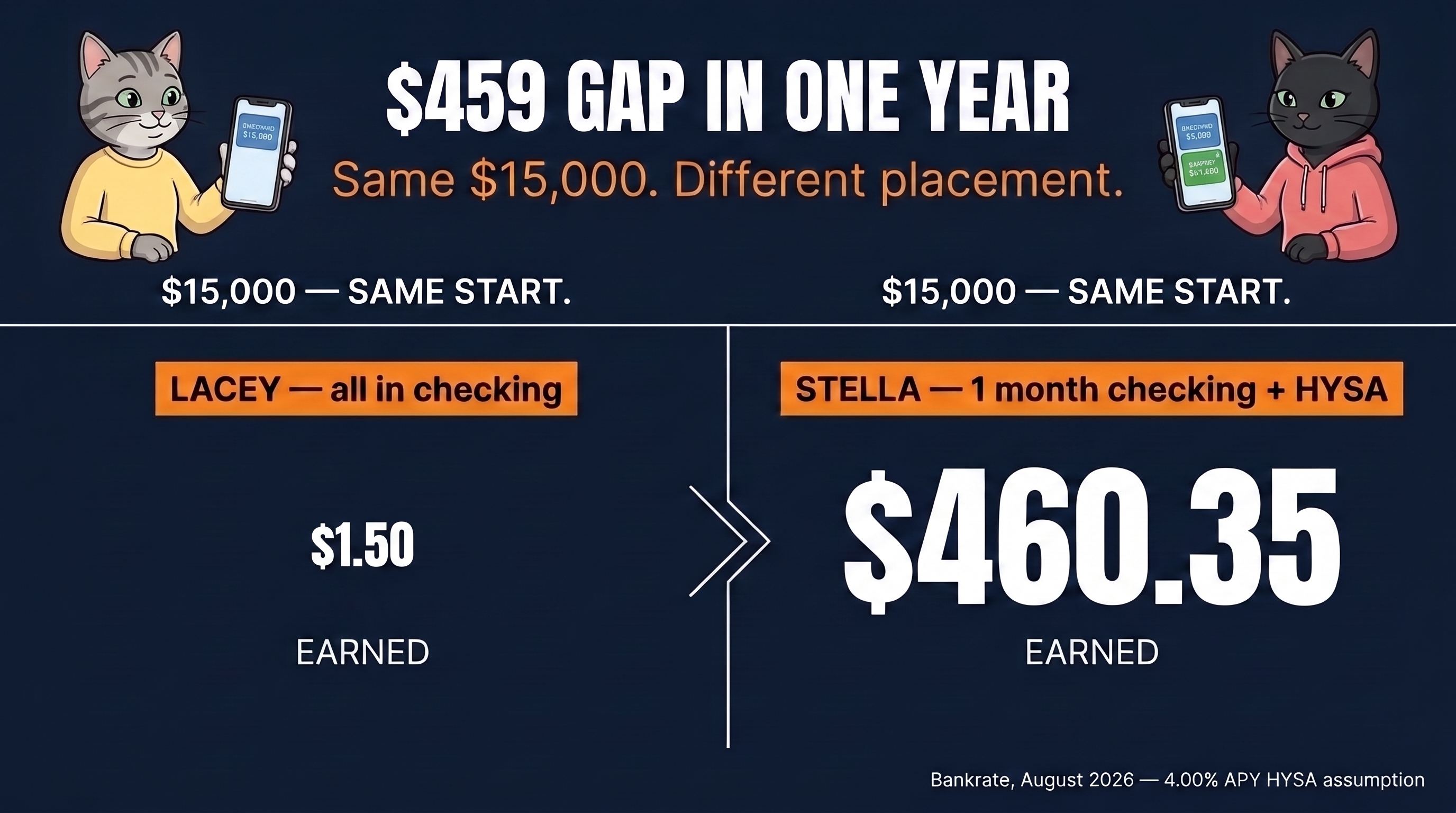
At the end of one year, Lacey's $15,000 has earned about $1.50 — checking accounts typically pay close to 0.01% APY. Stella's split earns about $460.35 combined. Same total money, same year, a gap of roughly $459 — created entirely by where the money was sitting, not by anything either of them did differently with their spending.
The Idle Cash Gap
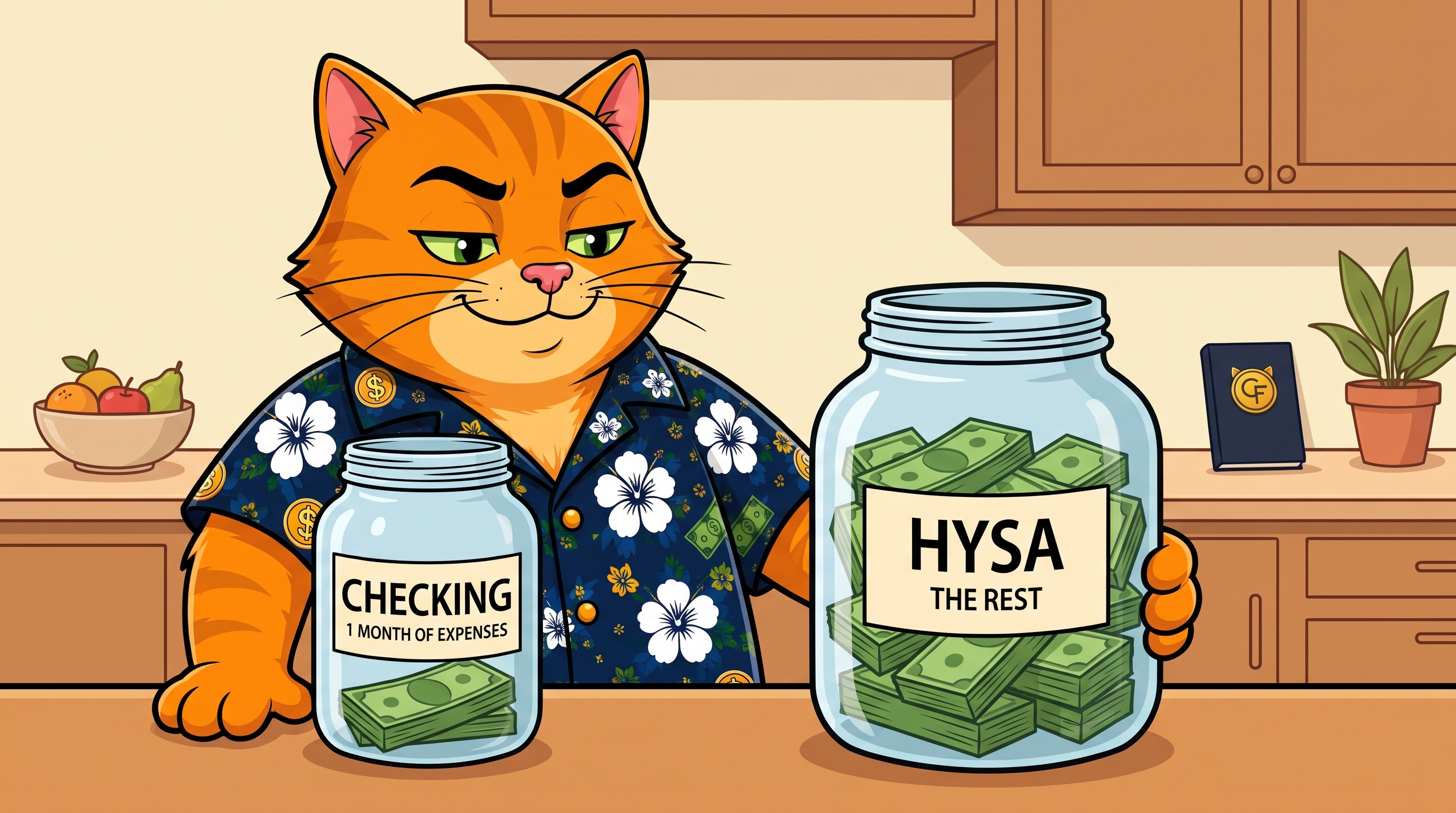
Same $15,000. One version keeps roughly 1 month of expenses in checking and moves the rest into a 4.00% APY HYSA. The other keeps it all in checking earning close to 0%.
Over one year, that's about $460 in interest versus about $1.50 — roughly $459 left on the table for no reason other than where the money was sitting.
Why People Over-Keep in Checking
The instinct makes sense. A bigger checking balance feels like a buffer against overdrafts, surprise bills, or just running short before payday. That's a reasonable thing to want.
The problem isn't the desire for a buffer — it's the size of it. A buffer big enough to cover genuine emergencies doesn't need to sit in the account that pays nothing. It just needs to be reachable, and savings — especially a HYSA linked to the same bank — is usually just as reachable as checking, typically within a day or two.
The Simple Framework
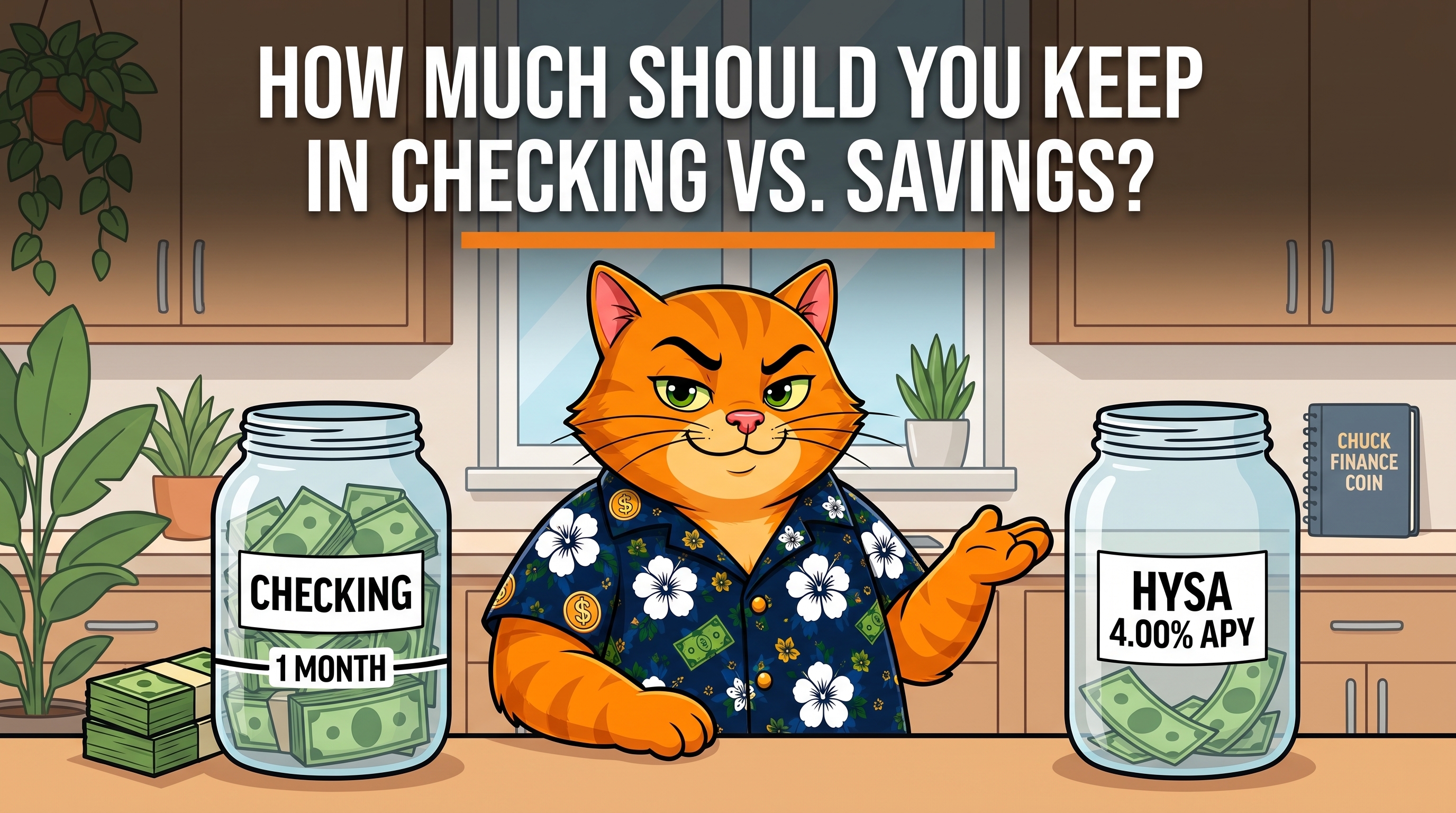
Keep about 1 month of actual expenses in checking. Everything else — the emergency fund, the extra cushion, the money with nowhere urgent to go — belongs in savings, earning something instead of nothing. Be Stella, not Lacey.
When to Break the Rule
This isn't one-size-fits-all. Irregular income means a bigger checking buffer makes sense, since the "1 month" baseline gets unpredictable. A large purchase coming up in the next few weeks might be worth holding closer to checking rather than moving it and moving it back. Self-employed income, with its own timing and tax-withholding quirks, often needs a wider buffer too. The 1-month rule is a strong default, not a law.
The Part Chuck Wants You To Actually Do
Check the actual balance sitting in checking this week. Compare it to roughly 1 month of real expenses — not a guess, the actual number. If it's a lot more than that, move the difference into savings. Keep an amount in Checking that is comfortable and works best for you while the rest grows safely in Savings.
Sources: