What a HYSA Actually Is
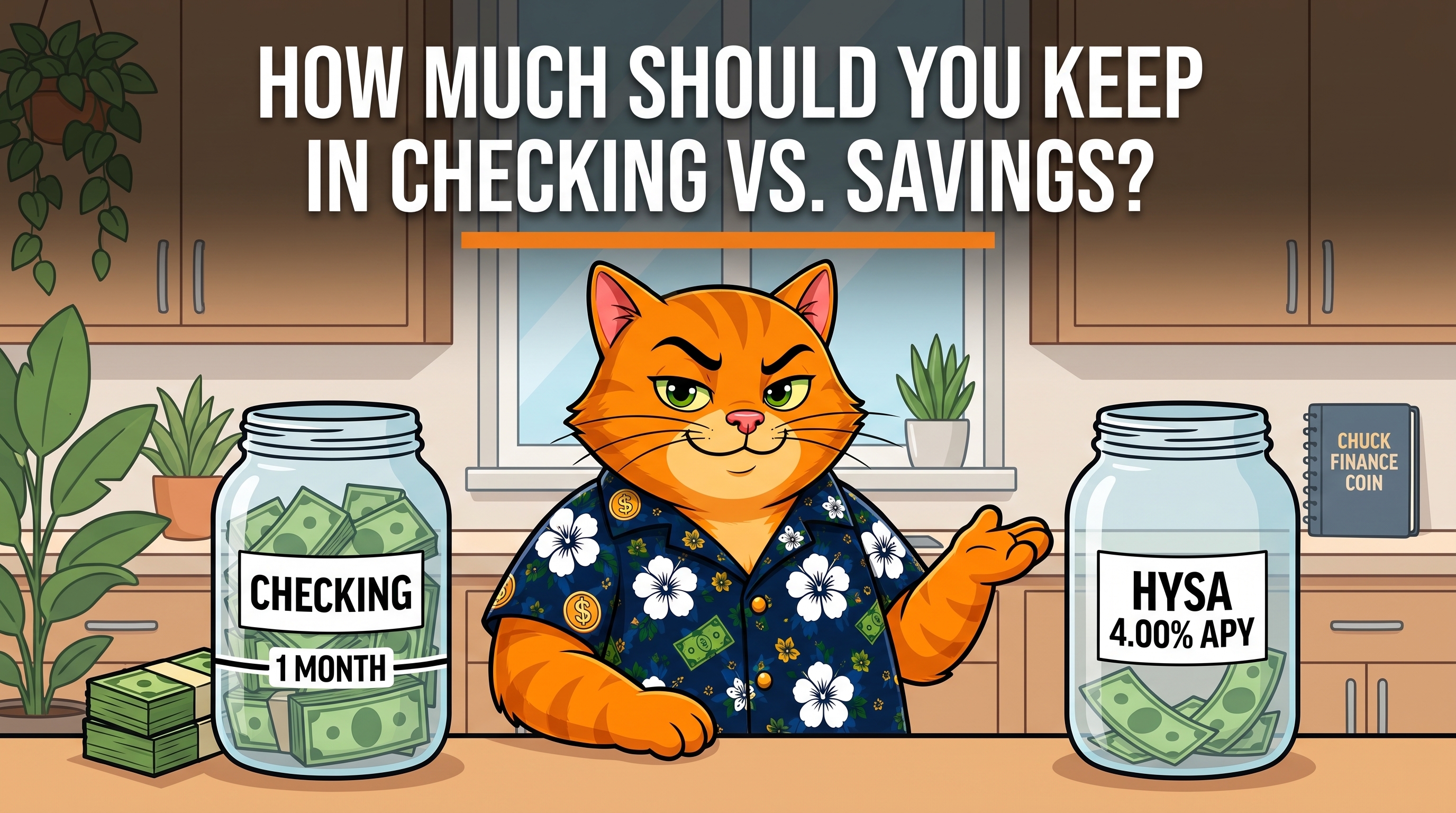
A High-Yield Savings Account (HYSA) is a savings account, usually offered by an online bank, that pays a meaningfully higher interest rate than a traditional savings account at a brick-and-mortar bank. Same basic product — a place to hold cash and earn interest on it — just paying a lot more for the privilege of holding your money. That's the whole definitional gap. The rest of this post is about whether that gap still matters enough to bother.
The Wrong Question vs. the Right One
Here's the actual framework: the comparison that matters is not today's HYSA rate against last year's HYSA rate. It's today's HYSA rate against what your money is earning right now, sitting wherever it currently sits. If your money is earning close to nothing where it is, a HYSA paying meaningfully more is still worth it — regardless of whether that HYSA used to pay even more. The rate falling doesn't erase the gap. It just changes its size.
Maya's Math
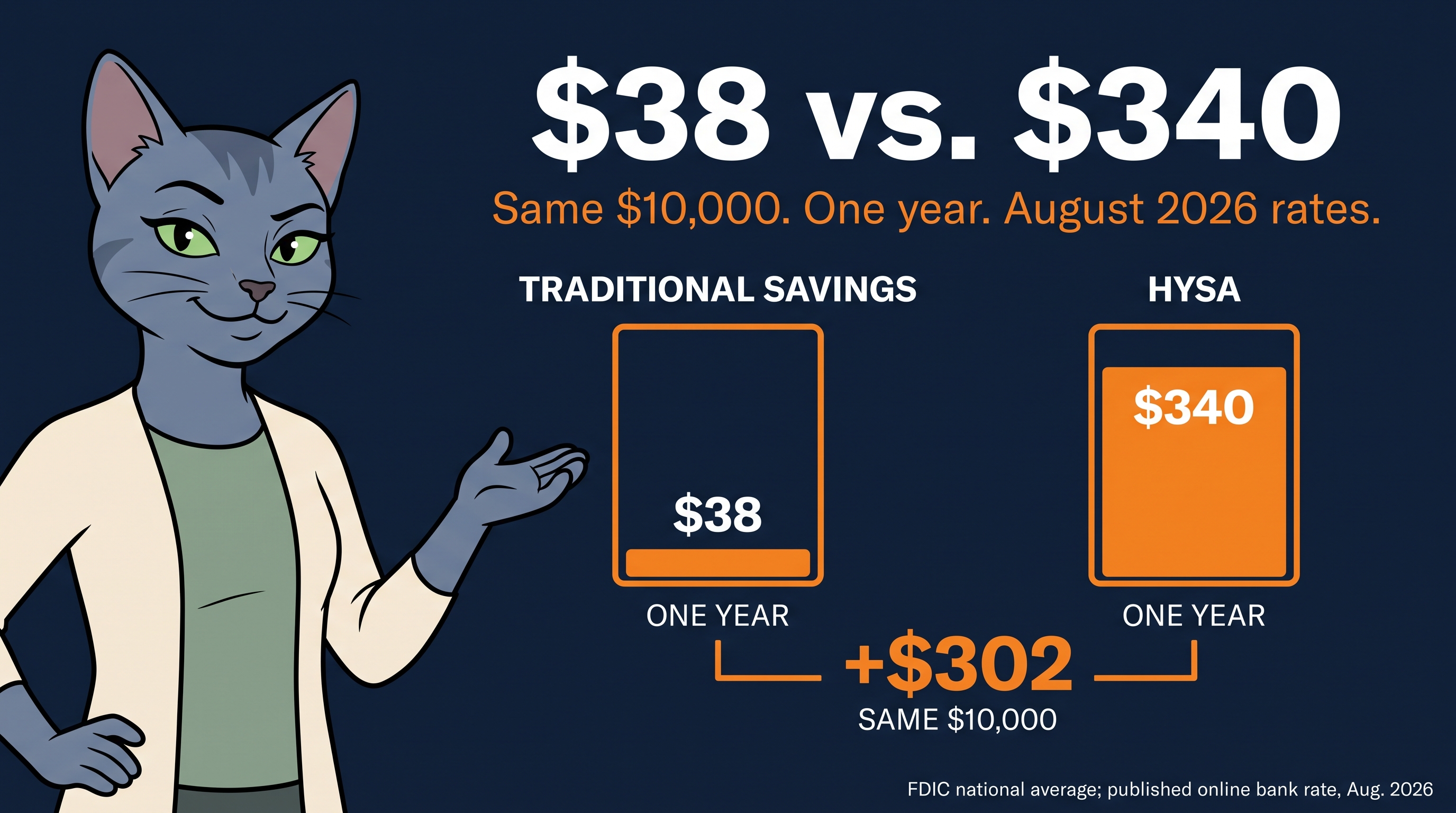
Maya has $10,000. Here's what it earns over one year in two places, using verified, dated rates as of August 2026 — illustrative math, not a prediction of future returns:
- Traditional savings account, at the Federal Deposit Insurance Corporation's (FDIC's) national average rate of 0.38% Annual Percentage Yield (APY): roughly $38 in a year.
- A high-yield savings account, at 3.40% APY — the published Online Savings Account rate at Marcus by Goldman Sachs as of August 26, 2026, used here purely to run real math with a real, currently verifiable number, not as a recommendation of this or any other specific account: roughly $340 in a year.
That's a $302 difference, on the same $10,000, doing nothing except moving it. Actual HYSA rates vary by bank and change over time — this is one real, dated data point, not a ceiling or an average — but even a HYSA paying a point less than this example still leaves a gap worth hundreds of dollars a year on Maya's balance. That's the number the "did I miss the window" question is actually about.
Why Rates Fell — And Why That Doesn't Change the Math
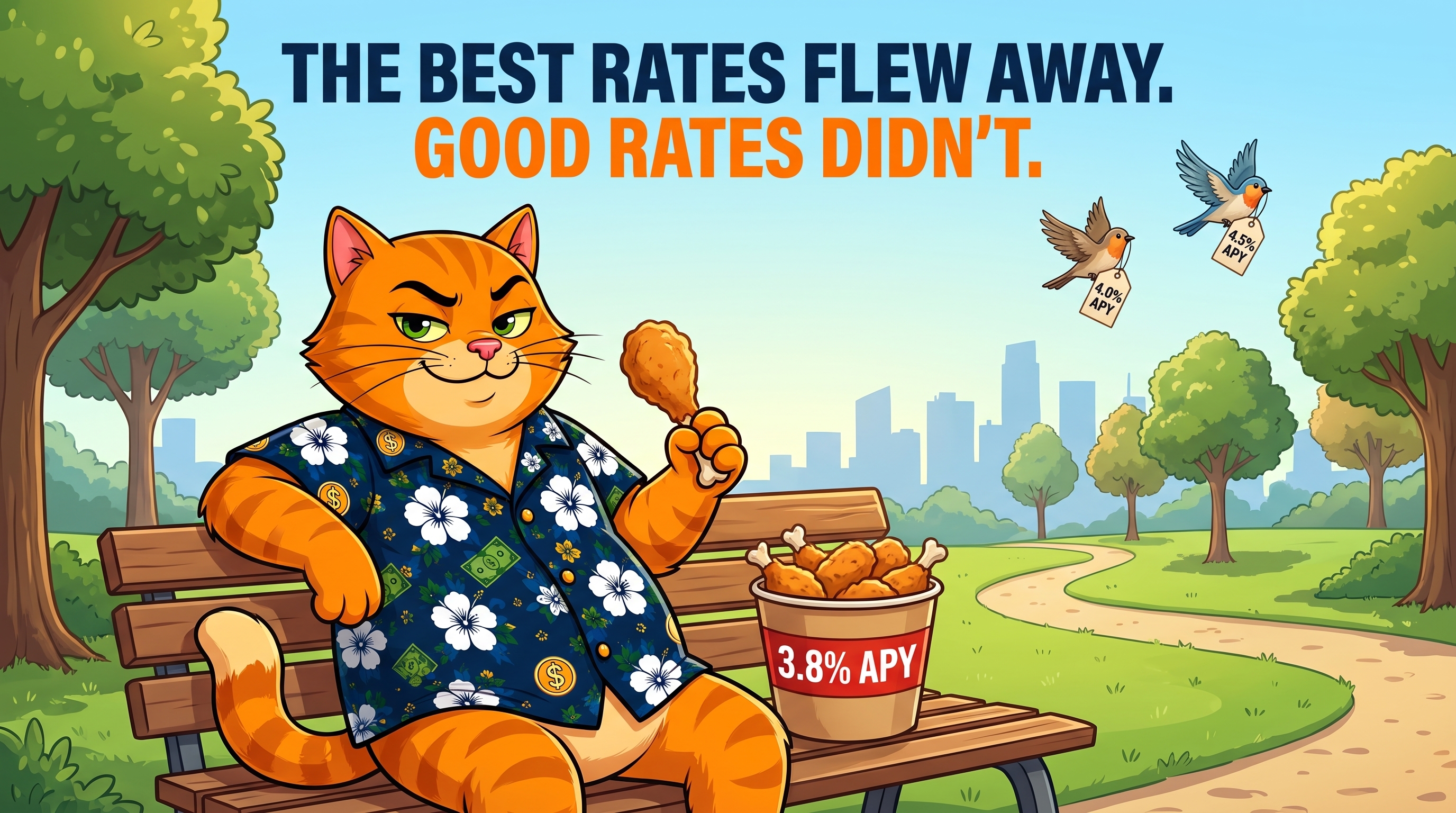
HYSA rates are heavily influenced by the broader interest-rate environment, including Federal Reserve policy. The Fed cut its benchmark rate six times between late 2024 and the end of 2025 — about 1.75 percentage points total — after holding it at a multi-year high through most of 2023 and 2024. HYSA rates followed that decline down from highs closer to 5% to a few percentage points now. Since the start of 2026, the Fed has held rates steady at every meeting, including July — the recent decline has leveled off, not continued.
The FDIC's national average savings rate — which is weighted toward the biggest banks, since they hold most deposits — barely moved through any of this. It's sat at roughly 0.38% for over a year, through both the HYSA rate's decline and its recent plateau. Big banks were never competing hard for savings deposits, so their rates didn't have far to fall, and the Fed cutting doesn't pressure them to move much either. The gap between the two narrows somewhat as HYSA rates fall — it doesn't close, because the traditional-bank side was never moving much to begin with. The question is always the size of the gap, not the direction of the HYSA rate by itself.
What Makes a HYSA Worth Evaluating
Not a list of specific accounts — the characteristics worth understanding about any HYSA before you evaluate one:
FDIC insurance. A HYSA at an FDIC-insured bank is covered up to $250,000 per depositor, per bank, per ownership category — the exact same protection as a traditional savings account. This isn't a riskier product; it's the same insured deposit, paying more.
Rate variability. The APY on a HYSA isn't locked in. It can move up or down with broader interest rates, sometimes with little notice. The rate you open the account at isn't guaranteed to be the rate you have next year.
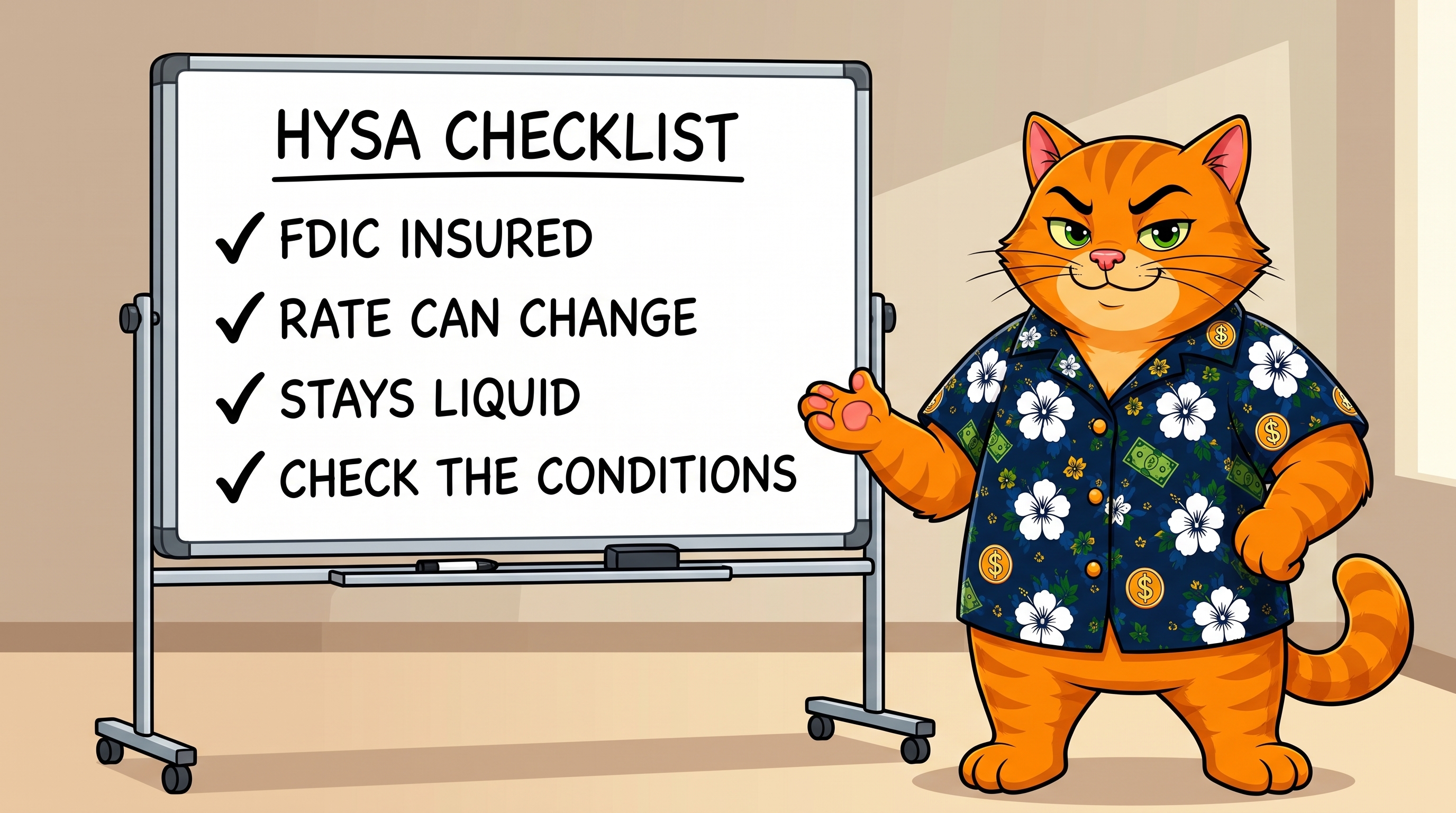
Liquidity. Your money stays accessible — unlike a Certificate of Deposit (CD), there's no penalty for withdrawing it. That's part of what makes it a savings account and not a locked-term investment.
Account conditions. Some HYSAs require a minimum balance, a certain number of monthly deposits, or a linked checking account to earn their advertised rate. Read the actual conditions before assuming the headline APY applies to your situation.
When a HYSA Might Not Be the Right Move
One honest exception worth naming, and one adjacent question worth pointing elsewhere:
The Compare-to-Now Rule
The right comparison is today's HYSA rate vs. what your money is earning right now — not last year's HYSA rate
On $10,000, that's roughly $302 a year sitting on the table — about $340 in a currently published HYSA rate vs. about $38 in a typical traditional savings account, as of August 2026. The rate direction doesn't change that gap much.
Transfer timing. If you need same-day access to cash, check how long your prospective HYSA takes to move money back to checking — some online banks take a business day or two. That's a real practical friction worth knowing about before you need the money urgently, even though it doesn't change the underlying math.
Carrying debt at the same time? That's a related but separate decision from where your savings sit — Should I Pay Off Debt or Invest First? already walks through that trade-off in full, and it's worth reading on its own rather than folding into this one.
A HYSA won't fetch every last cent for you — but it will stop your money from napping through the whole afternoon.
The Part Chuck Wants You To Actually Do
Look up what your current savings account is actually paying right now — the real ongoing APY, not a promotional rate that expired months ago. Then compare it with a current HYSA rate. The difference tells you whether switching is worth it.
Rates cited in this post reflect conditions at time of publication (August 2026) and are subject to change. Verify current rates independently before making any account decisions.
Sources:
- FDIC, National Rates and Rate Caps, August 2026 (0.38% national average savings rate, corroborated via Bankrate, Experian, and MoneyRates reporting of the same FDIC figure; direct fdic.gov access was blocked by bot detection during verification)
- Marcus by Goldman Sachs, Online Savings Account rate page, directly fetched, APY as of August 26, 2026 (used solely as one real illustrative rate, not a product recommendation)
- Board of Governors of the Federal Reserve System, federal funds rate target history, 2023–2026