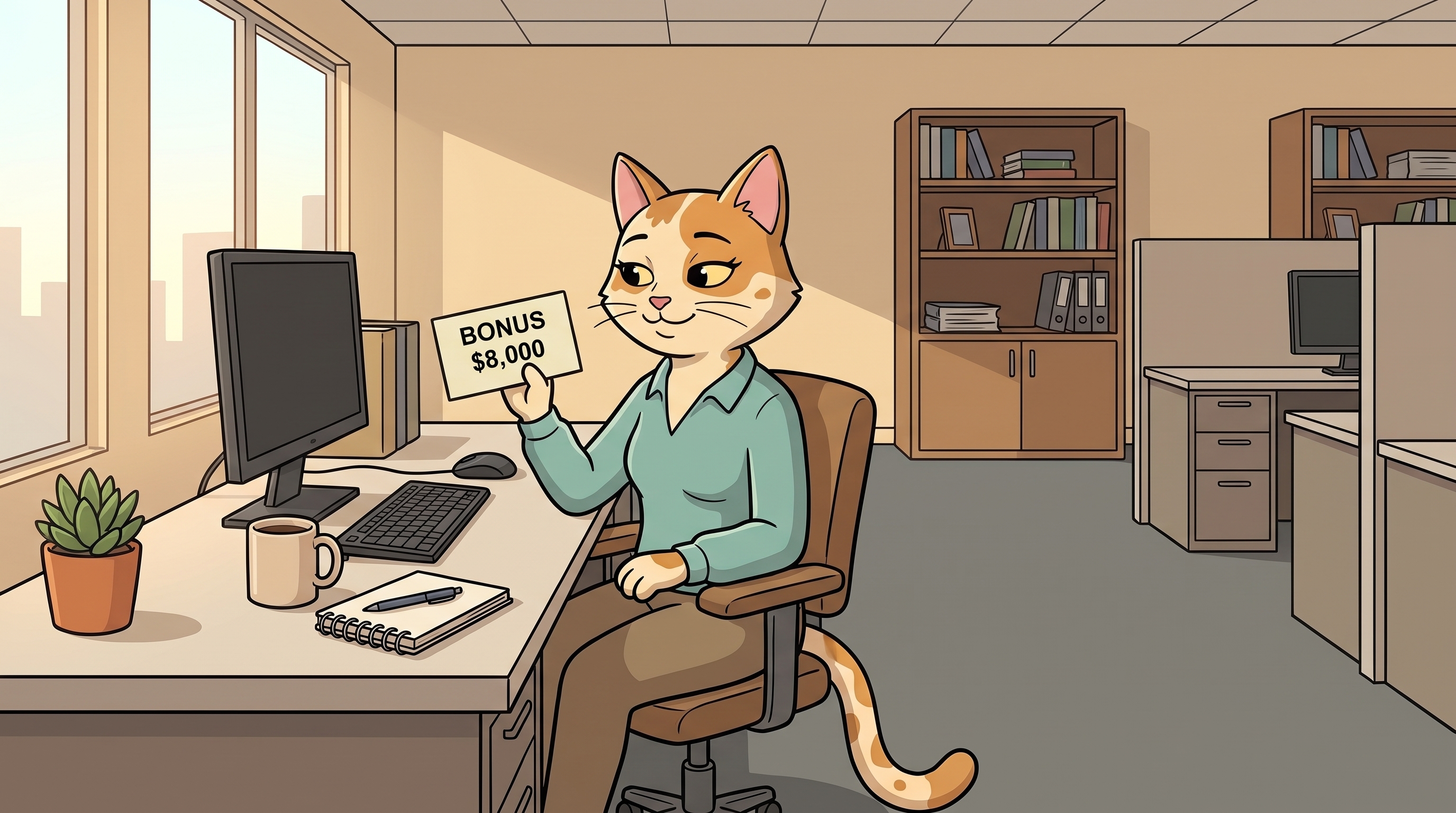
What APY Actually Means
A bank pays you an interest rate — the APY, or Annual Percentage Yield — for the privilege of holding your money. It then turns around and lends that same money out at 4% to 6%, sometimes higher, on car loans, credit cards, and mortgages. The APY you get back is the bank's cut of what it makes off your deposit, handed back to you. The bank decides how much of that cut you're worth.
Some banks decide you're worth almost nothing.
Most people never actually run this calculation, and it's not because the math is hard — it's because nothing about the process invites you to. Nobody hands you a form asking if you'd like to keep earning close to nothing forever. Your bank doesn't send a letter comparing itself to the online account paying four times as much. The big banks that pay almost nothing are also the ones with the branch on your corner, the app already installed, the direct deposit already set up. Every reason to stay is convenience, and convenience doesn't show up on a rate sheet.
You didn't agree to any of this on purpose. You opened a savings account because the bank was already there — attached to your checking, recommended when you were a teenager, whatever the reason — and it worked well enough that you never had a reason to look again. That's not a character flaw. That's just what "good enough" does. It removes the reason to check.
The Banks Paying You Almost Nothing
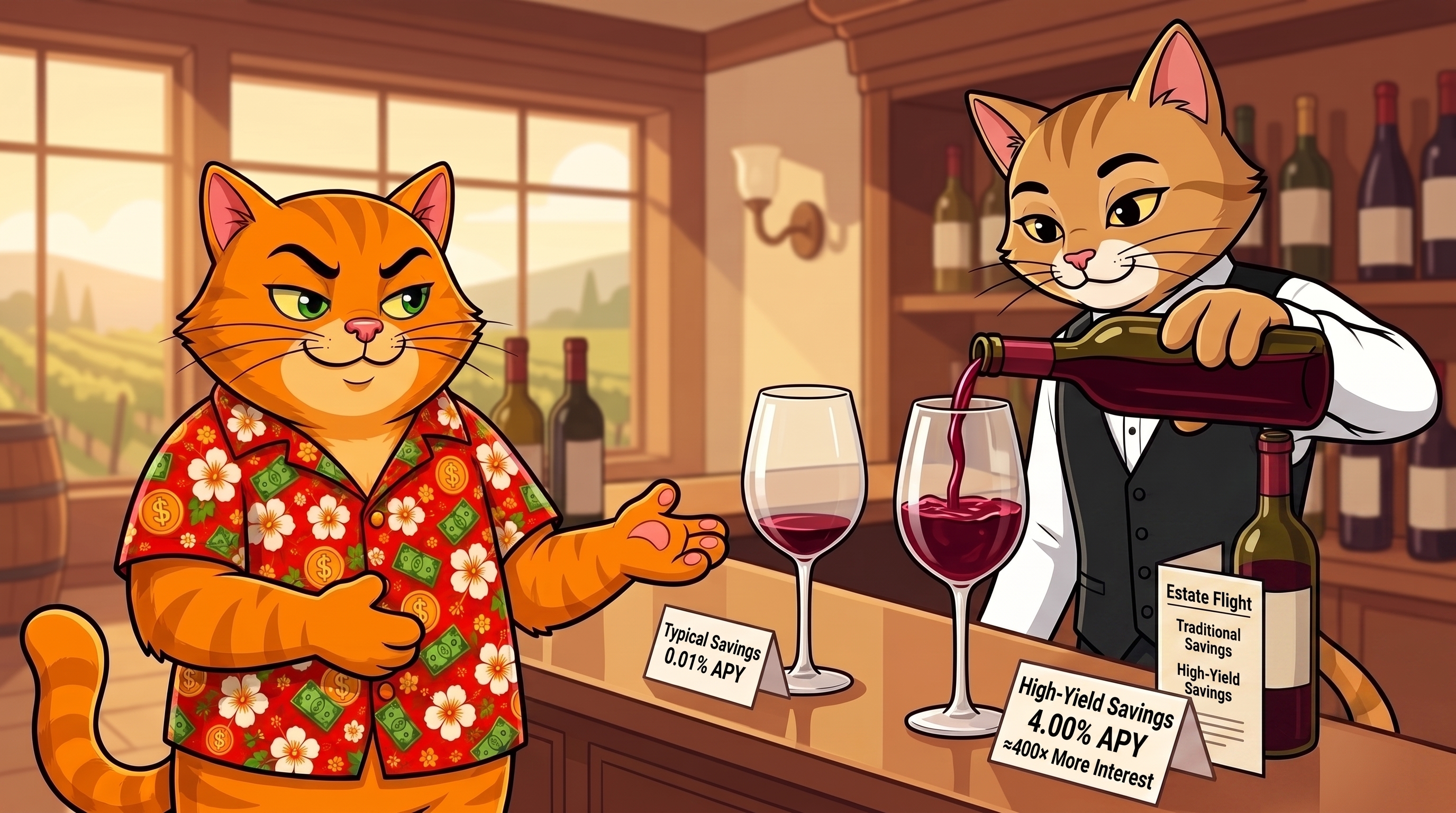
Chase pays 0.01% APY on its standard savings account. Bank of America pays 0.01%. Wells Fargo pays 0.01%. On $10,000, that's about a dollar a year — less than what you'd find in a couch cushion.
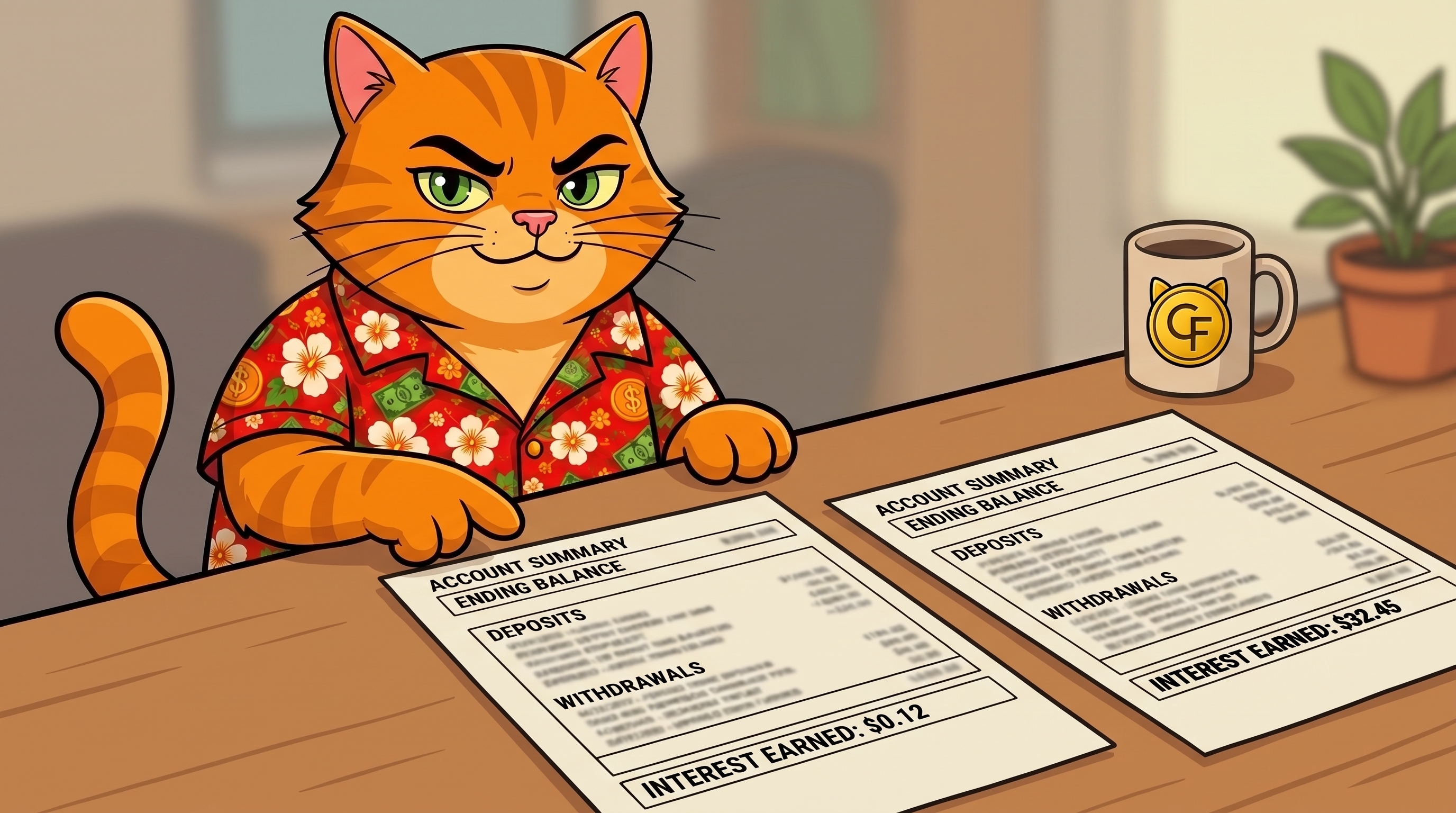
The national "average" isn't much of a rescue either. The FDIC puts the average savings rate at 0.38%. Bankrate's own survey puts it at 0.61%. Two organizations whose entire job is tracking this number can't agree within a quarter of a point — but both are still a rounding error next to 4%. "Average" just means most people are losing money slightly less badly than the person next to them.
None of this is an accident. A bank holding your money at 0.01% isn't failing to notice you deserve more — it's succeeding at something else entirely: borrowing your money at close to zero cost and lending it back out at 4% to 6%. The less attention you pay to your own rate, the longer that spread stays theirs instead of yours.
The Real Gap Isn't 100x — It's Over 400x
Here's where the "100 times" number from the top of this post gets an upgrade. Climate First Bank, an online bank with no minimum balance and no direct deposit requirement, currently pays 4.01% APY. On $10,000, that's $401 a year against the big banks' roughly $1. That's the 100x.
The actual top rate right now, from Axos Bank, is 4.21% APY — $421 a year on the same $10,000. Compare that to 0.01%, and the real gap isn't 100 times. It's over 400 times, on money that hasn't moved an inch, just changed addresses.
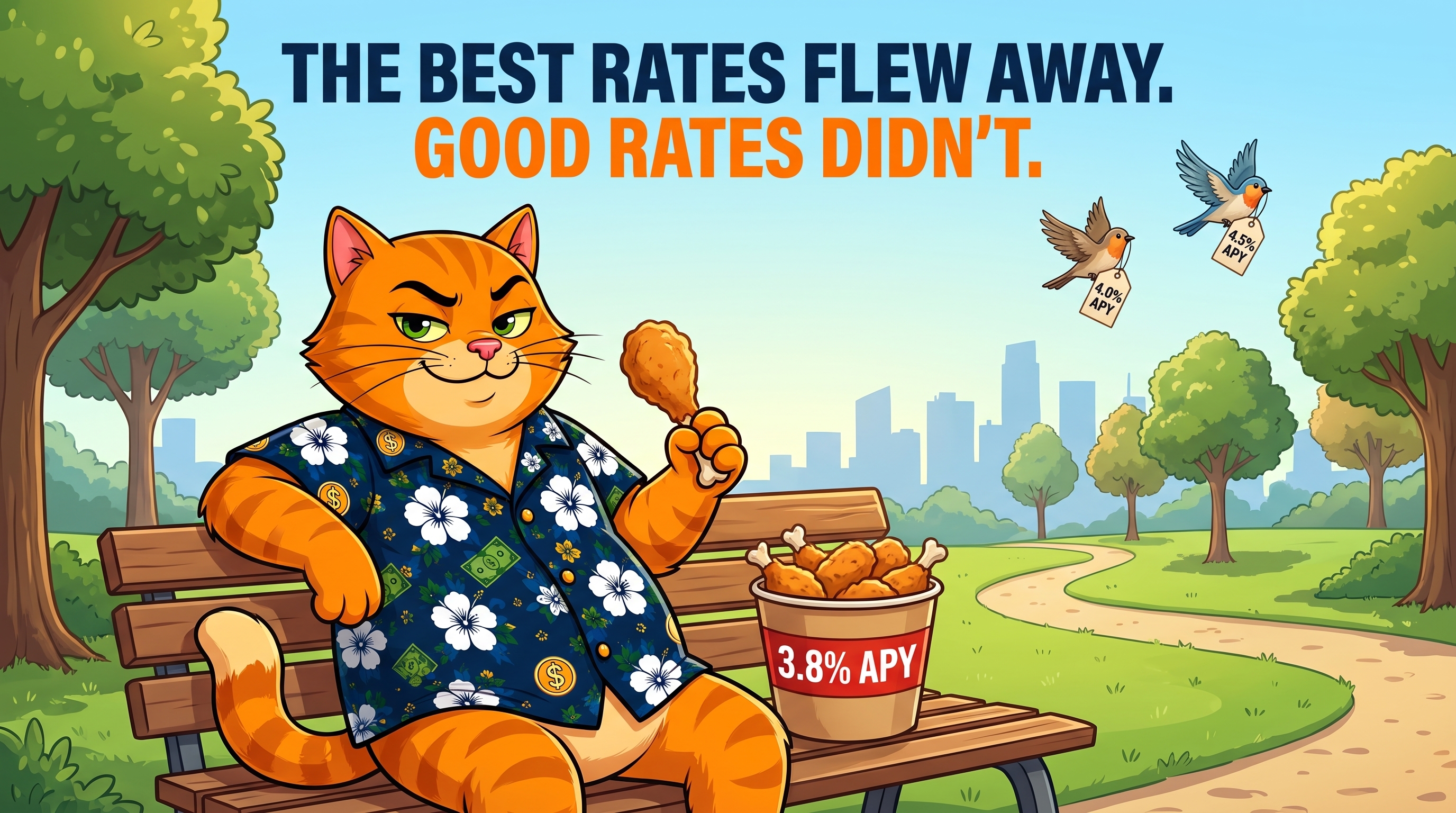
It won't stay this high forever. The Fed held its benchmark rate steady at 3.50%–3.75% in June 2026 and pulled the rate cut it had been projecting for later in the year — which is the only reason today's high-yield rates are still worth talking about. Earlier in 2026, top online rates were running over 4.75%; they've drifted down since, and they'll keep drifting if the Fed moves again. The 0.01% accounts, meanwhile, can't get any lower. They're already at the floor. The highest-rate window is now, not eventually.
Is This Actually Safe?
If part of you is hearing "4% at a bank you've never heard of" and wondering if there's a catch — that's a fair instinct, worth answering directly instead of waving off.
Online banks paying competitive APY aren't running a different insurance system. FDIC insurance covers up to $250,000 per depositor, per bank, whether that bank has a branch on your street or exists entirely as an app. Climate First Bank is FDIC insured. Axos Bank is FDIC insured. The rate is higher because the overhead is lower — no branches, no tellers, no marble lobby to pay for — not because the protection is thinner.
The APY Gap
Big bank APY: 0.01%. Top online bank APY: 4.01%–4.21%, no minimum balance required.
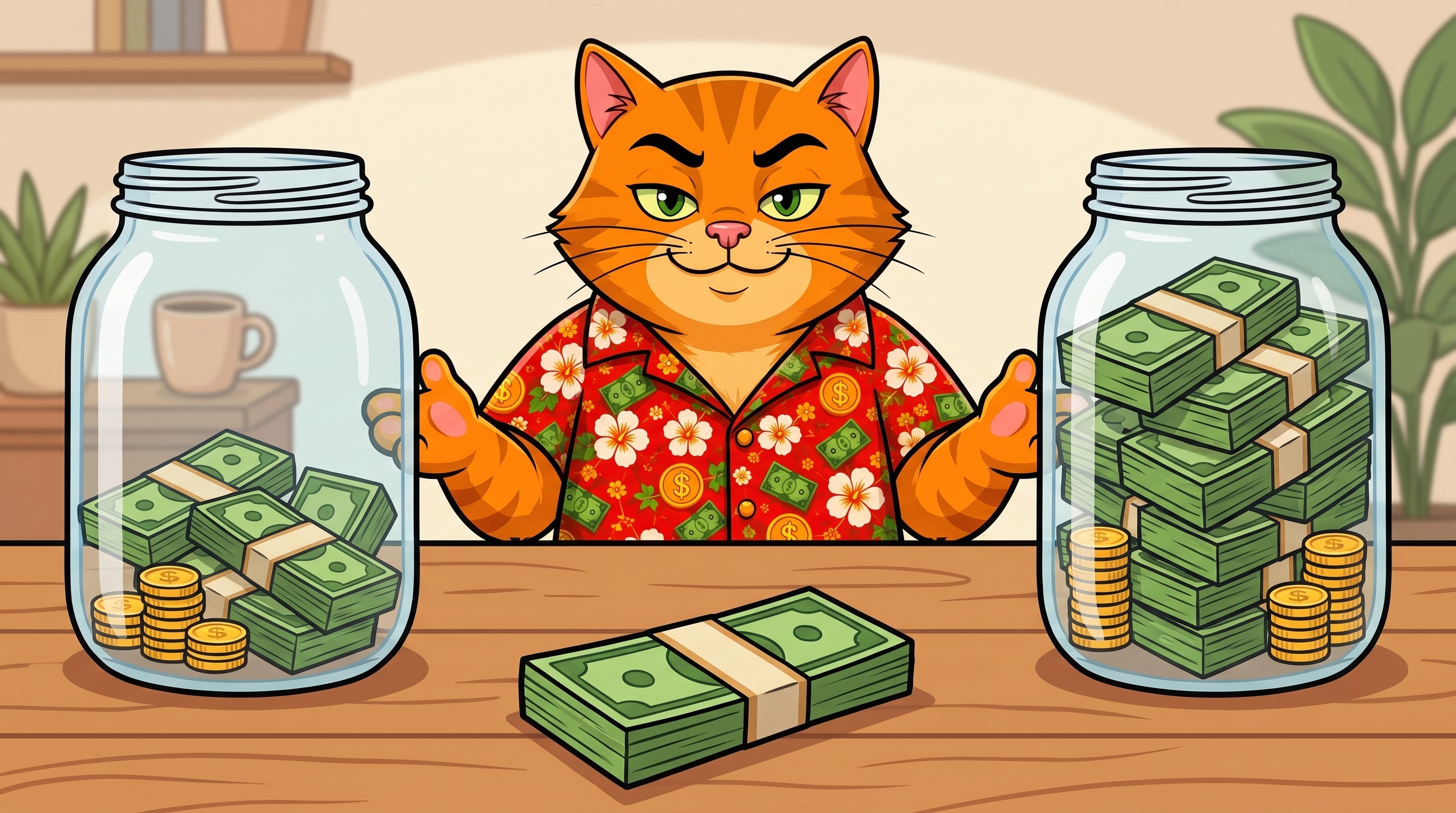
On $10,000, that's the difference between $1 a year and $401–421 a year — the same money, just parked in the wrong place.
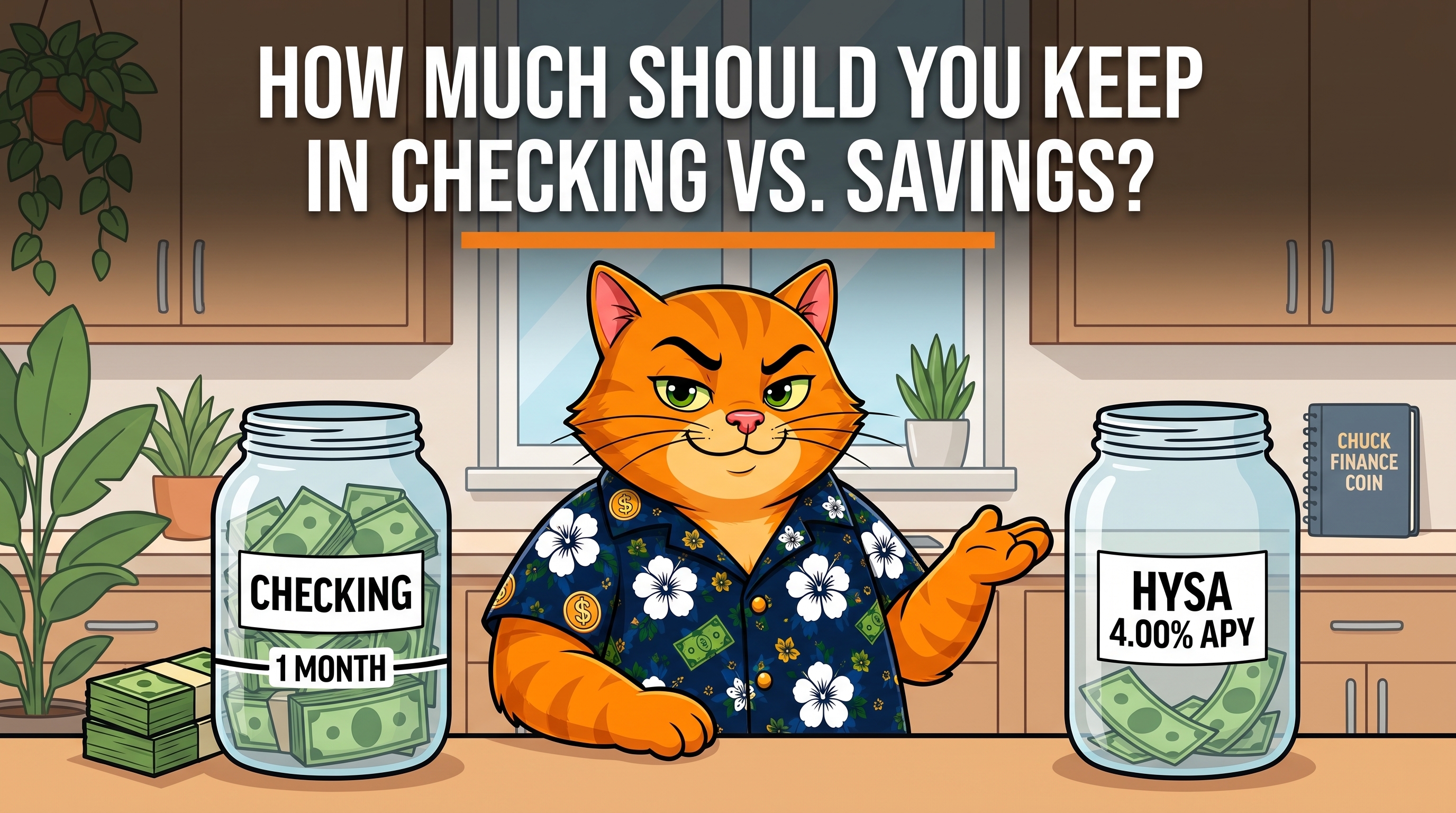
It's also not a CD. A Certificate of Deposit locks your money away for a fixed term — usually months to years — in exchange for a higher rate. A high-yield savings account works exactly like the one you already have: withdraw whenever you want, no penalty, no waiting period. The only thing that changes is the number attached to the word "yield."
And if going fully online still doesn't sit right with you, credit unions are the middle option nobody mentions enough. Plenty of local credit unions pay well above the big three precisely because they're not funding a nationwide branch network off your deposit. You lose a little of the top-tier rate, but you keep an actual person to talk to and a branch to walk into. That's a real tradeoff, not a compromise you should feel bad about making.
None of this requires overhauling how you handle money. Nobody's asking you to close accounts, chase promotional bonuses, or turn into someone who tracks interest rates for fun. It's one account, moved once, then left alone — which, if you think about it, is exactly the level of effort Owen was already putting in. He just put it in the wrong place.
Here's What Actually Fixes This
You're not bad with money because you never compared savings rates. Almost nobody does — the entire industry is built around that specific blind spot staying exactly where it is. Noticing it once, today, is the only part that takes any effort at all.
- Log into your current bank and find your actual APY — not the interest rate, the APY. They're not always the same number, and on some statements they're listed separately.
- If it starts with 0.0, that money is losing real value every month just sitting there, because inflation is still running higher than a dollar a year covers.
- Open a high-yield savings account at a different bank. It doesn't have to be Axos or Climate First specifically, and it doesn't have to be this week's single highest rate — it just has to start with a number bigger than zero point anything. Confirm it's FDIC insured (nearly all legitimate online banks are).
- Move the balance over. Most transfers finish in one to three business days and cost nothing to set up.
- Keep your checking account exactly where it is. This isn't about switching banks — it's about making sure the account holding your actual savings isn't the same account that pays you nothing for holding it.
- Link the new account to your existing checking so future transfers take thirty seconds instead of becoming another research project.
Marie didn't do anything complicated. She didn't time a rate, chase a bonus, or read a single finance book. She moved money once and then went back to doing nothing — the same thing Owen did. The only difference is which account got to do nothing on her behalf.
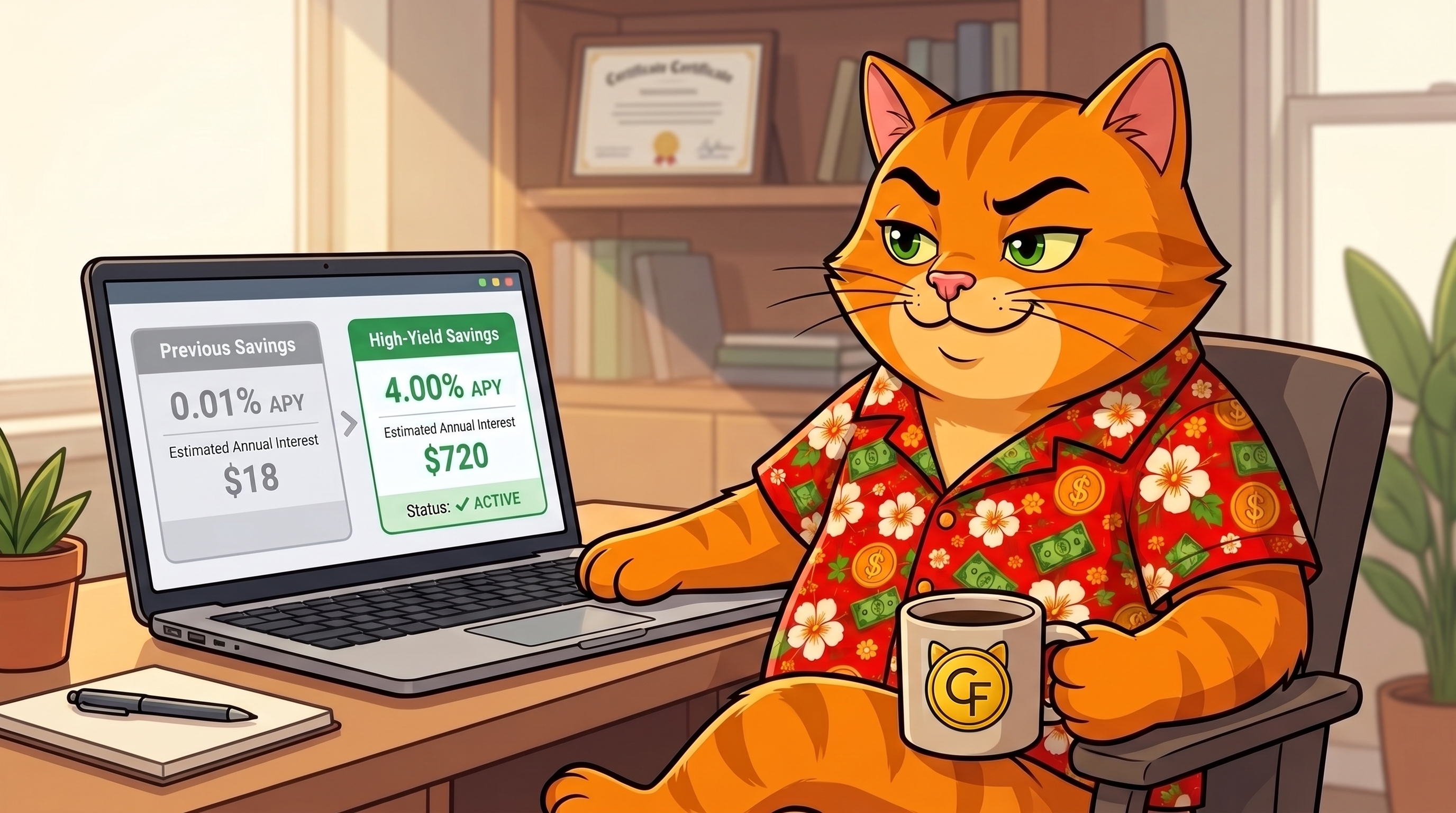
Same $8,000. Same effort. A gap that, right now, runs over 400 times.
Sources:
- FDIC.gov, National Rate Data — July 20, 2026
- Bankrate, Average Savings Account Interest Rates — July 29, 2026
- NerdWallet, Best High-Yield Savings Accounts — August 3, 2026
- U.S. News, "Do You Keep Your Savings at Chase or Wells Fargo? Here's How Much You're Losing"
- The Motley Fool / Fool.com, High-Yield Savings Rate Trend, 2026