
What Accounts Are Actually For
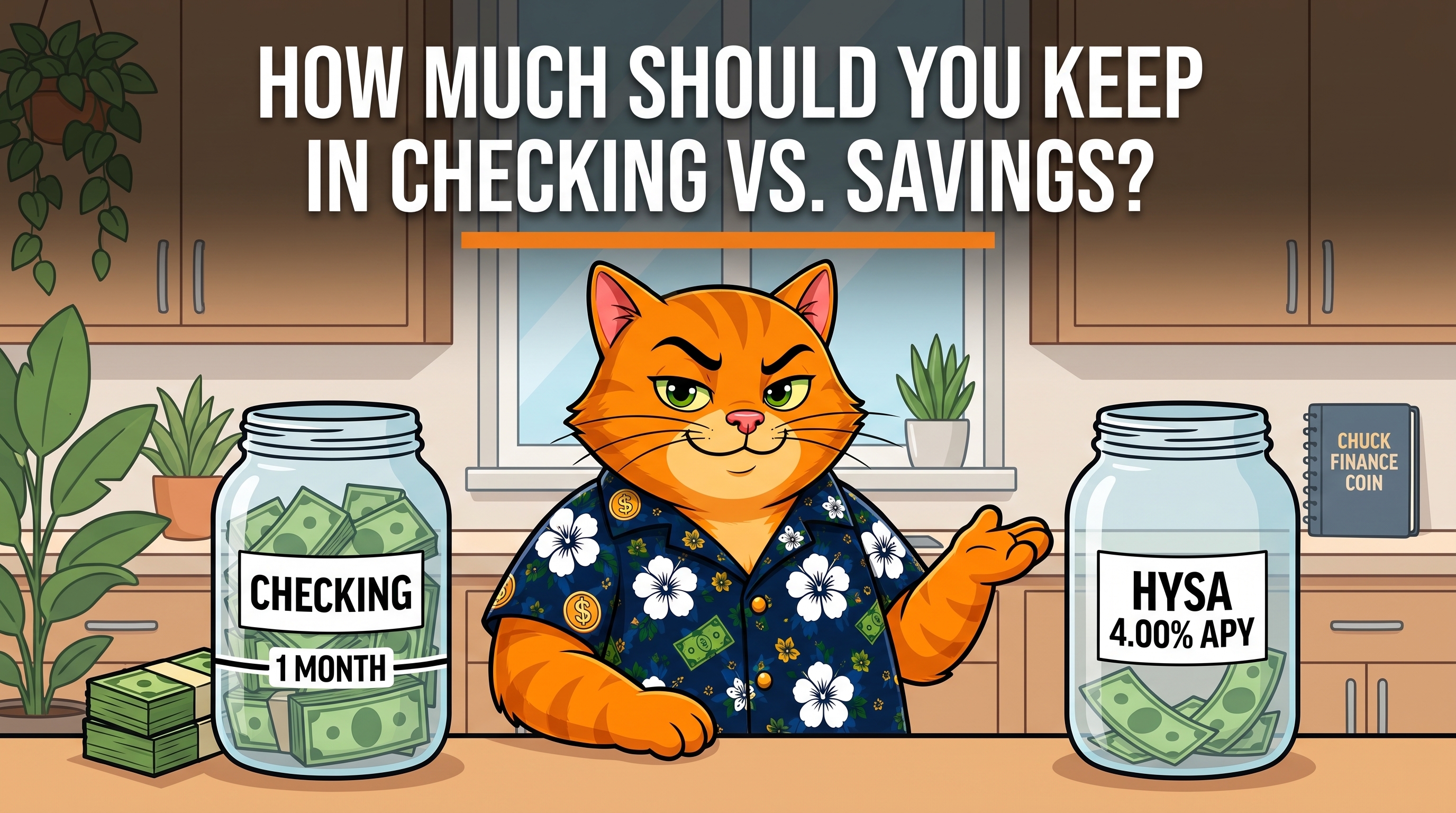
Checking handles spending — bills, groceries, the money moving in and out every week. Savings holds money that isn't being touched. Sometimes one savings account covers everything; sometimes separate savings accounts make sense for tracking distinct goals individually. How much actually belongs in each account type is its own question — the one worth answering here is how many accounts you actually need in the first place.
Eugene's Setup
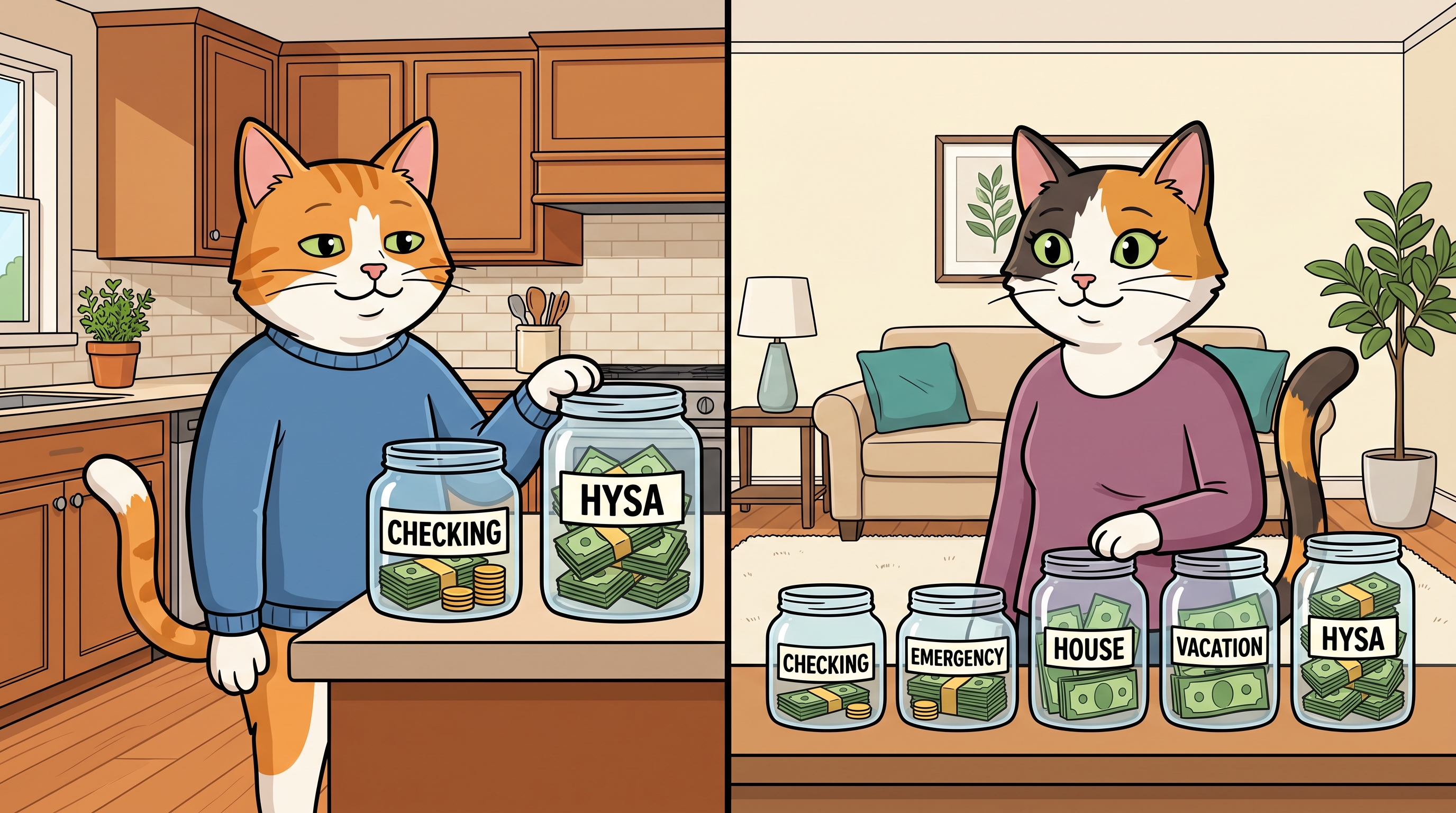
Eugene runs one checking account and one HYSA. That's it. His income is steady, his expenses are predictable, and he doesn't have multiple concrete savings goals competing for attention right now. Two accounts cover everything he actually needs to track — that HYSA is doing double duty as his emergency fund, sitting somewhere it actually earns something.
Priscilla's Setup
Priscilla runs five accounts: one checking, and four separate savings accounts — emergency fund, house down payment, vacation fund, and a general HYSA for everything else. She has multiple concrete goals she wants to track individually, and seeing each one's actual progress matters enough to her to justify the extra accounts.
The Real Question to Ask
Both setups are right. Neither is "more disciplined" than the other. Eugene isn't behind for having two accounts, and Priscilla isn't overcomplicating things by having five. The structure should match the person — not the other way around.
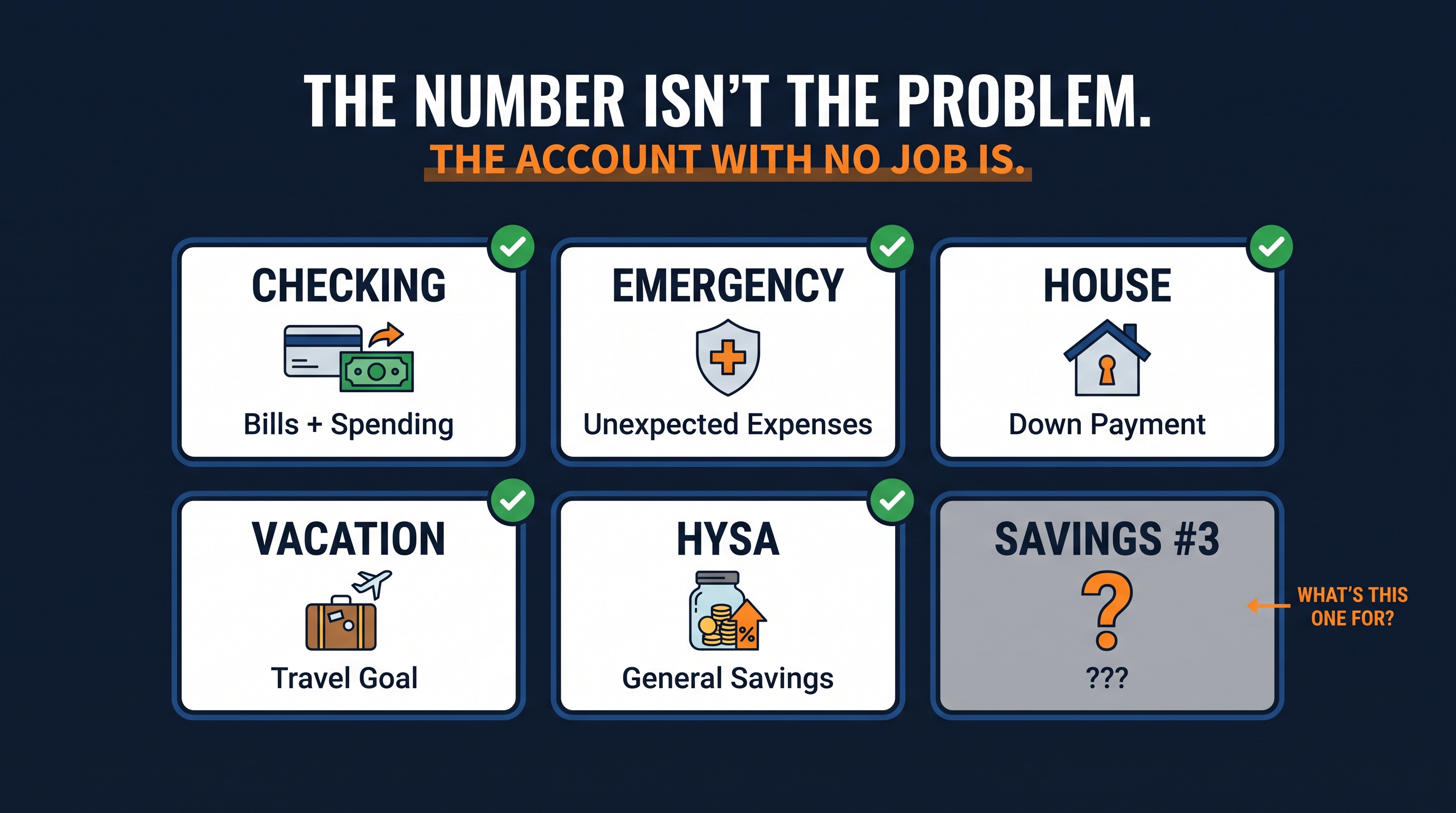
The actual question isn't how many accounts you have. It's whether each one serves a distinct purpose you'd actually notice if it disappeared. If closing an account tomorrow wouldn't change how you track or manage your money, that account isn't earning its place — regardless of what number you land on.
When More Accounts Genuinely Help
Multiple accounts work when they're tracking multiple real goals — a house down payment growing separately from an emergency fund, for instance, so you can see each one hit its own target without doing mental math to separate them. They help when business and personal finances need a hard line between them. They help when a couple wants both shared accounts and individual ones, so joint expenses and personal spending don't blur together.
When More Accounts Genuinely Hurt
More accounts hurt when balances get forgotten — money sitting somewhere you don't check, doing nothing, tracked by no one. They hurt when minimum-balance fees quietly apply to an account that's fallen below the threshold without anyone noticing. A dormant account with a $25 monthly minimum-balance fee, unnoticed for six months, costs $150 — for an account that was never actually tracking anything in the first place. And they hurt when the sheer number of accounts makes it harder to see your full financial picture at a glance, which defeats the entire purpose of organizing money into separate places.
The Forgotten Account Tax
A dormant savings account with a $25 monthly minimum-balance fee, unnoticed for six months, costs $150 — for an account that was never actually tracking anything.
That's not a rate or a percentage. It's cash leaving quietly because an account existed without a job to do.
A Simple Gut-Check
Run this on your own accounts right now:
- Can you name what each account is actually for, without checking a statement?
- Would you notice if one of them disappeared tomorrow?
- Do you know every account's balance without having to log in and get reminded?
- Is every account clear of minimum-balance fees, or are you paying to maintain something you forgot about?
If you answered "no" to any of these, that's the actual signal worth paying attention to — not the total count sitting in your name.
The Part Chuck Wants You To Actually Do

Count your own accounts right now, and run the gut-check above on each one. If an account fails it, that's worth a real decision — not because the number's too high, but because that specific account stopped earning its place.
There's no right number waiting to be discovered. There's only whether each account you're carrying is actually doing a job you'd miss.