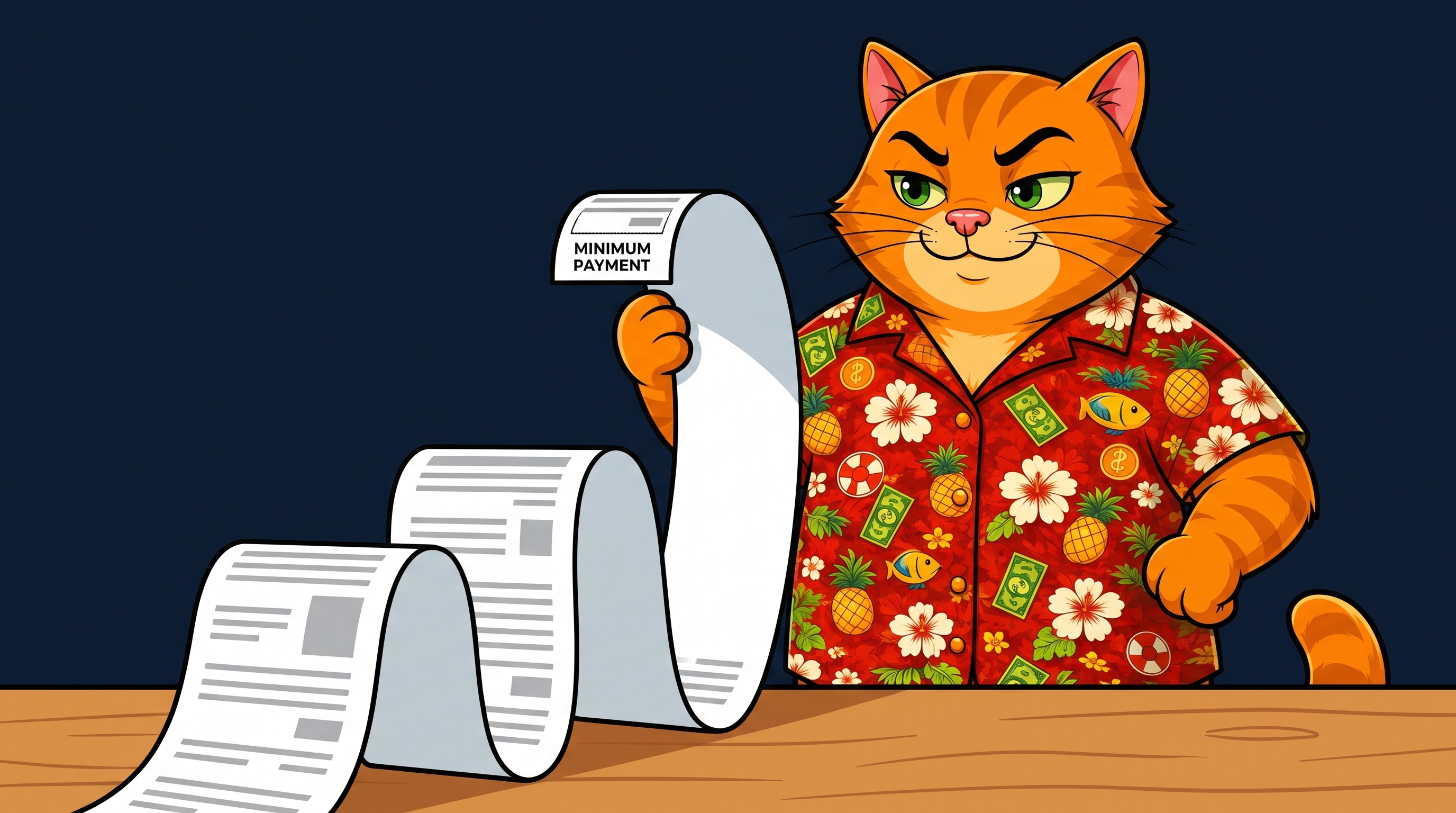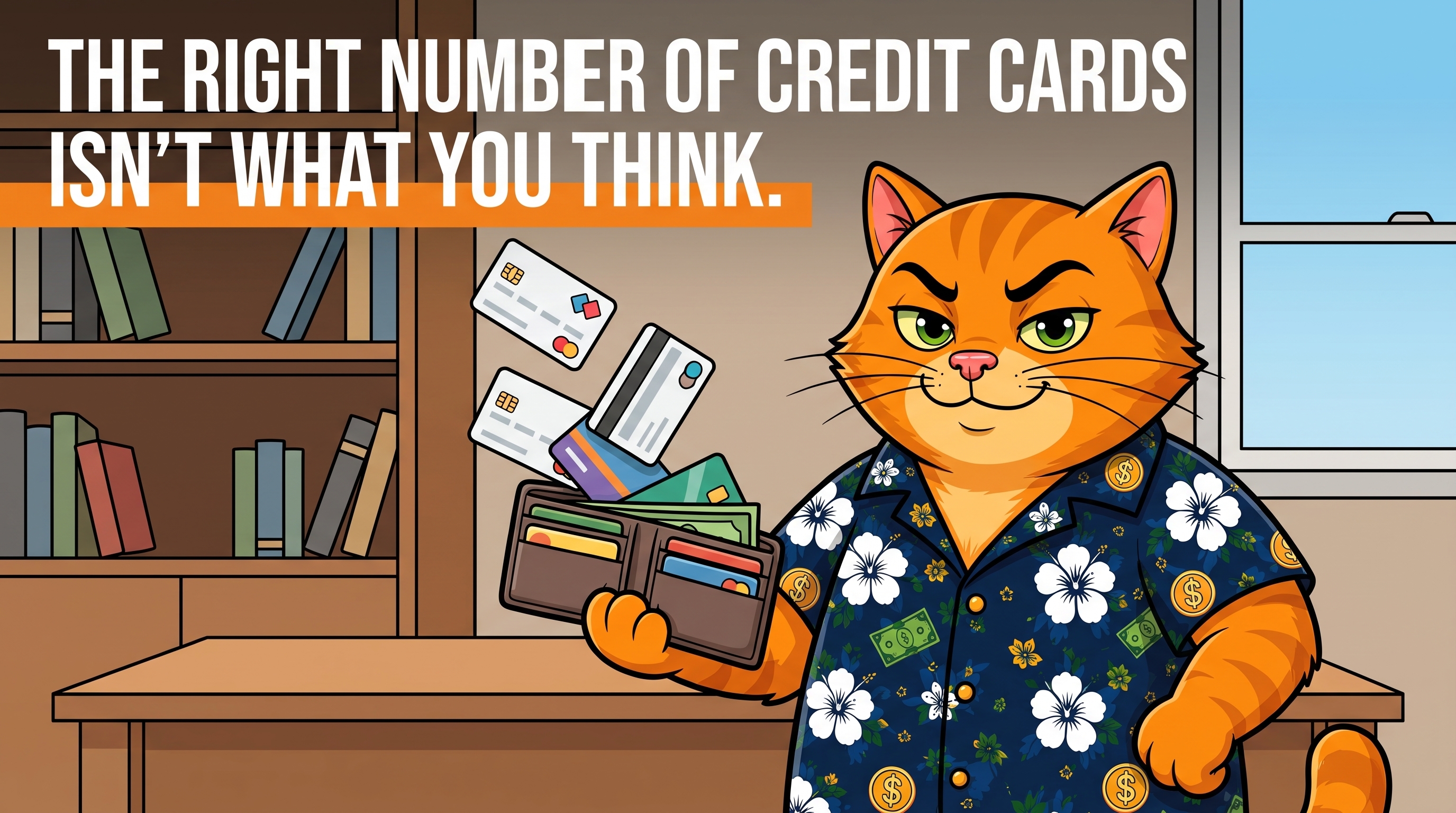


How These Cards Actually Work (On Paper)
You pay an annual fee upfront — anywhere from $95 to $895 depending on the card. In exchange, the bank offers a list of credits: travel reimbursements, dining allowances, streaming subscriptions, hotel perks. The idea is that if you use enough of those credits, you come out ahead of what you paid.
That's the deal on paper. What happens in practice is a different story.
The Math Nobody Puts on the Marketing Page
In 2025, the Federal Reserve found that 19% of credit card users pay an annual fee on the card they use most — and millennials lead that group at 24%. That's not a small number of people making a mistake. That's roughly one in five Americans handing a bank money every year for a card they may not even be using correctly.
There's a reason this fee is creeping toward the young and the well-paid instead of shrinking away entirely. Once you're earning enough to feel like you've arrived somewhere, a card with your name embossed on a heavy metal rectangle feels like a receipt for that fact. For a small slice of people who fly constantly and genuinely enjoy running a rewards strategy like a side project, the math actually works. For almost everyone else, they're paying for the feeling and mistaking it for the rewards.
Why the Fee Keeps Climbing
From 2015 to 2024, the number of people paying an annual fee actually dropped by 2.4% — fewer people paying, not more. But the average fee among the people who stayed? More than doubled. $62 to $127.
Fewer people paying, and the ones who are left are paying more than double what they used to. That's not a coincidence. That's a business getting very good at keeping exactly the customers who won't do the math.

The premium end of the market pushed further in 2026. The Capital One Venture X sits at $395. The Chase Sapphire Reserve jumped to $795. The American Express Platinum went from $695 to $895 — and added $1,400 in statement credits to justify the jump. Except every one of those credits requires you to do something specific, on their timeline, in their app: book through their travel portal, shop at one particular department store, use a lounge you may not have access to near your actual gate. Miss one of those steps and you didn't get $1,400 in value. You got a bill.
Quick gut check: do you know, off the top of your head, exactly which credits your own card offers — and whether you used all of them this year? If you're being honest, it's probably two or three things out of a list of ten. That's not a personal failure. That's exactly the number the bank modeled when they priced the card.
The Hidden Logic of the No-Fee Card
A no-fee card doesn't need you to do anything. Wells Fargo Active Cash pays 2% back on everything, automatically — no portal, no minimum spend, no lounge you have to find. Citi Double Cash does the same thing structurally: 1% when you buy, another 1% when you pay it off. Chase Freedom Unlimited pays 1.5% flat, more in a few rotating categories.
None of them ask you to remember anything, ever. The premium card's entire value proposition depends on your follow-through. The no-fee card's value proposition depends on nothing at all.
And no — the bank isn't losing money on it. Every swipe already generates a small fee the merchant pays, whether your card charges you anything or not. The annual fee was never the thing keeping the lights on. It's an extra number the bank adds precisely where they've calculated you're least likely to push back.

Curiosity killed the credit score, not the cat.
The Real Cost Isn't the Fee — It's What You're Not Collecting
Bankrate found that 55% of rewards cardholders who pay their balance in full every month are still leaving money on the table — because they default to cash or debit for everyday purchases instead of the card that's supposedly earning them something. Groceries, 44% of the time. Restaurants, 43% of the time.
So the fee isn't just $395, or $795, or $895. It's that number, plus every dollar of reward you didn't bother collecting, plus every credit that expired unused. Add it up honestly and most premium cardholders aren't paying the sticker price on their statement — they're paying something closer to triple it, spread out in ways that never show up as a single uncomfortable number.
Do the Actual Math
"It's probably not worth it" isn't a plan. Here's what running the numbers actually looks like on two real cards.
- Capital One Venture X ($395 fee): you need the $300 travel credit and the $100 anniversary bonus, both redeemed, both used inside the right window. That's $400 against a $395 fee — technically ahead, if you clear both hurdles.
- American Express Platinum ($895 fee): the $1,400 in credits breaks down into small, specific pieces — hotel credit that only counts through their portal, a store credit for a retailer you may never shop at, entertainment credits for services you may not subscribe to. Land half of those categories in a normal year — realistic for most people — and you've captured maybe $700 of that $1,400. You didn't break even. You paid $195 for the privilege of trying.
This Isn't a Character Flaw
None of this is about being bad with money. Most people who carry a card like this aren't careless — they're not overspending, not carrying a balance, not making some obvious mistake you'd catch in a budget meeting. They picked a product built around an idealized version of their spending habits instead of their actual ones, because the sign-up page shows the best-case math and never the median one.
Here's the part nobody tells you when you sign up for one of these cards: you were never actually being evaluated on whether the card was good for you. You were being evaluated on whether you'd forget to check. The bank already ran these numbers before you ever got the mail offer.
The Real Trap: Sunk Cost
The real trap isn't the fee itself — it's the sunk cost sitting underneath it. Once you've paid $795 for a year, canceling feels like admitting you wasted it, so people keep paying, year after year, just to avoid feeling like the first year was a loss. That's loss aversion doing exactly what it always does: losing $795 you already spent feels worse than losing $795 you haven't spent yet, even though a dollar is a dollar either way.
A lot of people didn't even choose the card for the ongoing rewards — they opened it for the sign-up bonus, meant to cancel before the second year's fee hit, and then the renewal date came and went quietly, because canceling a card takes an actual phone call. The bonus is long spent. The fee just keeps renewing itself on autopilot.
What to Actually Do About It
This isn't "cancel every card with a fee." Some of them genuinely pay for themselves if your spending matches the design.
- Keep the card if: you fly six or more times a year on the same airline, you already book everything through one portal out of habit, or the lounge is somewhere you'd be sitting anyway between flights.
- Pull the real number: add up every credit, every reward, every perk you actually used in the last 12 months — real dollars redeemed, not advertised value.
- Compare it to what you paid. Close or ahead? The card's doing its job. Not close — true for most people running this exercise the first time? You don't need a dramatic decision.
- Keep a no-fee card next to it for the purchases where the premium card was never earning anything anyway.

The card sitting in your wallet right now is just the first place this pattern shows up. A fee, a subscription, a "premium" version of something ordinary — all betting you won't sit down and do the arithmetic. Once you've caught it once, you start noticing it everywhere else it's hiding, too.
Sources:
- How Many Americans Have a Credit Card With an Annual Fee — The Motley Fool, 2025 (citing Federal Reserve)
- Average Credit Card Annual Fees of June 2026 — ElitePersonalFinance
- Amex Platinum Refresh: New Benefits, $895 Fee — Worth It? — CNN Underscored, 2026
- Wells Fargo Active Cash Card vs. Chase Freedom Unlimited — CNBC Select, 2026
- 55% of Rewards Credit Cardholders Are Missing Out on Rewards — CNBC Select (citing Bankrate), 2026