
The Number Your Bank Doesn't Want You to Look At
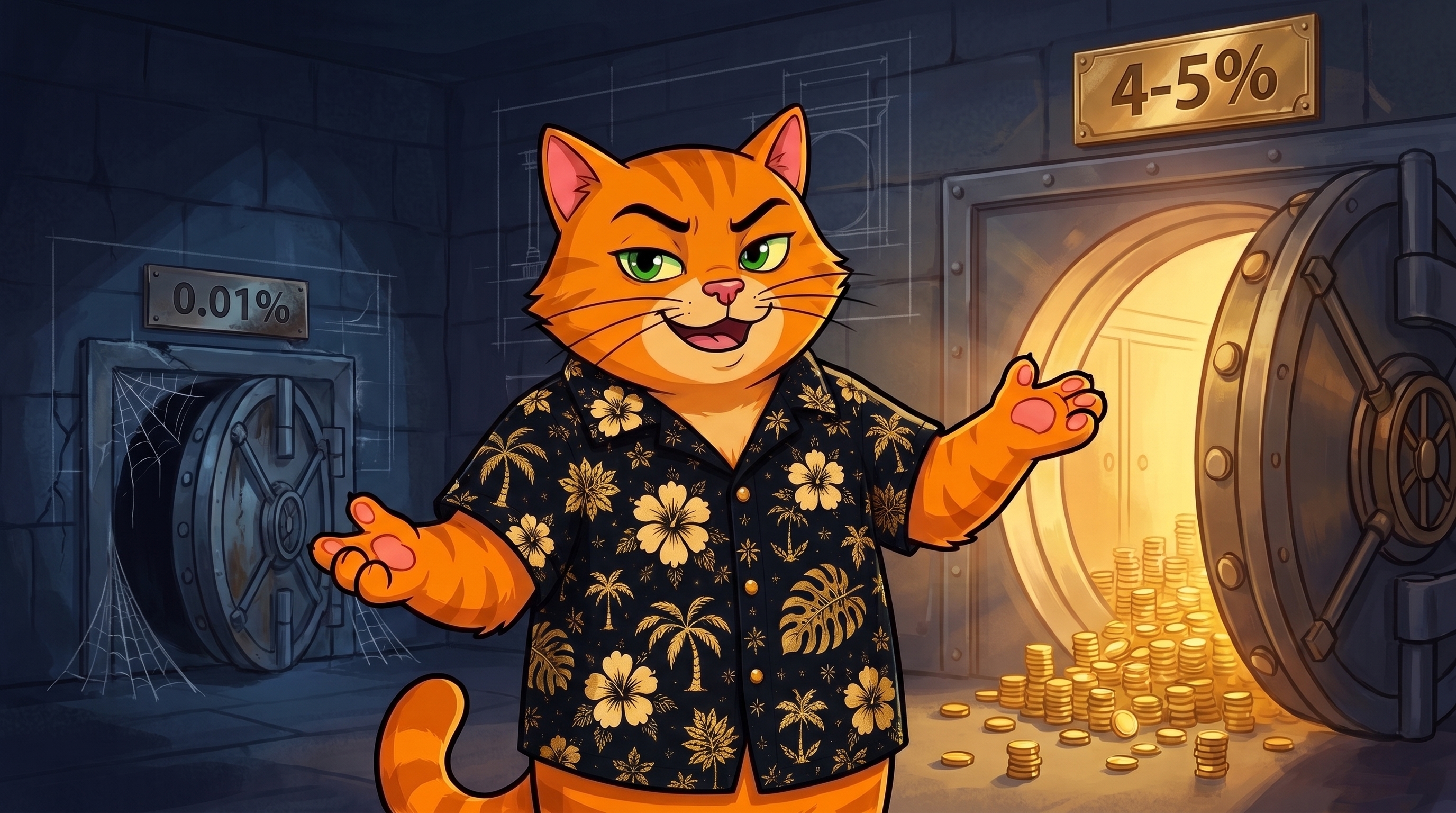
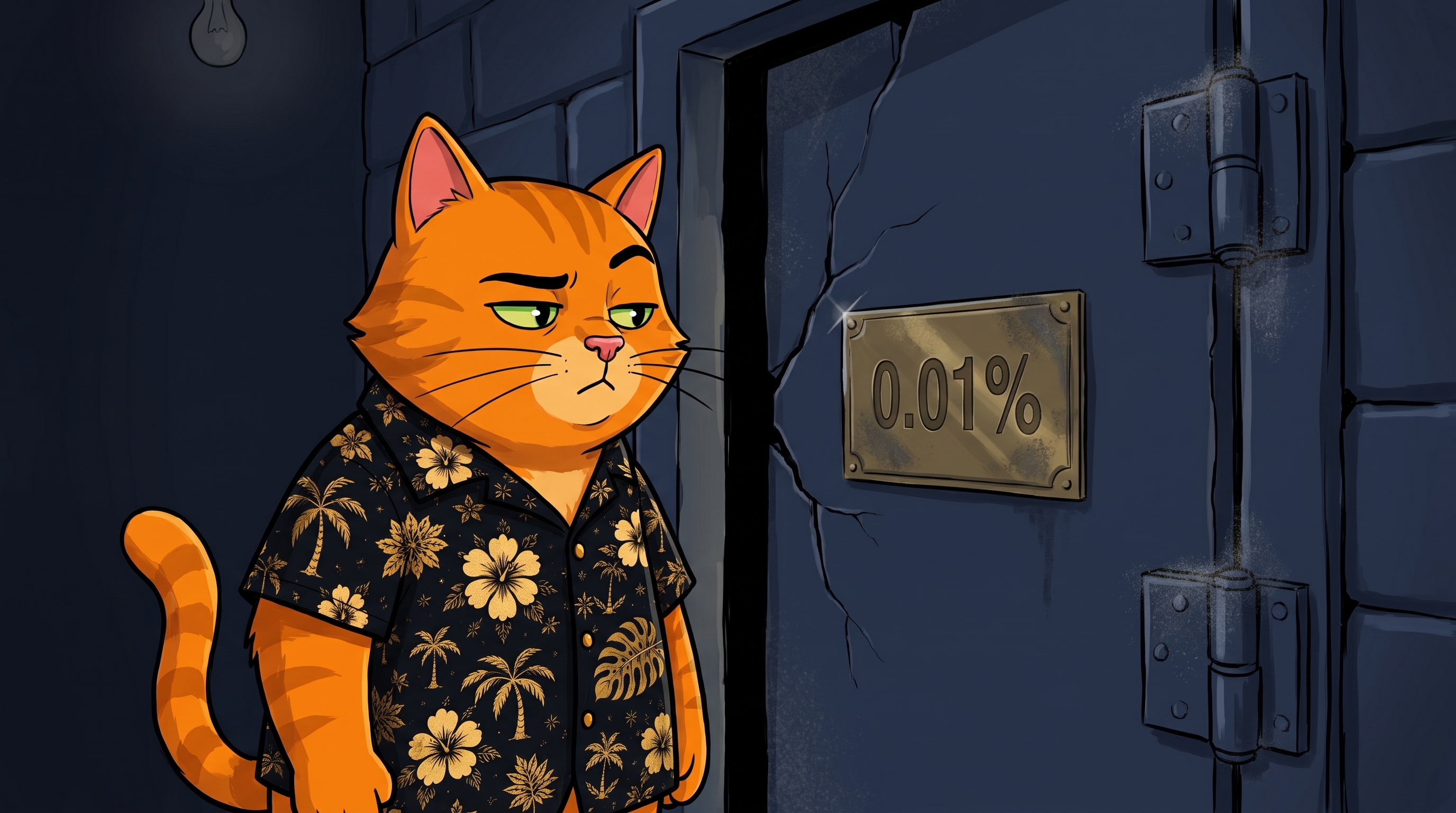
The national average savings account interest rate as of May 2026 is 0.38% APY, according to FDIC data. That is the average across all banks. If you hold a savings account at Chase, Bank of America, or Wells Fargo — the three largest banks in the country — the standard rate is 0.01% APY.
Not 0.1%. Not 1%. Point. Zero. One.
At 0.01%, a $10,000 balance earns exactly one dollar per year. Twelve months. Three hundred sixty-five days. One dollar.
At the same time, high-yield savings accounts (HYSAs) at online banks are currently paying between 4% and 5% APY. As of June 2026, multiple FDIC-insured online banks are offering rates in that range with no minimum balance requirements and no monthly fees. That same $10,000 earns $400 to $500 a year.
The accounts carry identical federal protection. The only difference is how much your bank is paying you for the privilege of using your money.
The gap looks small on paper — until you run the actual numbers.
At $20,000: Bankrate calculated that people in standard savings accounts leave over $750 on the table compared to a high-yield account over just two years. That is $750 your bank collected from your inertia.
At $50,000: the annual gap is roughly $2,000.
At $100,000: you are leaving $4,000 a year in your bank's revenue column instead of yours. Every year. For doing nothing differently except where your account lives.
How Banks Are Actually Using Your Money
Banks do not hold your money. They borrow it.
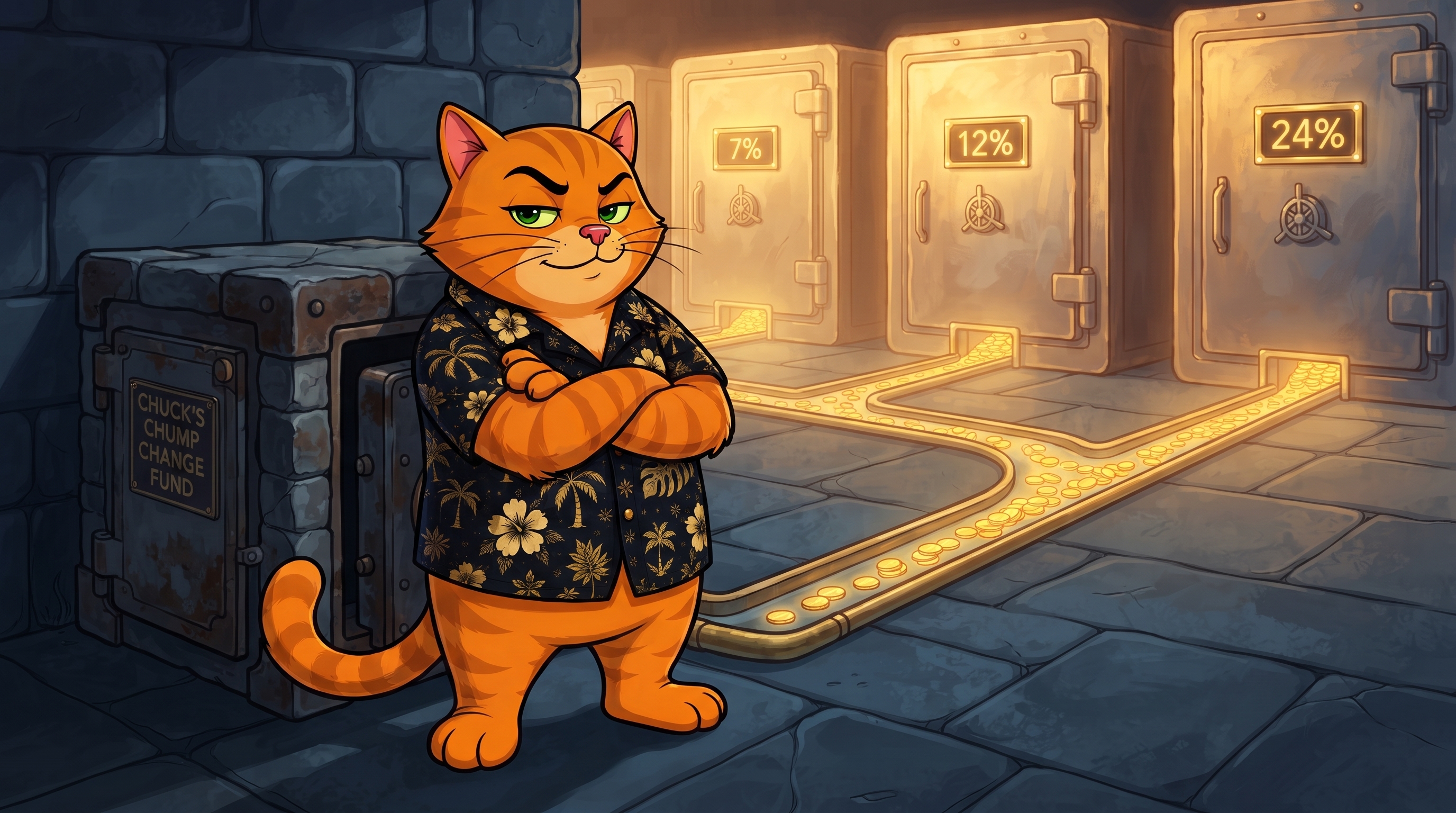
When you deposit $10,000 into a savings account, the bank takes that money, bundles it with every other deposit, and lends it out. Mortgages at 7%. Car loans at 8%. Personal loans at 12%. Credit cards at 24%. Your $10,000 is generating hundreds of dollars a month in interest income for the bank. The bank pays you 0.01% of that return — one cent per $100 — and keeps the rest.
This is not fraud. This is banking. But it means your savings account is not a passive holding place for your money. It is an extremely profitable financial product — for them.
You are not the customer in this transaction. You are the inventory.
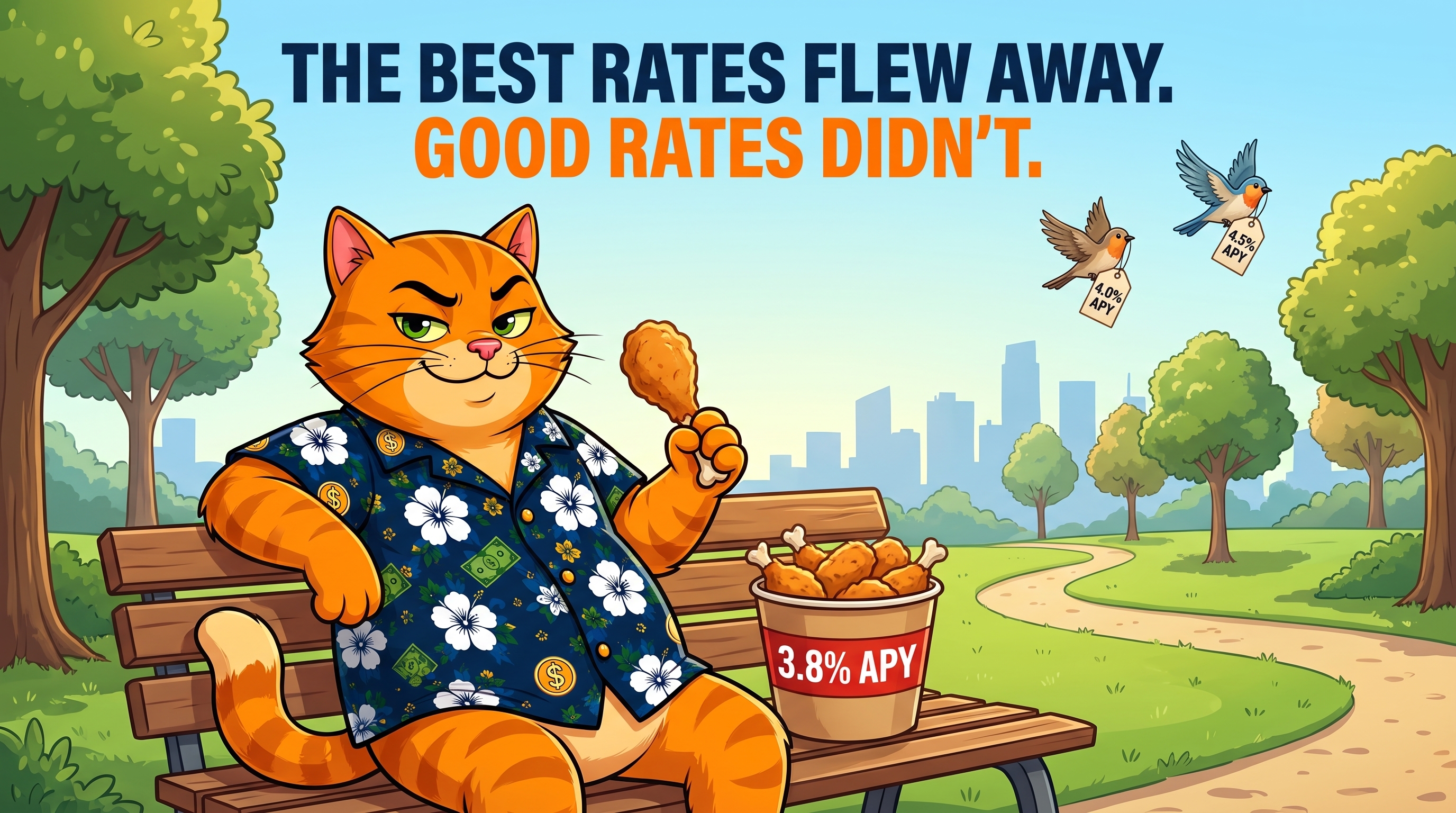
Turns out, curiosity didn't kill this cat. Not checking your interest rate, however — that cost you a few hundred bucks.
When the Federal Reserve raised interest rates aggressively between 2022 and 2024, high-yield savings accounts responded within weeks — passing those higher rates directly to customers. The big banks did not. Their savings account rates stayed near zero even while the Fed funds rate climbed above 5%.
That gap was not an oversight. It was a business decision. The banks knew that the majority of their deposit customers would not switch accounts even if rates stayed low — because they never had before.
The Loyalty Penalty: 18 Years of Inertia
According to Bankrate, the average American maintains a relationship with the same bank for 18 years. Longer than most marriages. Not because people love their bank — because switching feels complicated and nothing has forced the issue.
Forty-five percent of Americans cite branch access as the reason they have not switched to an online bank. That reasoning is understandable. It is also irrelevant for a savings account. You do not walk into a branch to move money into savings. You tap a screen.
The branch is a comfort object, not a financial tool — and your bank knows it. That is exactly why they built all those branches. Not for your convenience. For your inertia.
The rates on big bank savings accounts fell near zero during the low-rate era and stayed there even after the rate environment changed. The customers who did not notice were subsidizing the customers who did. The customers who stayed at 0.01% while HYSAs paid 5% each handed their bank an average of several hundred dollars per year that belonged to them.
That accumulated transfer — the money banks collect from customers who do not switch — has a name. It is called the loyalty penalty. And most people paying it do not even know it exists.
What Inflation Is Really Doing to Your Savings
Here is where the math becomes genuinely uncomfortable.
Inflation in the United States is running at 3.8% annually as of April 2026, per the Bureau of Labor Statistics. If your savings account is paying 0.38% — the national average — you are not keeping pace. You are losing purchasing power at a rate of 3.42 percentage points per year.
What that actually means:
- On $10,000: you earn $38 in interest. Your purchasing power erodes by $380. Net real loss: $342. Every year.
- On $50,000: net real loss of $1,710 per year.
- On $100,000: net real loss of $3,420 per year.
The account feels safe because the number on the screen does not go down. But a number does not have to go down to lose value. It just has to grow slower than prices. The technical term for this is a negative real interest rate. The plain-English description is a wealth-destruction vehicle operating in slow motion.
The same $10,000 in a HYSA paying 4% earns $400 per year. Against 3.8% inflation, you are ahead by 0.2 percentage points. That is not spectacular — but it is the difference between losing ground and holding it. At 5% APY, you are ahead by 1.2 percentage points and your money is genuinely growing in real terms.
The accounts paying those rates exist right now. This is not a promotional window or a future scenario. As of June 2026, multiple FDIC-insured online banks are offering 4% to 5% APY on standard savings accounts with no strings attached.
Is a HYSA worth it? The real question is: can you afford to keep leaving this money on the table?
The Five-Year Gap Nobody Shows You
Here is a number that does not get enough attention.
Keep $30,000 in a standard savings account at 0.38% for five years. You end the period with approximately $30,577. You earned $577 in five years on $30,000. Less than $10 per month.
The same $30,000 in a HYSA at 4% over five years grows to approximately $36,500. You earned roughly $6,500. On the same money. Without any additional risk. Without any market exposure. Without a lock-up period or penalty for withdrawal.
The $5,900 gap did not require a stock pick, a financial advisor, or a strategy. It required one account opening and one transfer.
Now extend this across a full 18-year banking relationship — the average. The loyalty penalty does not show up on any bank statement. It accumulates quietly while you focus on other things. And then one day the math of what you saved does not match what it should have built — and you cannot explain why.
Now you can.
Here's What Actually Fixes This
Before getting into the mechanics — something worth saying plainly.
You did not end up here because you were careless with money. You ended up here because the financial system was designed to make this easy to miss. Your bank has never sent you a letter that reads: "By the way, you could be earning forty times more on this money at a different institution." Nobody does that. The information existed. Nobody was pointing at it.
That changes now. The fix has three parts. None of them are complicated. All of them take less time than making dinner.
Step 1 — Find the right account
Search current HYSA rankings from Bankrate, NerdWallet, or Fortune. As of June 2026, multiple options exist in the 4% to 5% APY range. Look for three things before opening anything:
- FDIC insured — non-negotiable. The federal government guarantees your deposits up to $250,000.
- No minimum balance requirement — the rate should apply to your actual balance from day one.
- No monthly fees — there is no reason to pay a fee on a savings account in 2026.
Anything below 4% APY right now is not competitive. One thing to verify before opening: check whether the advertised rate is ongoing or promotional. Some accounts advertise a higher introductory rate that drops after three to six months. Confirm the ongoing rate before committing.
Step 2 — Open the account
Takes about ten minutes online. You need your Social Security number, a government ID, and the routing and account number from your current bank. No credit check. No impact on your credit score. The application is straightforward — most online banks have simplified this process significantly.
Some people feel uneasy banking with an institution they have never heard of. That unease is the loyalty penalty collecting itself one more time. FDIC insurance does not care how famous your bank is. The federal guarantee covers your deposits regardless of whether the bank has branches in your neighborhood or a recognizable name.
Step 3 — Move the money
Link your existing checking account to the new HYSA. Most banks complete the connection in one to three business days. Then transfer your savings balance.
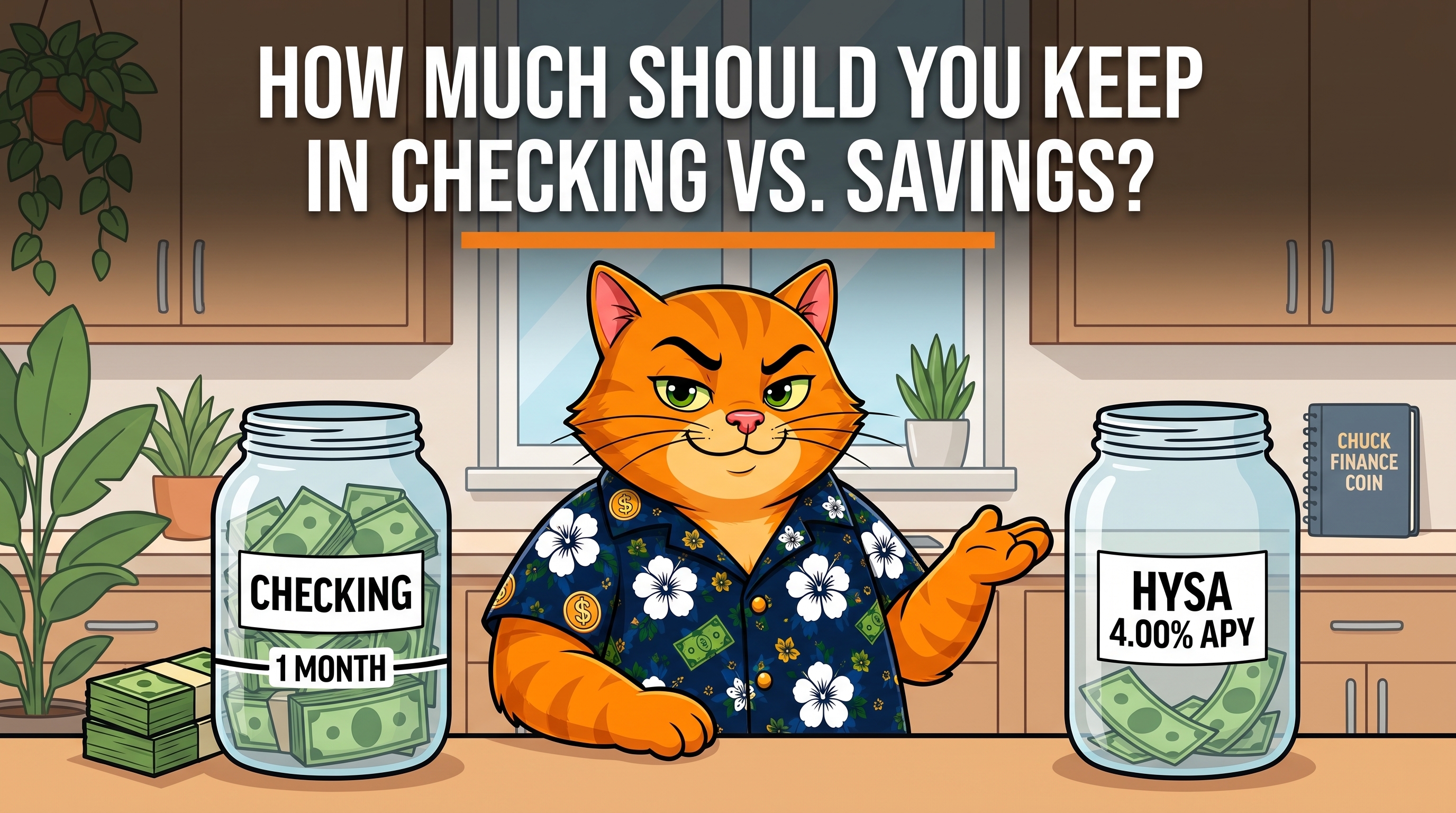
Keep your checking account exactly where it is if that is simpler. The only money that belongs in a low-rate account is money you need same-day access to for transactions. Your emergency fund, your savings goals, your long-term cash reserves — that money should be earning a real return starting now.
One decision. One afternoon. The difference starts compounding the day the transfer clears.
What About Credit Unions?
If branch access genuinely matters to you, a credit union is a reasonable middle ground.
Credit unions are member-owned financial institutions, typically offer better rates than the big banks, and carry NCUA insurance — the equivalent of FDIC protection for credit unions. Your deposits are federally protected up to $250,000, the same as any FDIC-insured bank.
Rates at credit unions will not match the best online HYSAs, but they are meaningfully above 0.01%. If walking into a branch is a real requirement for how you manage money, a local credit union is a better option than staying at Chase or Bank of America.
The point is not that you must use an online bank. The point is that 0.01% is indefensible. Where you land above that threshold is a personal preference. Whether you move above it is not a matter of preference — it is a matter of basic math.
Sarah from the opening of this post had $18,000 in a savings account earning $1.80 a year. She was not careless. She was not behind on her bills. She was doing exactly what she had always been told to do.
The problem was not her behavior. The problem was the container.
The same $18,000 in a HYSA at 4% earns $720 this year. She did not change her income. She did not change her spending. She did not take on any risk she was not already carrying. She stopped letting her bank keep what was hers.
Eleven minutes to open the account. One transfer. Done.
Your bank has been counting on you not doing that math. You have done it now.
If this changed how you think about where your money lives — the next step is straightforward: open a high-yield savings account before the end of the week. Not next month. This week. The compounding starts the day you move the money.

Chuck's next breakdown covers where to keep your emergency fund once it's in the right account. Read it here: Where to Put Your Emergency Fund (So It Actually Earns Its Keep)
Sources:
- FDIC, National Rates and Rate Caps, May 2026
- Fortune, Best Savings Account Rates, June 3, 2026
- Bankrate, Best High-Yield Savings Accounts, June 2026
- CNBC Select, Americans Not Using High-Yield Savings Accounts, August 2025
- CNBC, CPI Inflation April 2026, May 12, 2026
- Bankrate, How Much Americans Are Losing By Keeping Money in Low-Yield Accounts, 2026
- Bankrate, Average Savings Interest Rates, 2026