
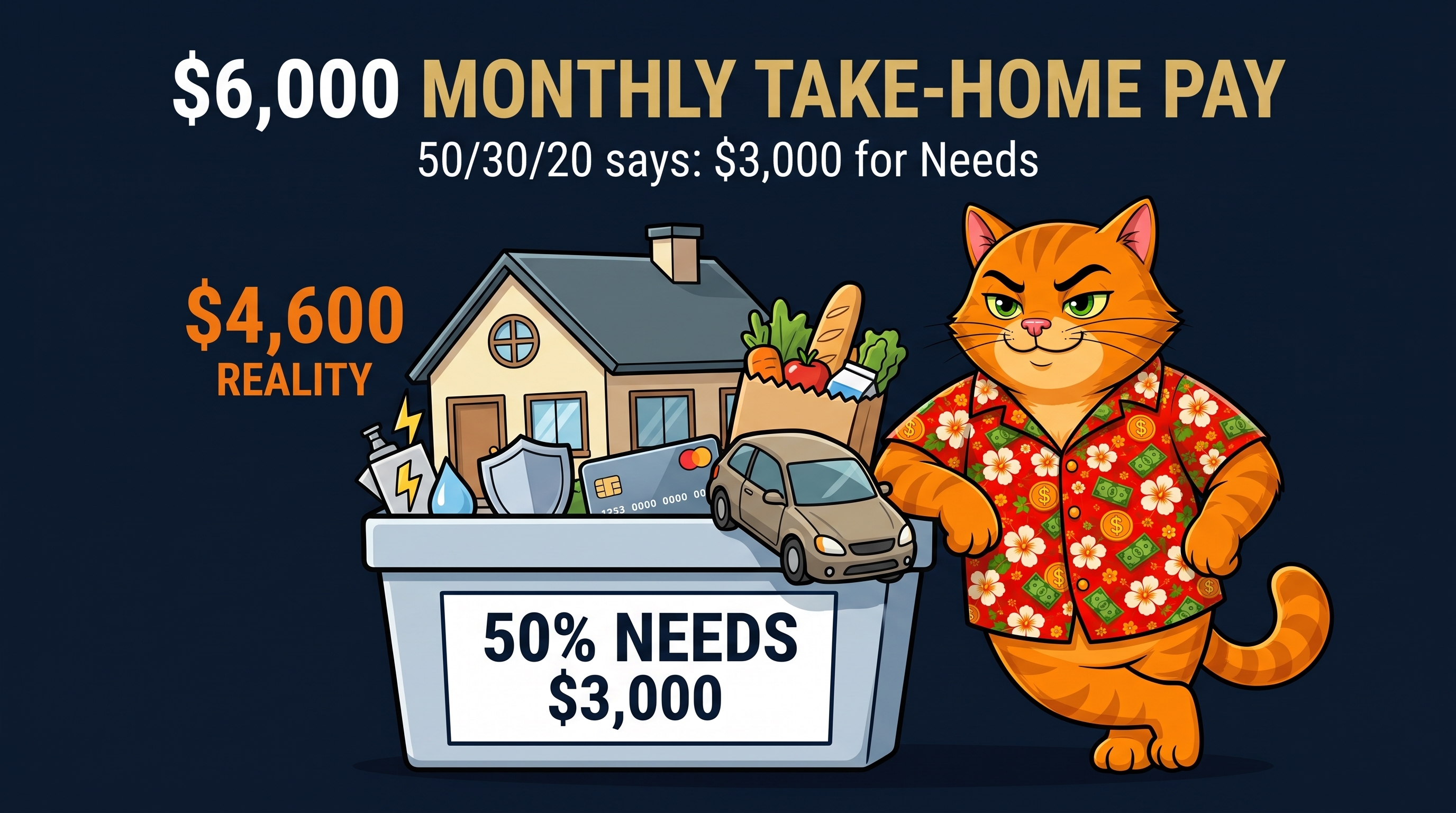
Wren's Real Numbers
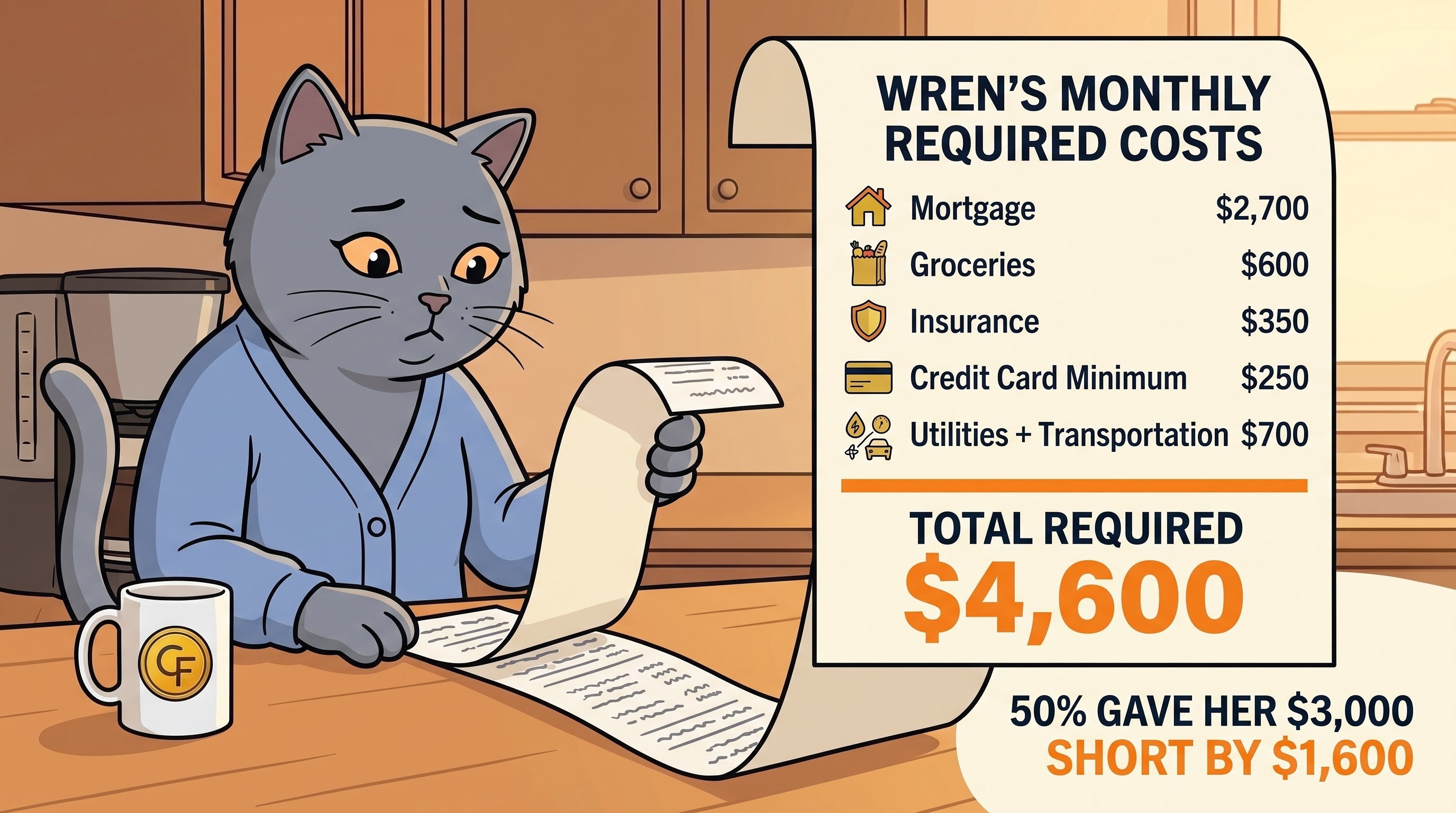
Wren brings home six thousand dollars a month. Run her actual required costs: a $2,700 mortgage, $600 in groceries, $350 for insurance, a $250 minimum credit card payment, and $700 for utilities and necessary transportation. Add it up and her real needs number is $4,600 — not the $3,000 that fifty percent of her paycheck was supposed to cover.
The rule told her to send twenty percent, $1,200, straight to savings every payday, no exceptions. Required costs plus that savings target comes to $5,800 out of a $6,000 paycheck. That leaves $200 for everything else that month — not the $1,800 the plan promised her. So the $1,200 went in on payday, and piece by piece it came back out before the month was over, because $200 was never going to cover a real month of living.
That's not a discipline problem. That's a plan that was mathematically incompatible with her paycheck from day one.
Three Ways a Budget Can Fail
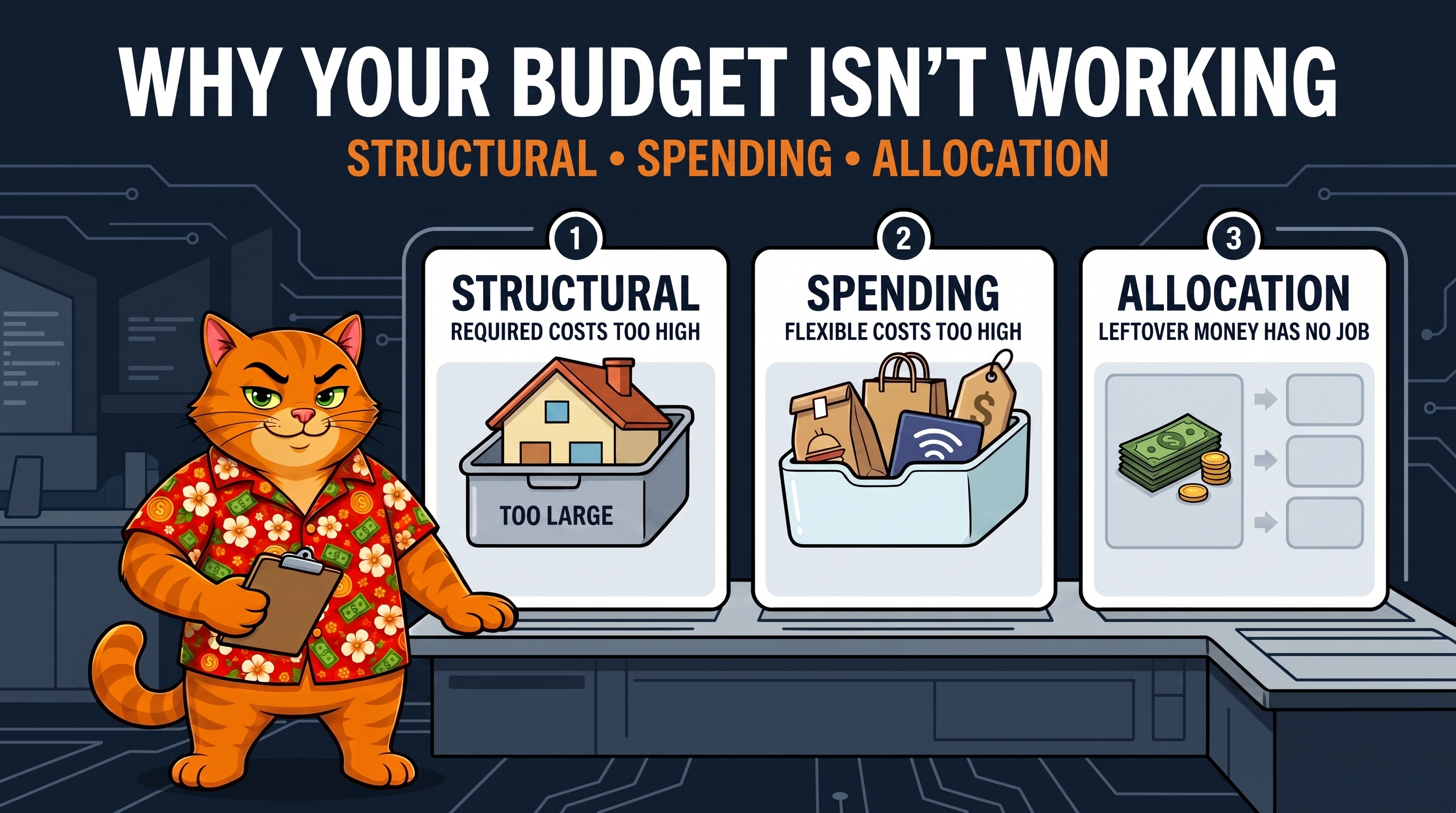
There are three completely different ways a budget like this can fail, and 50/30/20 hides all three behind the same vague diagnosis: you went over.
Your required costs can be too high — that's a structural cost problem, and no amount of willpower fixes a mortgage. Your flexible spending can be too high — subscriptions, restaurants, shopping that looked harmless one purchase at a time. Or your required costs are fine, your flexible spending is fine, but whatever's left at the end of the month disappears anyway, because it never had a job before you spent it. That's an allocation problem.
Wren's is the first one. Her required costs were eating the plan before wants or savings ever got a real turn.
When's the last time you actually added up your real required costs, instead of assuming they'd fit inside fifty percent?
The Housing Math That Breaks the Rule
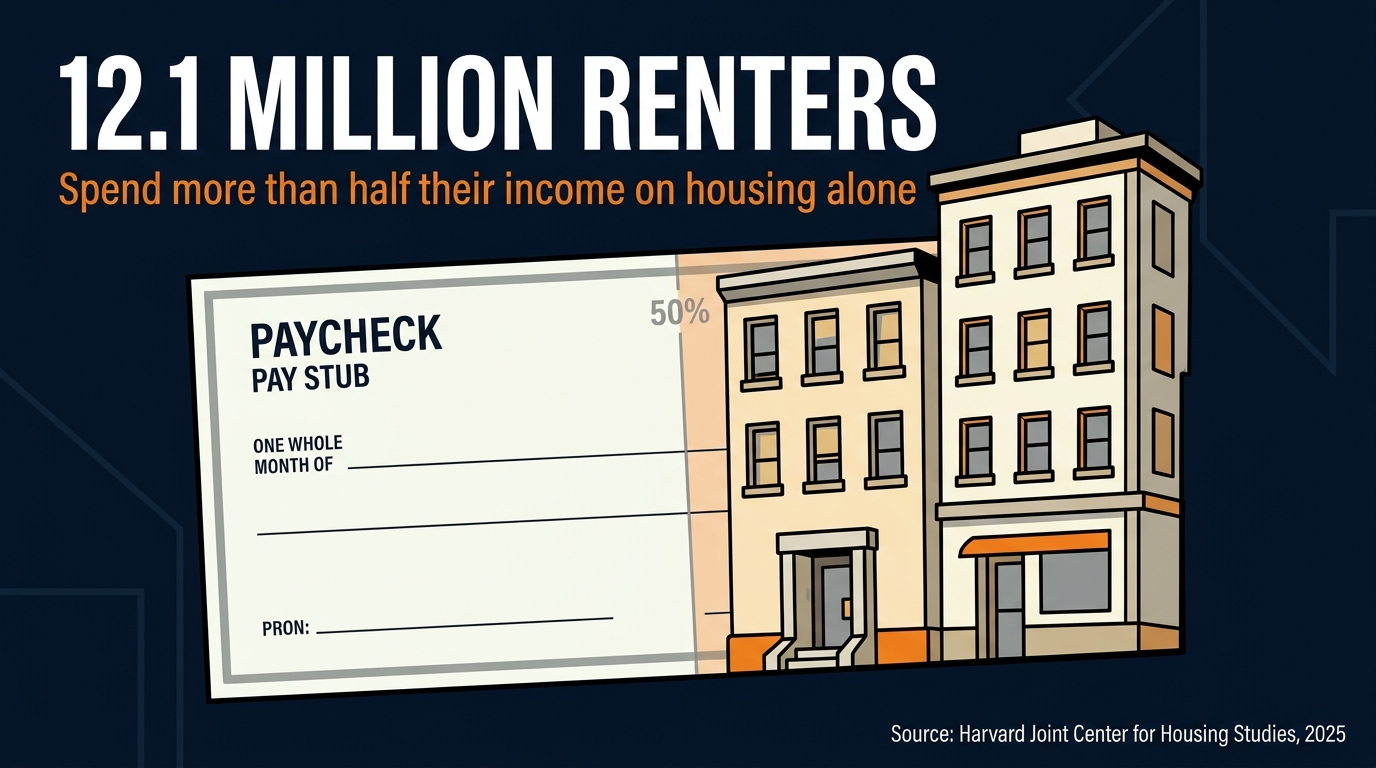
According to Harvard's Joint Center for Housing Studies, nearly half of renters — 49% — already spend more than thirty percent of their income on housing alone, and 12.1 million of those renters spend more than half their income on it. For that group, housing by itself already blows through the entire fifty-percent needs allocation before groceries, insurance, or a single minimum payment shows up. And renters aren't the only ones getting squeezed — nearly one in four homeowners are cost-burdened too.
Wren kept blaming her follow-through. Wrong diagnosis. Her required costs were $4,600 before Future or Flexible ever got a turn. Discipline wasn't going to turn that into $3,000.
Here's What Actually Fixes This
The fix isn't three new percentages. It's three priorities, in order: Required, Future, Flexible.
Required is what your life actually costs this month — the real dollar figure, not a percentage. Rent or mortgage, groceries, utilities, insurance, minimum debt payments. Whatever that number turns out to be.
Future comes second: savings, investing, extra debt payoff, automated the moment the paycheck lands, before Flexible ever gets a chance to spend it. Because "I'll save whatever's left at the end of the month" has a way of landing on zero.
Flexible gets what's actually left — not because restaurants are evil, but because your electric company has stronger opinions about getting paid.
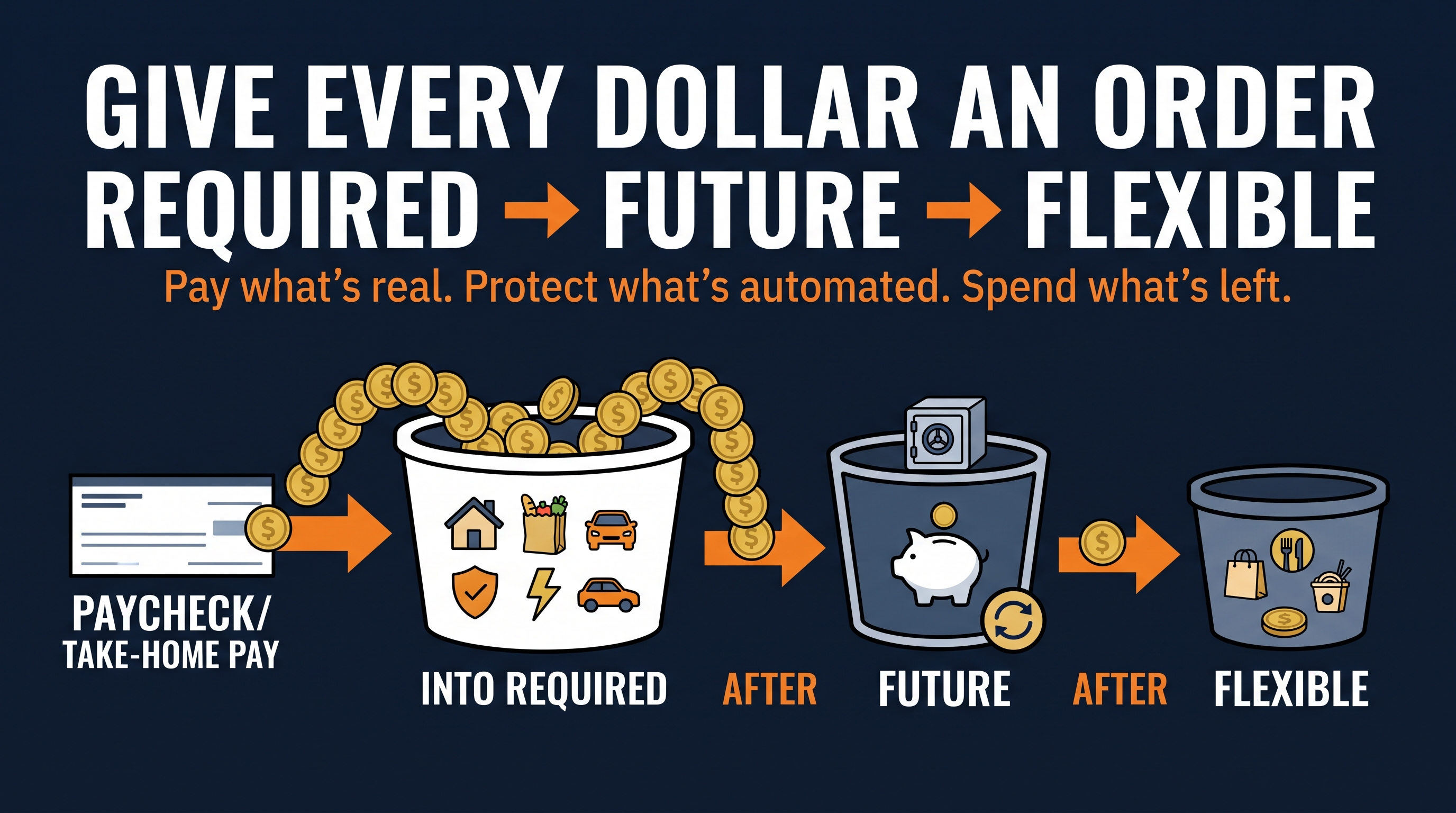
Required, Future, Flexible
Pay Required first as a real dollar figure. Automate Future second. Let Flexible absorb whatever's left.
If your rent alone is $2,700 on a $6,000 paycheck, your real "Required" number might be 65% or more — not the 50% the rule assumes. That's the number to build a plan around, not fight.
Wren rebuilt the plan around what was actually true. Required: $4,600, the real number. Future: $500, automated the day her paycheck lands — sustainable, not aspirational. Flexible: whatever's left, $900. Not comfortable. Not fake, either.
Six months later, three thousand dollars was actually sitting in her account — money that never had to come back out, because it was never promised to a bucket that couldn't afford it.
She's not chasing a hairball of a savings goal anymore — she's chasing a number that's actually hers.
50/30/20 Still Has a Job
The problem starts when you use 50/30/20 as instructions instead of a benchmark. The percentages aren't even the biggest issue. The order of operations is. It tells you what your life should cost, then asks you to match it. Required, Future, Flexible starts with what your life actually costs, then decides what the remaining dollars need to do.
50/30/20 still has a job — use it as a benchmark. If your required number lands near fifty percent, good, you're in the range the rule assumes. If it's sitting at seventy-five, stop rearranging the flexible column and pretending that's the emergency. The problem is somewhere else.
Build the plan around what's true instead of a percentage you inherited from somewhere else. If Required is breaking the budget, fix Required. If Flexible is breaking it, fix Flexible. If Future keeps getting whatever's left, stop leaving it until last. That's what a budget is supposed to tell you.
Required, Future, Flexible — Find Your Number
Add up your real required costs this week. Not an assumed percentage — the actual dollar figure. Then automate Future the moment your paycheck lands, before Flexible gets a say. Whatever's left is Flexible.
Two related reads: There's No Right Number of Bank Accounts — Here's What Matters Instead and The Minimum Payment Trap Nobody Warns You About.
Sources
- Harvard Joint Center for Housing Studies, The State of the Nation's Housing 2025 (published June 2025) — https://www.jchs.harvard.edu/