Table of Contents
- How Do Interest Rates Work? Start With the Price
- Amelia's Mortgage: What Less Than One Point Does
- The Interest Itself Is Bigger Than You'd Think
- Now Flip the Counter: What Bernard's Bank Sees
- You Can Stand on Both Sides
- A Rate Isn't Good or Bad
- What You Do With This Information
- Sources
How Do Interest Rates Work? Start With the Price
An interest rate is the price of using money, expressed as a percentage. The Consumer Financial Protection Bureau puts the borrowing side plainly: it's the cost you pay each year to borrow the money.
Borrow money, you pay the price.
Save money, and you can get paid for letting someone else use yours.
That's the whole concept. Everything else in this article is just watching that one idea play out with real numbers.
The Price of Money
Interest rate = the price of using money, per year, as a percentage
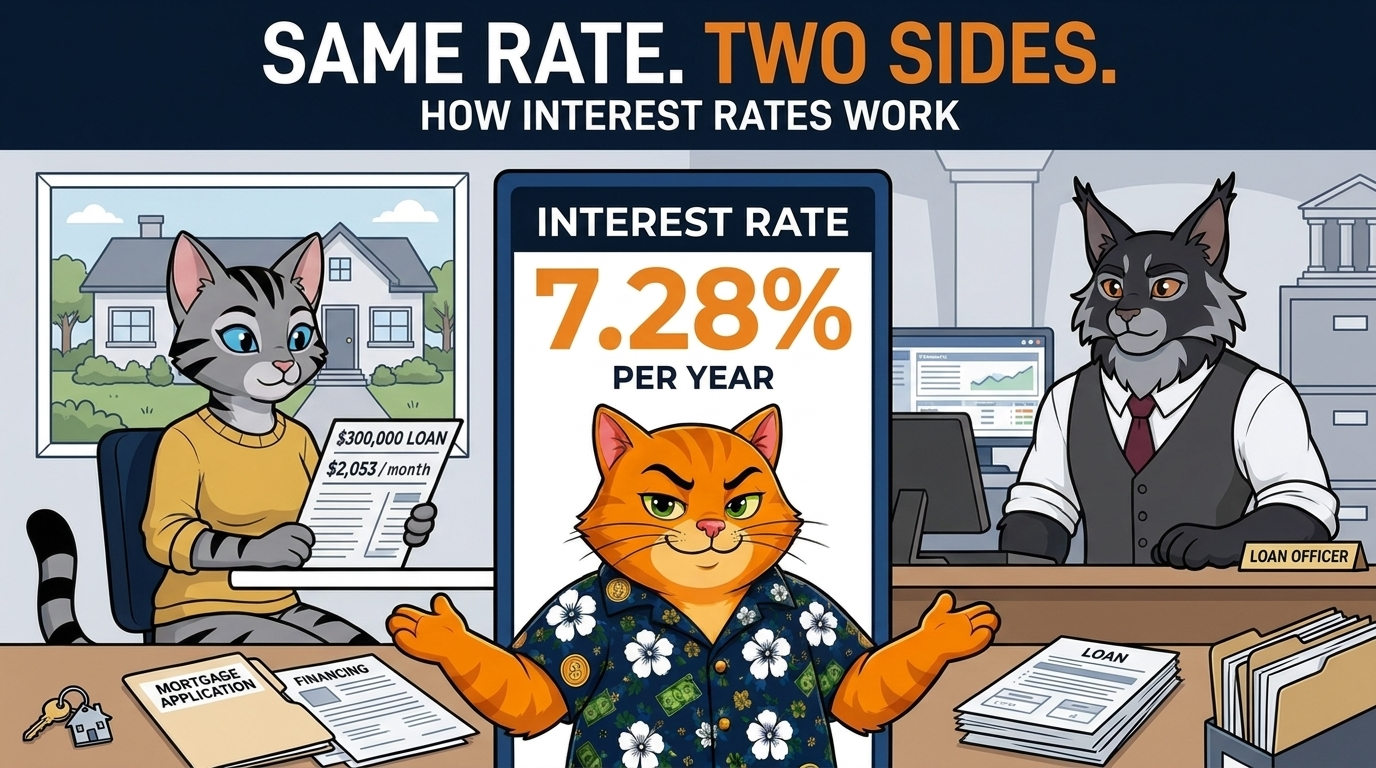
On a hypothetical $300,000 mortgage, one price gap is about $188 more every month for Amelia, and the same price is what Bernard's bank earns for lending.
Amelia's Mortgage: What Less Than One Point Does
Amelia wants a mortgage. So let's give her one. For the math, we'll use a hypothetical $300,000 loan over 30 years. Those are made-up inputs. The rates are not.
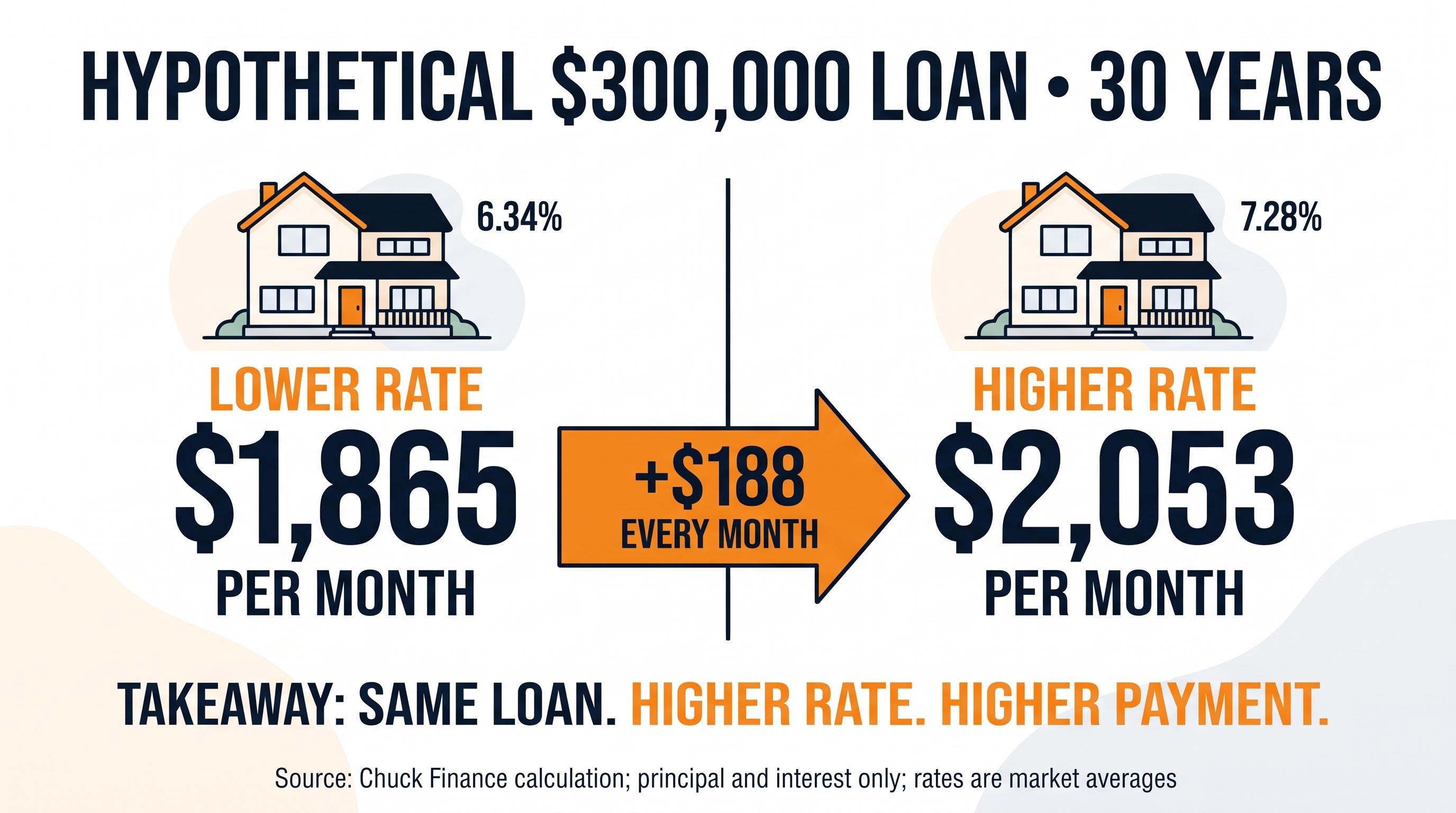
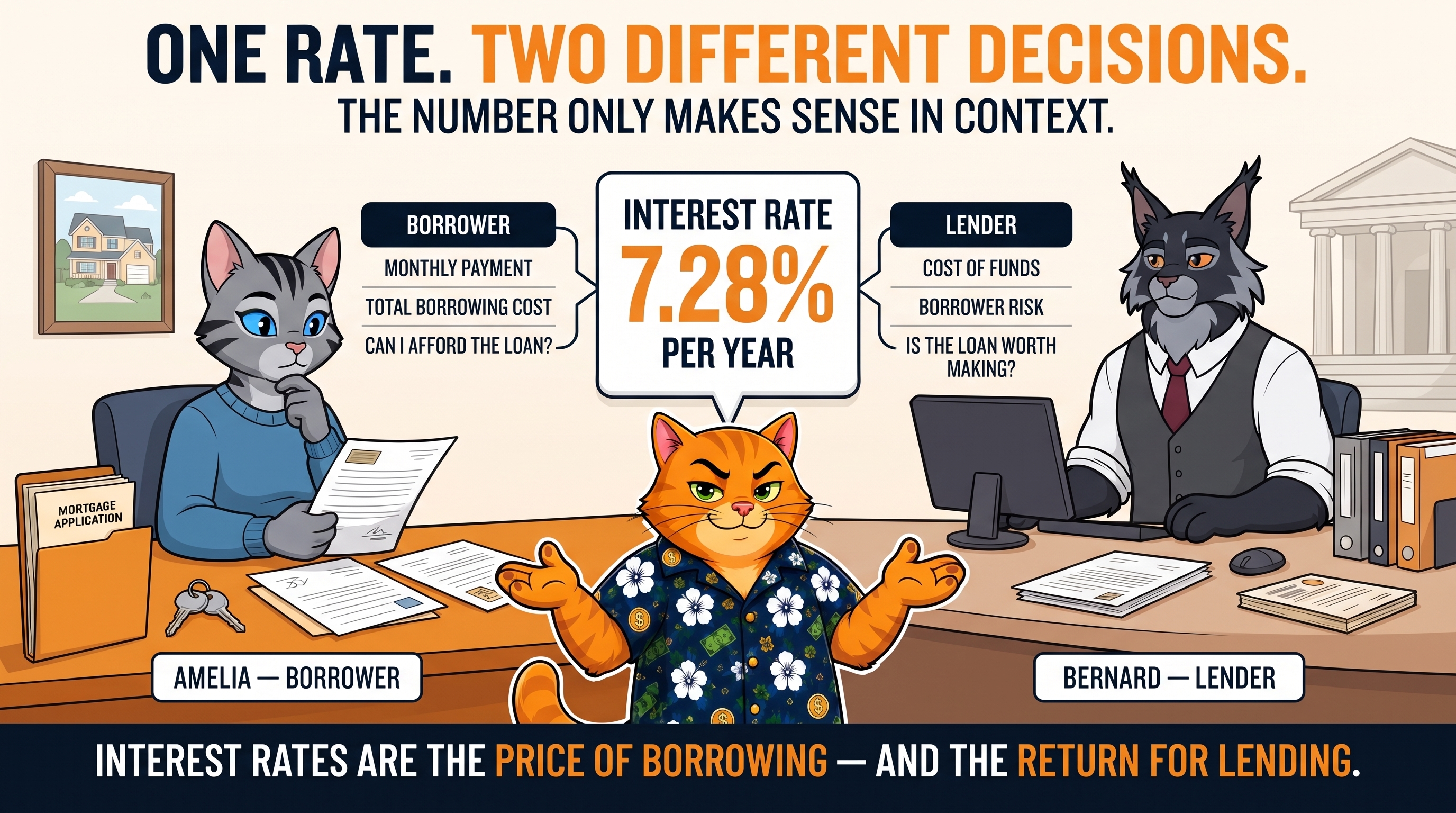
Freddie Mac's Primary Mortgage Market Survey tracks conventional conforming purchase mortgages. For the week of October 1, 2026, the average 30-year fixed rate was 7.28%. A year earlier, the same survey averaged 6.34%.
One caution before the math: those are two snapshots from two different periods. They are not a rate change Amelia lived through. We're using them to see what a gap that size does to the same loan.
On the same hypothetical $300,000, 30-year loan, here's what those two rates would do to principal and interest. Principal is the $300,000 she borrowed. Interest is the price on top.
| At 6.34% | At 7.28% | |
|---|---|---|
| Monthly payment (principal + interest) | about $1,865 | about $2,053 |
That's about $188 more every month. Over 30 years, it's more than $67,000 in additional payments. And that's before property taxes and insurance.
Less than one percentage point. It sounds like nothing. It isn't nothing.
The Interest Itself Is Bigger Than You'd Think
Now look at the interest alone.
| At 6.34% | At 7.28% | |
|---|---|---|
| Interest paid over 30 years | about $371,000 | about $439,000 |
Amelia borrowed $300,000. At either rate, the interest over 30 years can end up costing more than the amount she originally borrowed.
That's what a rate does. It puts a price on the money you're using, and the clock on a 30-year loan is long.
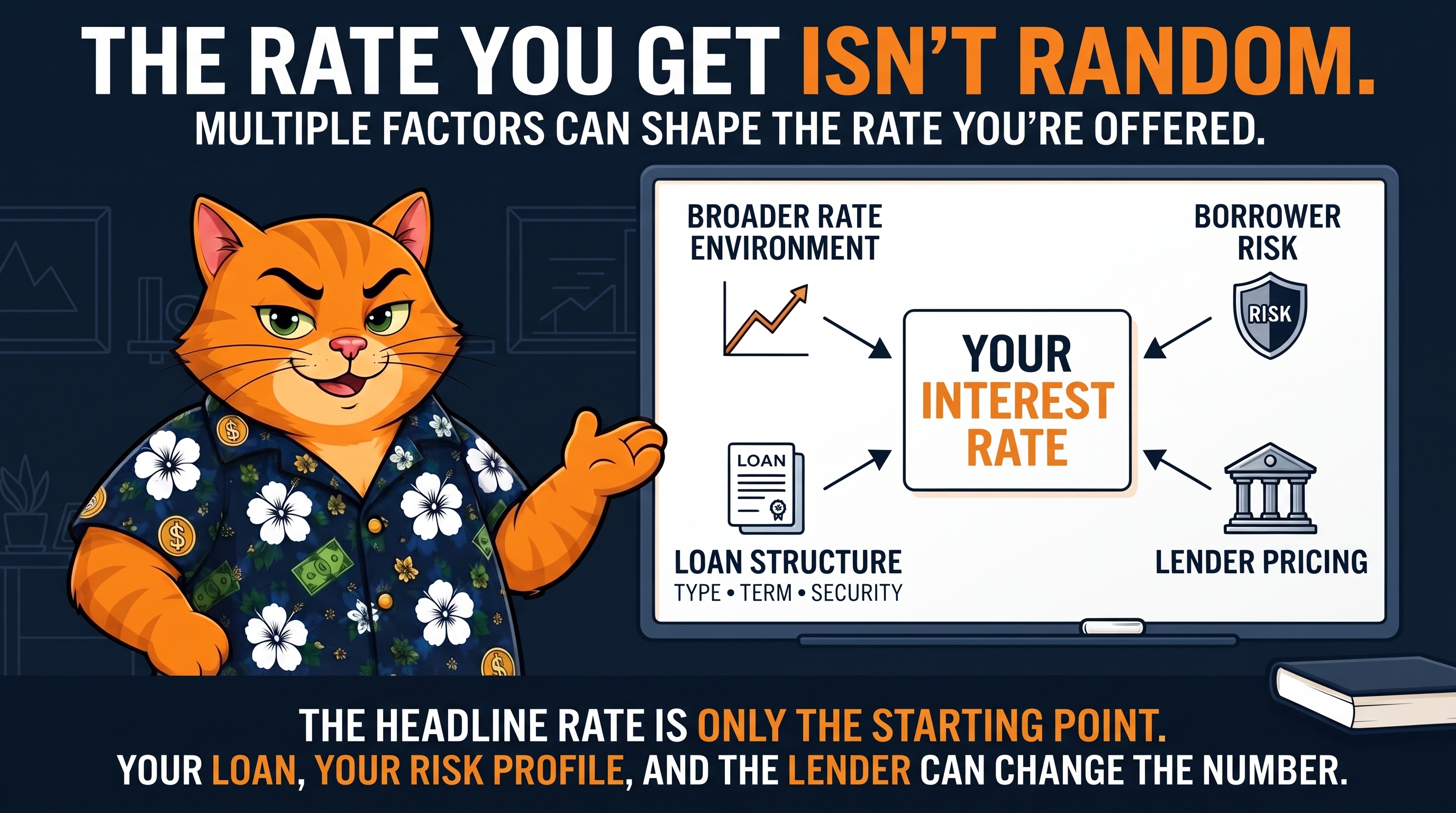
7.28% is an average. The rate Amelia actually gets quoted is the one that hits her payment. Her number could land above or below the survey's, which is why you should treat any headline rate as a reference point, not a promise.
Now Flip the Counter: What Bernard's Bank Sees
Time to walk around to the other side.
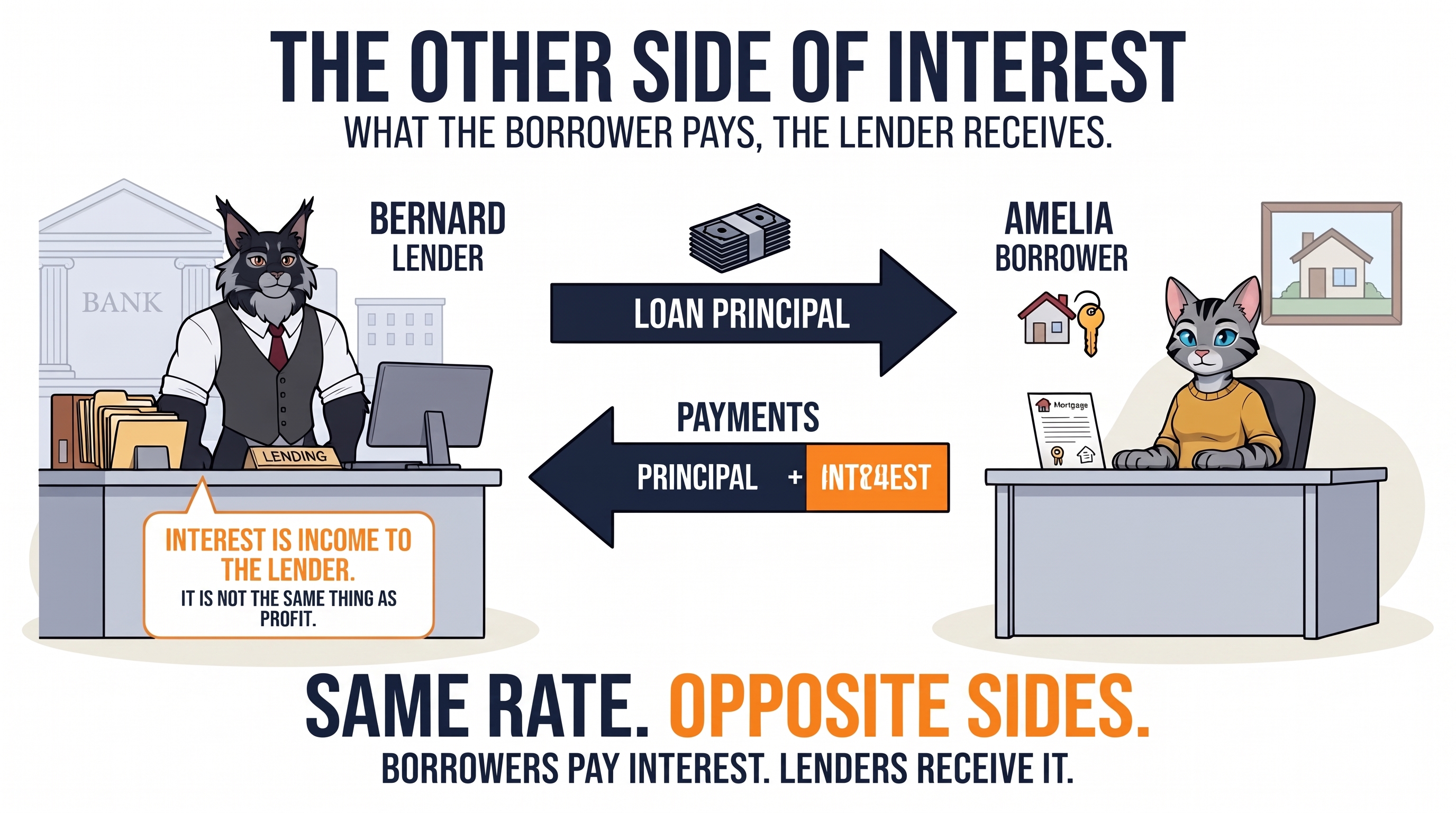
Bernard runs the bank. Amelia pays interest for using borrowed money. On the other side of the transaction, interest on loans is one source of income for a bank.
Here's the simple version. Banks can earn interest on loans and other interest-earning assets. They can also pay interest to depositors and incur other funding costs. Earning interest. Paying interest. Bernard's bank operates on both sides of the counter.
A real bank has plenty of other moving parts: other assets and liabilities, funding costs, operating expenses, credit losses, fees, and more. So don't subtract a savings rate from a mortgage rate and call the difference "the bank's profit." The interest a bank earns isn’t the same thing as profit.
What's worth knowing is this: loan prices and deposit prices are both prices. Banks compete on both.
You Can Stand on Both Sides
You can stand on both sides of that counter yourself.
Amelia can have a mortgage at one bank and a savings account at another. On the mortgage, she's paying interest. On the savings account, she's earning it. Same person. Both sides of the counter.
Now flip it around. Say you keep $10,000 in a savings account. At a 1% annual rate, that's about $100 in interest over a year. At 4%, it's about $400. Same $10,000. Different price for letting the bank use your money.
| At 1% for a year | At 4% for a year | |
|---|---|---|
| Interest earned on $10,000 | about $100 | about $400 |
Same $10,000. Same year. $300 apart. Higher rates can pay the saver more. Lower rates pay the saver less.
Now flip that 4% around. Borrow $10,000 at 4% and owe it for a year, and interest is money going out instead of coming in. Same concept. Opposite direction.
A Rate Isn't Good or Bad
A higher interest rate isn't automatically good or bad. It depends which side of the counter you're standing on.
When you're borrowing, you generally want the rate lower. When you're saving, you generally want the rate higher.
Amelia pays interest on her mortgage. Bernard's bank earns interest for lending the money. And when Amelia puts money into savings, the bank can be the one paying her.
If a rate has only ever felt like a bill, you've been looking at it from the borrower's side of the counter. The useful shift is realizing the number itself isn't the lesson. Your position is.
What You Do With This Information
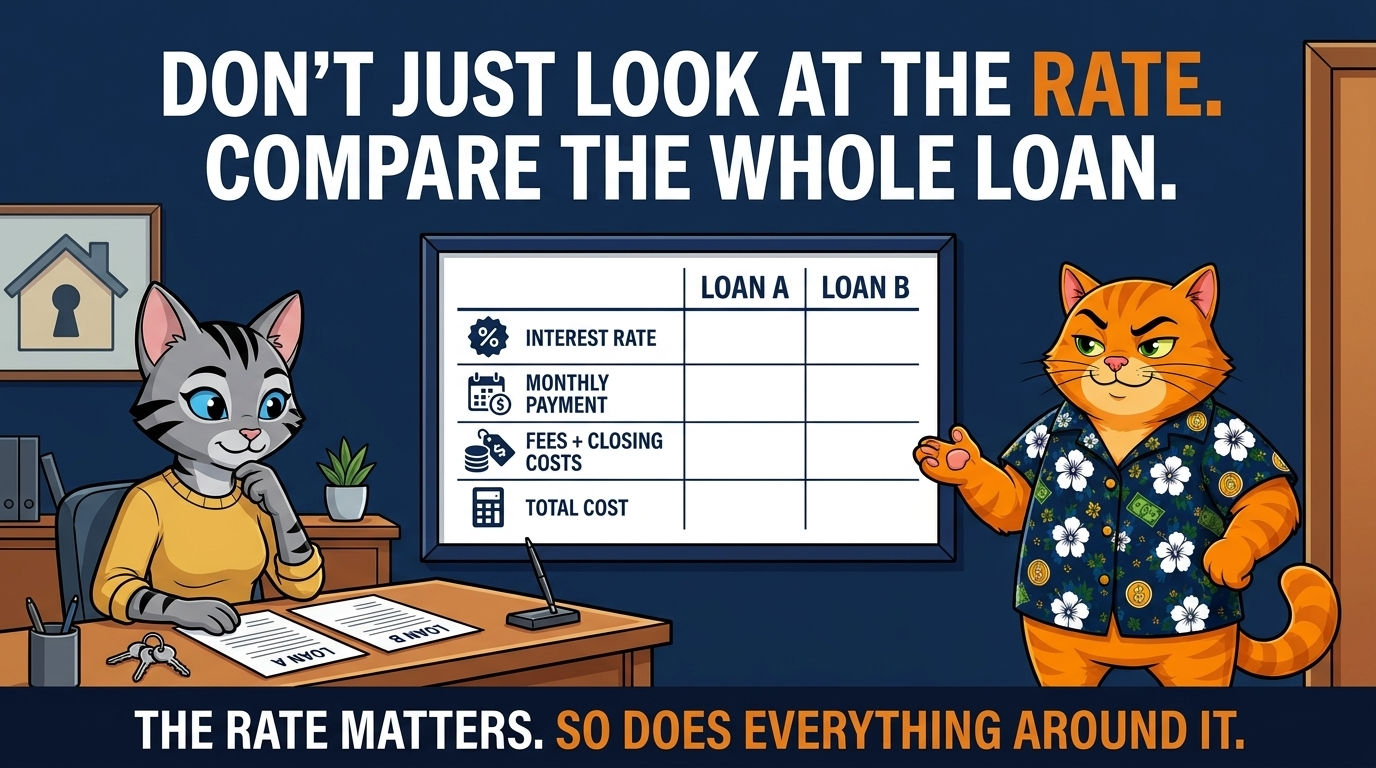
Once you understand what an interest rate actually is, the numbers stop looking quite so mysterious. It's a price. Sometimes you're paying it. Sometimes you're earning it. The practical move is to stop judging a rate in isolation and start asking what that rate is doing to your money.
So here's what Amelia does, and what you can do with your own numbers this week:
- Before you borrow, look at the rate you're actually being offered. Not the headline average. Your quote.
- Run the payment at that rate, then again one percentage point higher. Any loan calculator can do it. You'll see exactly how much that point is worth.
- Check the total interest, not just the monthly payment. The monthly number tells you what it costs this month. The total tells you what it costs.
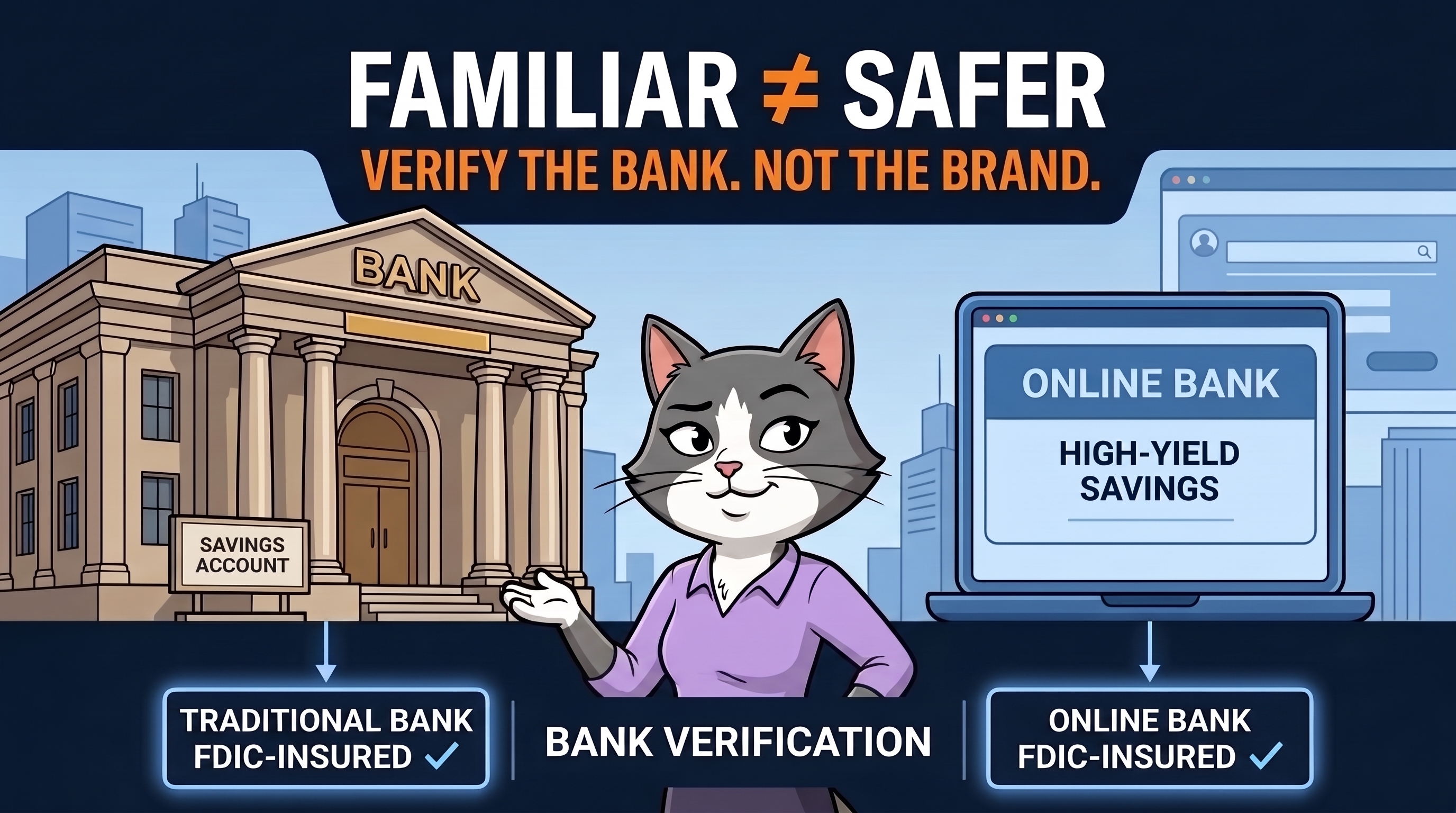
- Before you put money into savings, check what the account actually pays. Don't go by the name of the bank, and don't assume one savings account pays about the same as another.
A good rate depends on what the rate is doing to your money.
Amelia doesn't need a universal verdict on whether 7.28% is "good" or "bad." She needs to know what her actual mortgage quote does to her payment and total interest. Then she needs to look at the savings side separately and ask what her cash is earning.
Do the same. Pull up the rate on your biggest loan and the rate on your savings account today. Write both numbers down. For the loan, calculate the payment and total interest. For savings, check what the account actually pays.
That's the part I want you to keep: a rate is a price, and your side of the transaction determines whether that price is working for you or costing you.
Related: how does credit card interest work, what is compound interest, and is a high-yield savings account still worth it.
Chuck Finance is for entertainment and informational purposes only. Chuck is not a licensed financial advisor, and nothing in this post constitutes professional financial, investment, legal, or tax advice. Always consult a qualified professional before making financial decisions. The $300,000 loan and $10,000 savings balance are hypothetical examples, and the 1% and 4% savings rates are hypothetical. Mortgage figures are Freddie Mac survey averages for conventional purchase loans with 20% down and excellent credit, and are not a quote.
Sources
- Freddie Mac — Primary Mortgage Market Survey (30-year fixed average, week of October 1, 2026; October 2025)
- Consumer Financial Protection Bureau — interest rate vs. APR (page last reviewed August 28, 2026)
- FDIC — Risk Management Manual of Examination Policies, Section 5-1 Earnings (banks' interest income and interest expense)
- Payment and total-interest figures: Chuck Finance calculations on a hypothetical $300,000, 30-year fixed loan at the two Freddie Mac averages; principal and interest only.
Policy note: Mortgage-rate figures are dated (week of October 1, 2026). Recheck the current Freddie Mac survey and re-run the loan math before publication if the post goes live well after that week.