What an Index Fund Actually Does
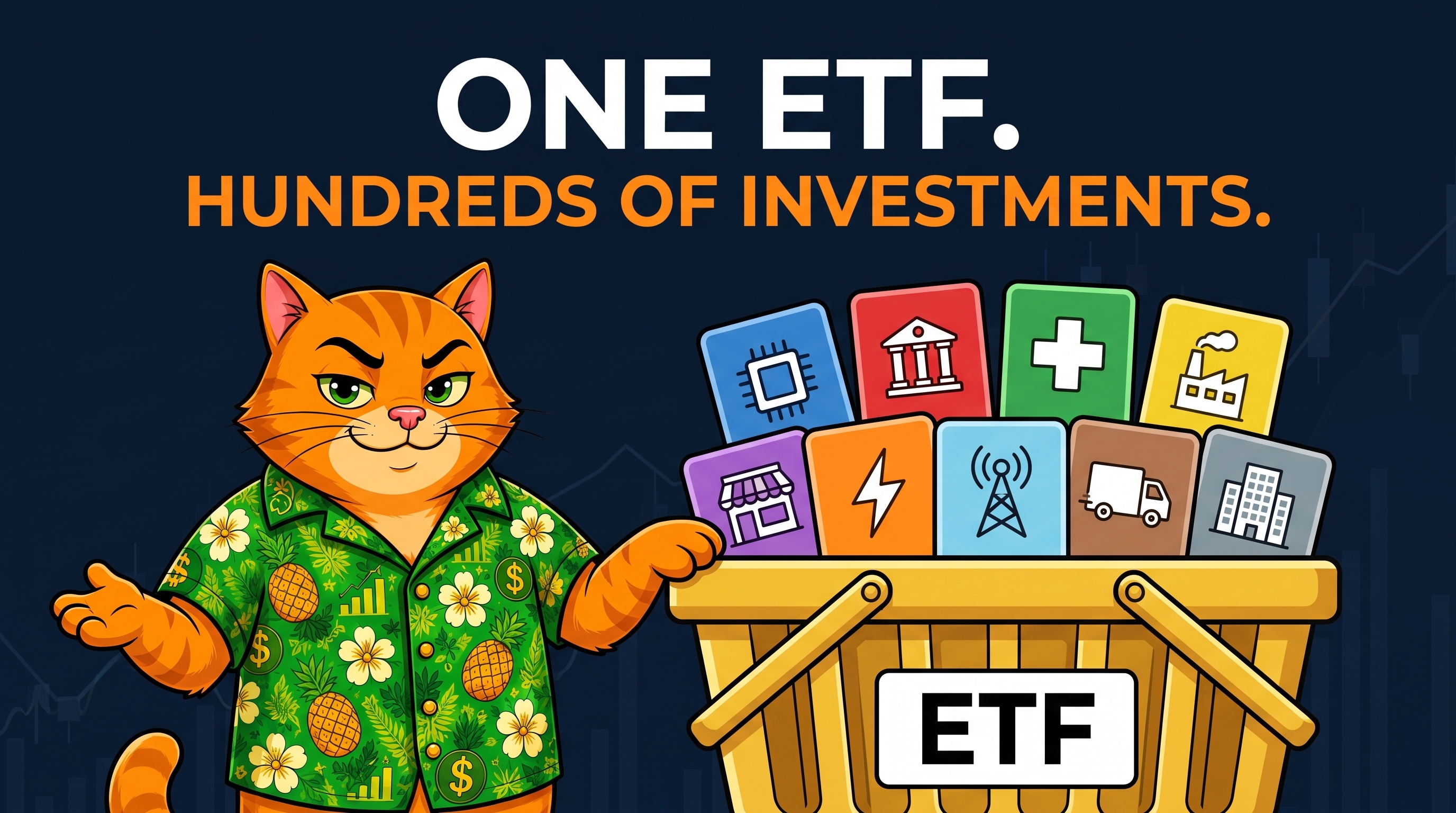
An index fund doesn't try to beat anything. It buys the entire benchmark — every company in an index like the S&P 500, in the same proportion the index already holds them — and then it just sits there. No stock-picking. No timing. No manager deciding what's smart this quarter. By design, it's the single most boring investment product that exists.
Say the market returns 10% this year. An index fund tracking that benchmark earns close to 10%, minus a fraction of a percent in fees. A fund manager, by contrast, has exactly one job: beat that number. When they return 8% instead, the investor still sees a gain on their statement. They made money. They feel fine about it. What they don't see is that they paid extra to get less.
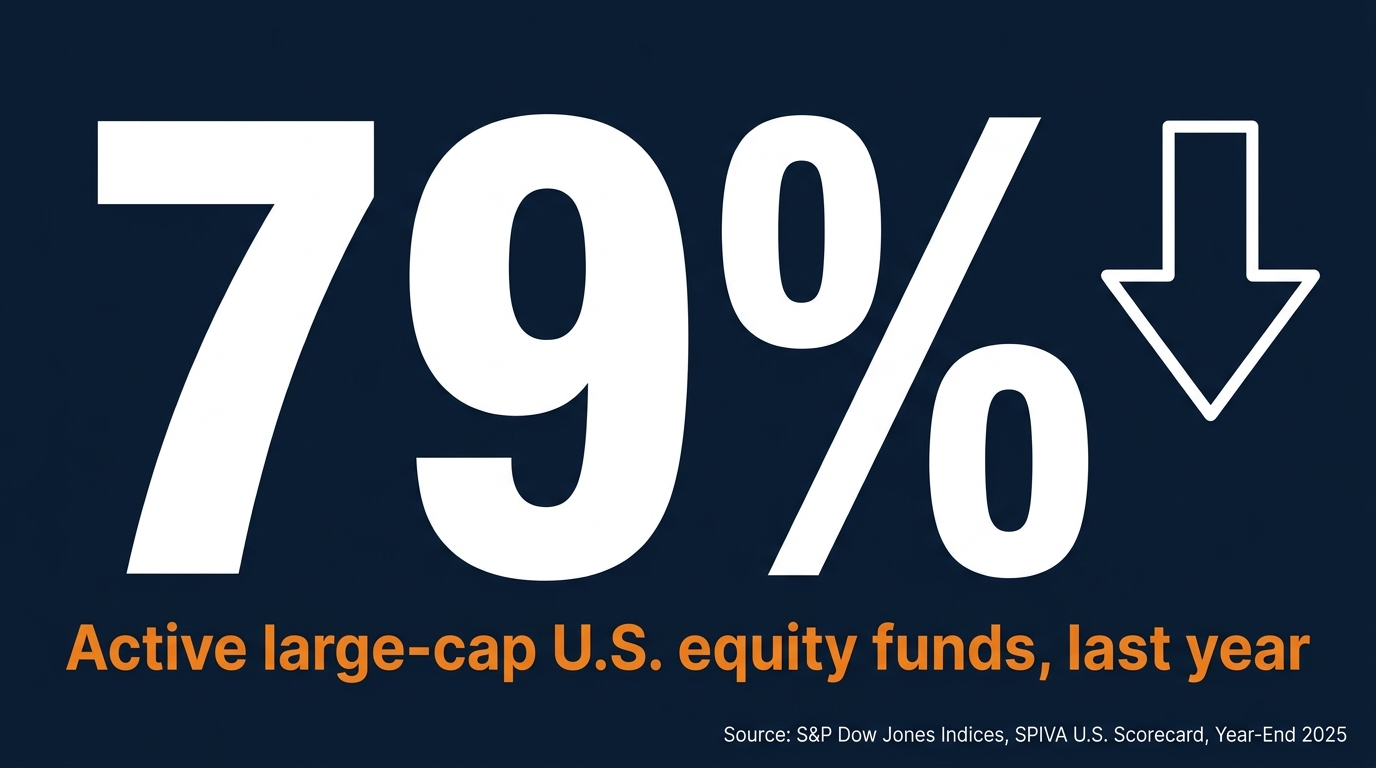
79% of Professionals Failed to Beat the Market Last Year
This isn't a cherry-picked hypothetical. Last year, 79% of active large-cap U.S. equity funds failed to beat the S&P 500 — the fourth-worst year for active large-cap managers in the 25-year history of this exact measurement, tracked annually by S&P Dow Jones Indices.
Read that as a hiring decision for a second: if 79 out of 100 people you paid for a specific outcome failed to deliver it, you wouldn't call that a coin flip. You'd call it a bad bet.
"I'll Just Find One of the Good Ones"
That's the instinct almost everyone has, and it runs into a second problem. Finding a fund that beat its peers last year is easy. Finding one that keeps doing it is the problem.
S&P tracked every large-cap fund that ranked in the top half of its category in 2021. Under a random distribution, you'd expect about 6.25% of them to stay above median for that entire stretch. The actual number: 4.5% — below what pure chance alone would predict. Yesterday's winner doesn't give you a reliable map to tomorrow's.
What You're Really Paying For
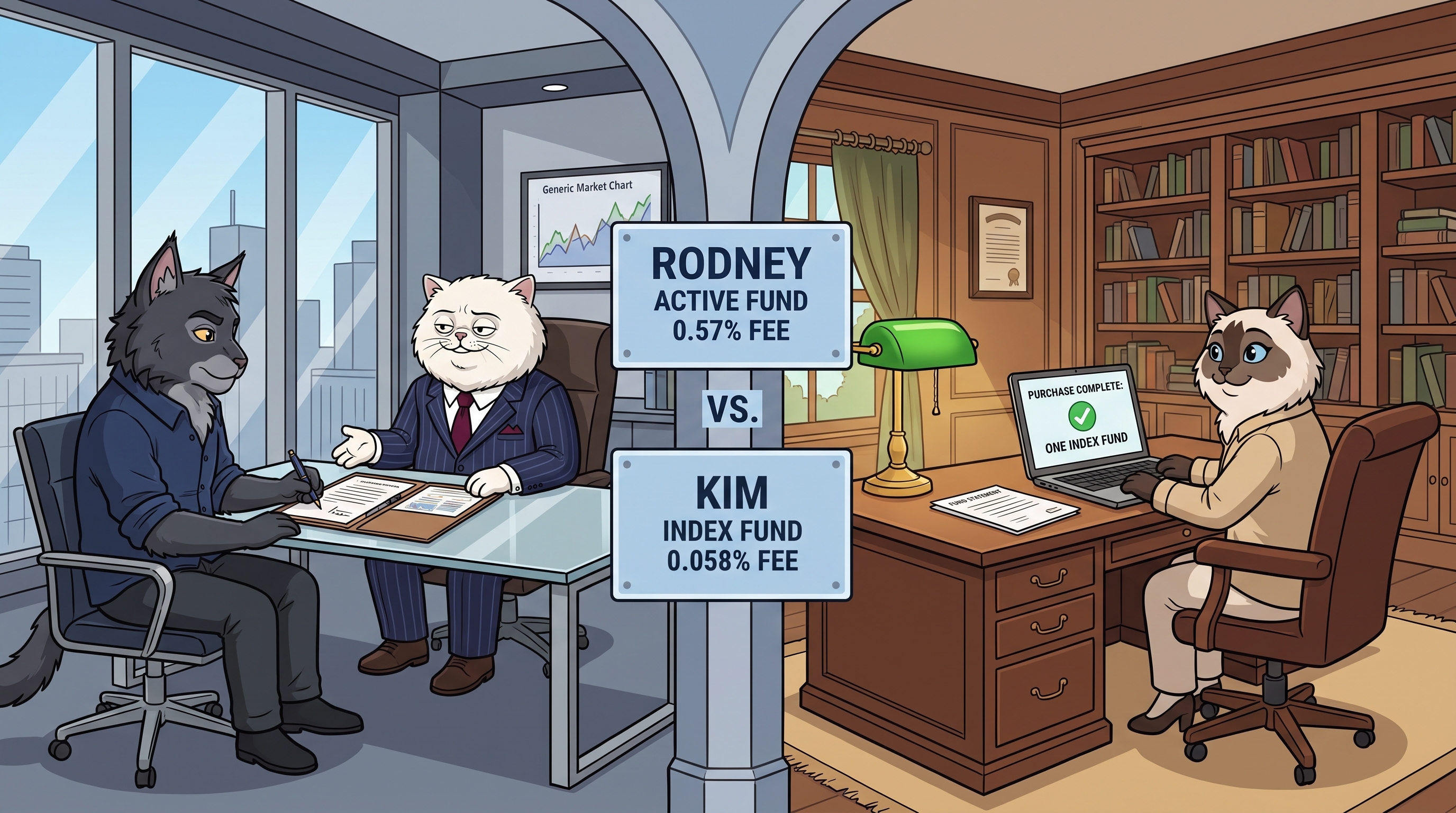
Real expertise has to be worth something — maybe it's worth paying for. Here's what it actually costs: a typical actively managed mutual fund charges around 0.57% a year. A typical passive index fund charges 0.058%. That's roughly 10 times more expensive to pay someone to try — and mostly fail — to beat the market than it is to just own it.
She's not chasing a market she can't catch — she's just not paying to chase it at all.
The $23,000 Fee Gap, Worked Out
Run one controlled comparison to see what that gap actually does. Same $10,000. Same 10% market return. Only the fee changes.
At a 0.058% fee, $10,000 grows to roughly $172,000 over 30 years. At a 0.57% fee, the same $10,000, same market, same three decades, grows to roughly $149,000. That's $23,000 gone — not because anyone made a bad call, but because a fee was quietly subtracted from the same return, every single year, the entire time. Curious what your own funds are actually charging? Expense Ratios Explained: The Number That Quietly Eats Your Returns breaks down exactly where to find that number on your own statement.
The Expense Ratio Gap
0.058% (index fund) vs. 0.57% (active fund) — roughly 10x
On $10,000 growing at 10% a year for 30 years, that gap alone costs you about $23,000 — money gone to fees, not bad stock picks.
Even Buffett Proved It
You don't need to find a smarter investor to trust with your money to see the pattern — even at the very top of the industry, the story repeats. In 2007, Warren Buffett publicly bet $1,000,000 that a plain S&P 500 index fund would beat a hand-picked selection of hedge funds over 10 years. Real hedge funds — some of the most expensive expertise money can buy.
Over that decade, the index fund returned 7.1% a year, compounding to a 125.8% total gain. The hedge funds averaged 2.2% a year. You don't have to believe fees explain the entire gap to see the shape of it: ten years later, all that additional strategy and expertise still finished behind the boring index fund.
Hiring a fund manager isn't one bet — it's two. The fund has to beat its benchmark, and you have to identify that fund before anyone else knows it will. Kim didn't win by finding the better stock picker. She stopped playing the stock-picker game — and investors have noticed. Passive U.S. fund assets passed active assets for the first time in late 2023. By June of this year, the gap had grown to $21.8 trillion in passive versus $18.8 trillion in active.
Here's What Actually Fixes This
This doesn't require picking better stocks, timing the market, or finding a smarter person to trust with your money. It requires exactly the opposite — doing less. Open your statement and find the expense ratio on every fund you own. Then find the specific benchmark that fund is actually supposed to beat — not the S&P 500 by default, the real one. A bond fund answers to a bond index. An international fund answers to an international index. Compare what you're paying against what the fund has actually delivered relative to that benchmark over time.
If you're just getting started and want the fundamentals first, Start Investing With Whatever You Have — Here's How is the right place to begin. And if "stock" and "index fund" still feel like different animals, What Is a Stock, Actually? closes that gap.

Rodney spent six years trying to pick the person who could beat the benchmark. Kim just owned the benchmark. That's boring. That's the point — and it's the choice available to you regardless of what you're currently invested in.
Sources